





Maximizing Performance in Laptops and Mini PCs without Hitting Bottlenecks
Small form factor (SFF) PCs and laptops have become increasingly popular in 2026 due to their portability and compact design. But when it comes to upgrading storage, PCIe SSDs can offer impressive performance gains — yet they also come with practical limits.
1️⃣ Why PCIe SSDs Are Attractive for SFF PCs
- ⚡ High sequential speeds: PCIe 4.0/5.0 SSDs offer significantly faster read/write than SATA SSDs.
- 🖥️ Responsive multitasking: Faster random access speeds improve application launch and system responsiveness.
- 🎮 Better gaming load times: Open-world games and asset-heavy titles benefit from higher throughput.
Beobachtung: SFF systems often come with limited upgrade options, so a PCIe SSD can provide a substantial performance boost without replacing the entire system.
2️⃣ Practical Limits in Small PCs
Despite their advantages, PCIe SSDs in SFF PCs face constraints:
| Faktor | Beschränkungen | Auswirkungen |
|---|---|---|
| Thermal headroom | Compact cases have limited airflow | High-speed PCIe 4.0/5.0 drives may throttle under sustained load |
| PCIe-Lanes | Laptops often support x2 instead of x4 | Reduces peak throughput, diminishing the performance advantage |
| Power budget | Smaller PSUs or batteries | High-speed drives consume more power, slightly reducing battery life |
| Motherboard compatibility | Some SFF boards may not fully support PCIe 5.0 | Newer drives may run at PCIe 3.0 speeds |
Mitnehmen: Die theoretical speed of the SSD may not translate fully into real-world gains in very compact systems.
3️⃣ Real-World Gains You Can Expect
| Anwendungsfall | PCIe SSD Impact | Anmerkungen |
|---|---|---|
| Betriebssystem-Start | 10–15 sec | Noticeably faster than SATA SSD, similar to larger desktops |
| App-Start | Instant | Especially in multitasking and office workflows |
| Spiel-Ladezeiten | 15–25% improvement | Large open-world games benefit most |
| File transfers | Up to 2–3x faster than SATA | Heavy media projects see tangible gains |
Key Insight: Für daily use, the performance difference between PCIe 3.0 and 4.0 in small PCs may be minor. PCIe 5.0 is mostly future-proofing or for content creators with large datasets.
4️⃣ When PCIe SSDs Make Sense in SFF PCs
- ✅ Upgrading laptops or mini PCs without replacing the motherboard
- ✅ Users who handle large media files or CAD projects
- ✅ Gamers with open-world or AAA titles
- ✅ Environments where multitasking and app responsiveness matter
Tip: If your workload is limited to office apps, web browsing, or light gaming, a PCIe 3.0 or high-end SATA SSD often provides enough speed at lower cost.
5️⃣ Conclusion
PCIe SSDs can bring significant performance gains to small form factor PCs, but it’s important to consider thermal limits, PCIe lane width, and power constraints.
Practical advice: Choose the PCIe generation based on your actual workload, not just marketing numbers. A well-chosen PCIe SSD upgrade can transform a compact PC, extending its life and improving responsiveness for daily tasks or professional applications.
Über Oreton
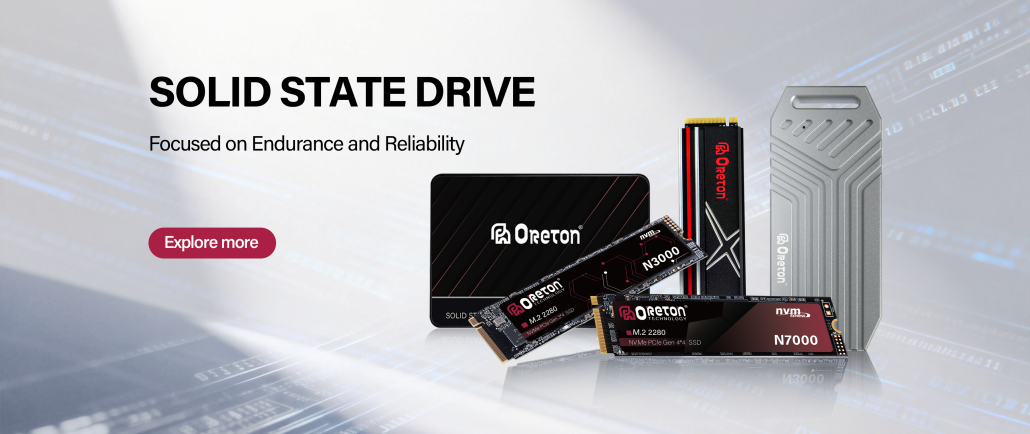
Oreton offers high-quality PCIe SSDs and SATA SSDs, optimized for stability, reliability, and real-world performance. From mini PCs and laptops zu enterprise deployments, Oreton ensures your storage delivers consistent speed and long-term reliability.