





Why Frequency Alone No Longer Defines Real Memory Performance
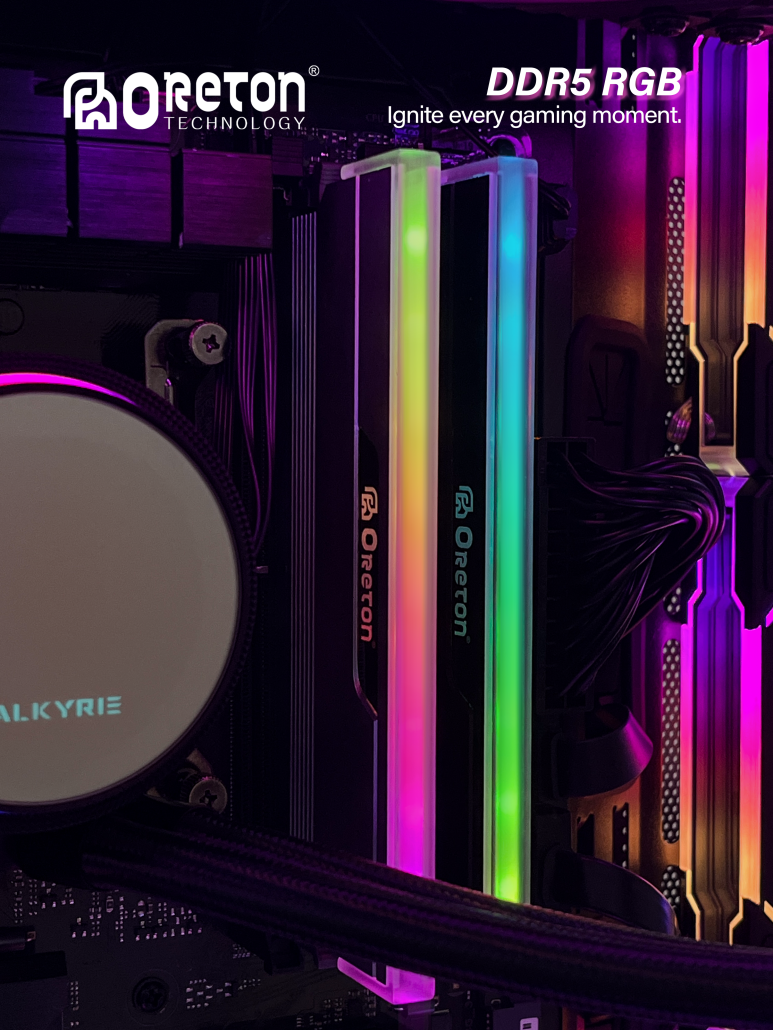
DDR5 memory frequencies are climbing faster than ever.
6400MHz, 7200MHz, 8000MHz — and even higher speeds — are now common across enthusiast PC builds and gaming systems. On paper, these numbers look impressive.
But in real-world systems, achieving stable high-frequency DDR5 performance is becoming increasingly difficult.
Because modern memory performance is no longer limited by the RAM module alone.
Behind every high-speed DDR5 configuration lies a complex interaction between:
- the CPU memory controller (IMC)
- motherboard design
- thermal conditions
- BIOS optimization
- signal integrity
And in many systems, these factors become the true bottleneck long before the RAM itself reaches its advertised limits.
1️⃣ DDR5 Changed the Nature of Memory Scaling
Compared to DDR4, DDR5 introduced:
- significantly higher frequencies
- increased bandwidth
- onboard PMIC power management
- more aggressive signaling behavior
This improved theoretical performance dramatically.
But it also made the entire memory ecosystem far more sensitive.
At lower DDR5 speeds, most systems operate comfortably.
At very high frequencies, however, stability margins become increasingly narrow.
This is why two systems using the exact same DDR5 kit can behave completely differently.
2️⃣ The IMC: The Most Overlooked Bottleneck
One of the biggest hidden limits behind high-speed DDR5 is the CPU’s:
Integrated Memory Controller (IMC)
The IMC is responsible for managing communication between the CPU and memory.
As DDR5 frequencies rise:
- signal timing becomes tighter
- synchronization becomes harder
- voltage sensitivity increases
- training complexity increases
A weak IMC may lead to:
- random instability
- failed memory training
- blue screens
- gaming crashes
- frequency fallback
Przykład
| Konfiguracja | Potential Result |
|---|---|
| Strong IMC + optimized motherboard | stable DDR5-7200 |
| Average IMC + budget motherboard | instability above DDR5-6400 |
| Compact laptop platform | aggressive downclocking |
This is why “silicon lottery” still matters heavily in DDR5 systems.
Not every CPU can handle extreme memory frequencies equally well.
3️⃣ Motherboard Design Matters More Than Ever
At DDR5 speeds, motherboard quality becomes a major factor.
Dlaczego?
Because extremely high memory frequencies require:
- cleaner signal routing
- stronger PCB design
- optimized memory trace layouts
- better power delivery
- improved BIOS tuning
Poor signal routing can introduce:
- latency inconsistencies
- training failures
- random crashes
- instability under heavy workloads
Higher Frequency = Higher Signal Sensitivity
As frequencies rise:
- electrical noise tolerance decreases
- trace quality matters more
- DIMM topology becomes critical
This is why premium motherboards often achieve:
- higher stable frequencies
- faster training
- better compatibility
- improved latency behavior
even with identical RAM kits.
4️⃣ Thermal Behavior Is Becoming a Major DDR5 Limitation
High-frequency DDR5 memory consumes more power than many users realize.
This introduces additional heat from:
- memory ICs
- PMIC components
- motherboard VRMs
- CPU IMC stress
Under sustained workloads:
- gry
- rendering
- Obciążenia związane ze sztuczną inteligencją
- large asset streaming
temperature can begin affecting stability directly.
Why Small PCs and Laptops Struggle More
Compact systems often have:
- limited airflow
- tighter PCB layouts
- reduced cooling headroom
W rezultacie:
- high-frequency memory becomes harder to stabilize
- thermal throttling may appear
- systems may automatically reduce memory speeds
In many small-form-factor systems, extremely aggressive DDR5 frequencies provide diminishing returns.
5️⃣ Signal Integrity Is the Invisible Challenge
Signal integrity is one of the least discussed — yet most important — parts of modern DDR5 behavior.
At very high frequencies:
- tiny electrical imperfections matter more
- timing windows become smaller
- synchronization becomes increasingly difficult
Even factors like:
- DIMM slot population
- PCB layer quality
- trace distance
- BIOS memory training algorithms
can influence stability.
This is why memory validation has become significantly more complex for:
- motherboard vendors
- OEMs
- system integrators
6️⃣ Why Real-World Gains Often Shrink at Extreme Frequencies
One major misconception:
Higher frequency always means proportionally higher performance.
In reality, DDR5 scaling is not linear.
Typical Real-World Scaling
| Upgrade | Real-World Impact |
|---|---|
| DDR5-4800 → 5600 | noticeable |
| DDR5-5600 → 6400 | moderate |
| DDR5-6400 → 7200 | smaller |
| DDR5-7200 → 8000+ | highly workload dependent |
For:
- office workloads
- browsing
- content consumption
- general gaming
the performance difference often becomes surprisingly small at ultra-high frequencies.
Meanwhile:
- heat
- instability risk
- IMC stress
- motherboard sensitivity
continue increasing.
7️⃣ Why OEMs Often Prioritize Stability Over Maximum Frequency
For OEMs and enterprise deployments, stability is more valuable than chasing extreme specifications.
Large-scale deployments require:
- predictable behavior
- validated compatibility
- low failure rates
- długoterminowa niezawodność
An unstable high-frequency memory setup can create:
- deployment inconsistency
- troubleshooting overhead
- random crashes
- higher return rates
This is why many commercial systems intentionally use:
- validated DDR5 frequencies
- conservative tuning
- stable thermal targets
instead of pushing maximum XMP limits.
8️⃣ The Future of DDR5 Scaling
DDR5 frequencies will continue rising.
But future performance improvements will increasingly depend on:
- stronger CPU memory controllers
- motherboard signal optimization
- better thermal engineering
- BIOS maturity
- smarter memory training algorithms
The industry is gradually learning that:
memory performance is now a platform-level challenge — not just a RAM specification.
9️⃣ Final Takeaway
High-speed DDR5 memory can absolutely improve performance —
especially in:
- competitive gaming
- tworzenie treści
- memory-sensitive workloads
- AI-related applications
But frequency alone no longer tells the full story.
In modern systems, the real bottlenecks often come from:
- IMC limitations
- motherboard quality
- thermal constraints
- signal integrity challenges
And in many real-world scenarios:
a balanced, fully stable DDR5 configuration delivers a better experience than simply chasing the highest MHz number possible.
O Oreton
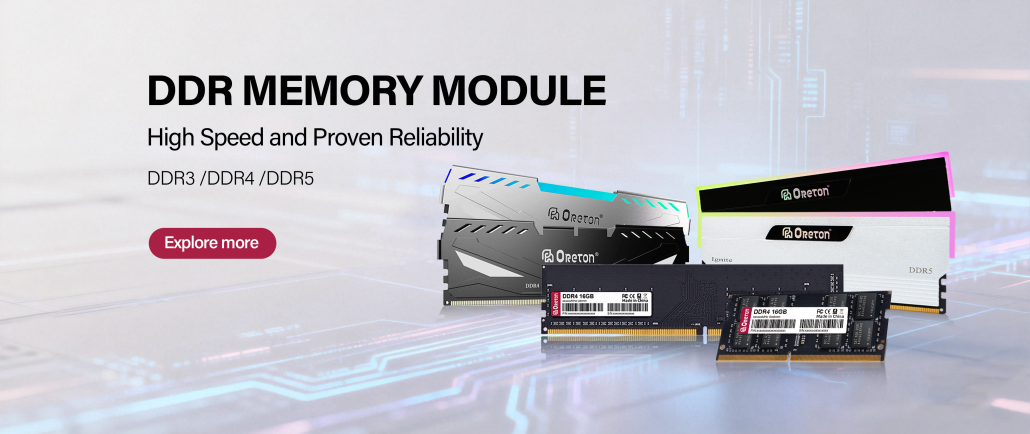
Oreton develops DDR3、DDR4 and DDR5 memory solutions focused on:
- stable high-frequency operation
- validated compatibility
- balanced real-world tuning
- reliable long-term performance
From gaming PCs to commercial deployments, Oreton prioritizes memory configurations that deliver consistent performance across diverse platforms and workloads.