





What XMP Profiles, Memory Controllers, and Real-World System Behavior Actually Mean for DDR4 and DDR5 Users

For years, higher RAM frequency has been heavily marketed as a direct path to better PC performance.
DDR5 kits now regularly advertise:
- 6000MHz
- 6800MHz
- 7200MHz
- even 8000MHz+ speeds
And with a simple click of an XMP profile, users can unlock these advertised frequencies almost instantly.
But here’s something many users discover later:
Higher RAM frequency does not always mean a more stable system.
In fact, pushing memory frequency too aggressively can sometimes introduce:
- arresti anomali casuali
- schermate blu
- boot failures
- game instability
- application errors
- inconsistent performance behavior
Especially on DDR5 platforms, memory stability has become far more complex than simply “higher MHz = better”.
1️⃣ What XMP Actually Does
XMP (Extreme Memory Profile) is essentially a pre-configured overclocking profile stored inside the RAM module.
Instead of manually tuning:
- frequenza
- tensione
- tempi
users can simply enable XMP in BIOS to apply the advertised settings automatically.
Ad esempio:
| Default JEDEC Speed | XMP Speed |
|---|---|
| DDR5-4800 | DDR5-6400 |
| DDR4-3200 | DDR4-4000 |
This makes high-performance memory much easier to use.
But there’s an important detail many users overlook:
XMP frequencies are not guaranteed equally across every CPU and motherboard combination.
2️⃣ Why Higher RAM Frequency Increases System Stress
Running memory at higher frequencies places additional stress on multiple parts of the system:
| Componente | Additional Load at Higher Frequencies |
|---|---|
| CPU memory controller (IMC) | harder signal synchronization |
| Motherboard traces | increased signal integrity challenges |
| RAM ICs | higher voltage and thermal load |
| BIOS memory training | more complex stability calibration |
As frequencies rise, maintaining clean and stable communication between CPU and memory becomes increasingly difficult.
This is especially noticeable with:
- DDR5 platforms
- computer portatili
- mini PCs
- budget motherboards
- systems with limited cooling
3️⃣ Why Two PCs Can Behave Completely Differently with the Same RAM
This is one of the biggest misunderstandings in the PC market.
A DDR5-7200 kit may run perfectly stable on one system —
while another system struggles to boot at all.
Perché?
Because RAM stability depends on:
- CPU memory controller quality (“silicon lottery”)
- motherboard topology
- Ottimizzazione del BIOS
- cooling
- memory ranks
- DIMM configuration
Even identical CPUs can have different IMC quality levels.
Esempio
| System | Result with DDR5-7200 XMP |
|---|---|
| High-end Z790 motherboard + strong IMC CPU | stable |
| Mid-range motherboard + weaker IMC CPU | arresti anomali casuali |
| Compact mini PC | thermal instability |
| Laptop platform | frequency fallback or boot failure |
4️⃣ DDR5 Made Stability More Complex Than DDR4
Rispetto alle DDR4, le DDR5 hanno introdotto:
- much higher frequencies
- more aggressive signal behavior
- gestione dell'alimentazione tramite PMIC integrato
- more sensitive timing relationships
This significantly improved bandwidth —
but also made memory tuning more demanding.
Di conseguenza:
- motherboard quality matters more
- BIOS maturity matters more
- cooling matters more
- CPU IMC quality matters more
5️⃣ Higher Frequency Does Not Always Produce Noticeable Real-World Gains
One major misconception is that higher memory frequency always creates a dramatically faster PC.
In reality:
| Aggiornamento | Real-World Difference |
|---|---|
| DDR5-4800 → 5600 | evidente |
| DDR5-5600 → 6400 | moderato |
| DDR5-6400 → 7200+ | often smaller than expected |
For many workloads:
- gioco
- office tasks
- navigazione
- consumo di contenuti
the real-world difference becomes increasingly difficult to notice beyond certain frequency levels.
Meanwhile, instability risk often increases disproportionately.
6️⃣ Why Stability Matters More Than Peak Frequency
For OEMs, businesses, and even many consumers:
- comportamento prevedibile
- low error rates
- affidabilità a lungo termine
are often more valuable than extreme benchmark numbers.
Una configurazione instabile della memoria ad alta frequenza può causare:
- corrupted files
- application crashes
- random freezes
- troubleshooting headaches
- reduced deployment reliability
This is why many enterprise and commercial systems prioritize:
- validated memory configurations
- moderate frequencies
- proven stability margins
rather than chasing maximum advertised speeds.
7️⃣ Laptops and Mini PCs Face Additional Challenges
Compact systems are especially sensitive to high-frequency RAM.
Perché?
Because they typically have:
- tighter thermal limits
- lower power budgets
- less motherboard signal optimization space
- limited BIOS tuning flexibility
Di conseguenza:
- aggressive XMP profiles may become unstable faster
- thermal throttling can affect memory behavior
- some systems automatically downclock memory for stability
8️⃣ What Users Should Actually Prioritize
Instead of focusing only on the biggest MHz number, users should consider:
✅ motherboard quality
✅ CPU memory controller capability
✅ cooling environment
✅ BIOS maturity
✅ validated compatibility
✅ balanced timings and frequency
In many real-world systems:
a slightly lower but fully stable RAM frequency often delivers a better overall experience than aggressively pushing unstable settings.
9️⃣ Conclusione finale
High RAM frequency can absolutely improve system performance —
in particolare in:
- gioco
- carichi di lavoro sensibili alla memoria
- creazione di contenuti
- high-refresh competitive environments
But frequency alone is not the full story.
As DDR5 speeds continue rising, system stability increasingly depends on:
- platform quality
- Ottimizzazione del BIOS
- memory controller capability
- gestione termica
- balanced tuning
And in many real-world situations:
Stability is ultimately more valuable than chasing the highest possible MHz number.
Informazioni su Oreton
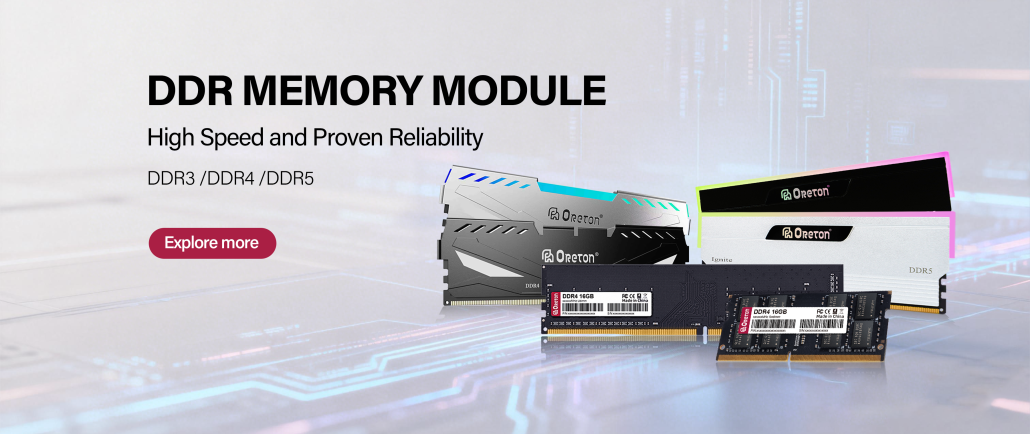
Oreton provides DDR3、DDR4 and DDR5 memory solutions designed around:
- stable performance
- compatibilità verificata
- reliable long-term operation
- messa a punto equilibrata in condizioni reali
From mainstream systems to high-performance platforms, Oreton focuses on memory configurations that deliver dependable results — not just impressive specifications on paper.