





Why Hardware Consistency Is Becoming More Important Than Peak Specifications
For many organizations, SSD procurement decisions are often driven by:
- price
- advertised speed
- capacité
- short-term cost savings
But in large-scale deployments, another factor quietly becomes far more important over time:
component consistency.
Because when SSD components change frequently — or when stability validation is insufficient — the long-term operational costs can grow far beyond the initial hardware savings.
In 2026, enterprise IT teams and OEMs are increasingly realizing that:
- predictable behavior
- stable supply
- validated firmware
- consistent NAND quality
often matter more than chasing the highest benchmark numbers.
1️⃣ Large Deployments Amplify Small Hardware Problems
In a single PC, a minor SSD issue may appear manageable.
But across:
- hundreds of office systems
- education deployments
- commercial PCs
- industrial terminals
- enterprise workstations
even small inconsistencies can scale into major operational problems.
Examples of Deployment-Level Risks
| SSD Issue | Long-Term Impact |
|---|---|
| Firmware instability | random system crashes |
| NAND inconsistency | unpredictable lifespan |
| Controller variation | inconsistent system behavior |
| Thermal instability | throttling under workload |
| Component switching | validation complexity |
At scale, these problems increase:
- maintenance workload
- troubleshooting time
- return rates
- deployment inconsistency
- operational downtime
2️⃣ Frequent Component Changes Create Hidden Risks
One growing challenge in the storage industry is:
silent component variation.
Some SSDs may retain the same product name —
while internally changing:
- NAND suppliers
- controller models
- DRAM cache configurations
- firmware behavior
This creates serious challenges for:
- OEM validation
- enterprise imaging
- IT deployment consistency
- long-term maintenance
Why This Matters
A validated SSD configuration may behave differently months later if:
- firmware changes
- NAND revisions change
- controller revisions change
This can lead to:
- unexpected instability
- compatibility inconsistencies
- different thermal behavior
- unpredictable performance scaling
3️⃣ Stability Often Matters More Than Peak Performance
Many enterprise workloads do not require:
- extreme PCIe 5.0 bandwidth
- maximum benchmark scores
- aggressive XMP-style tuning
Instead, they prioritize:
✅ reliability
✅ predictable latency
✅ sustained stability
✅ low failure rates
✅ long-term consistency
For enterprise IT teams:
avoiding downtime is usually more valuable than gaining a few extra benchmark points.
4️⃣ SSD Failure Costs Extend Far Beyond Hardware Replacement
When SSD instability appears in large deployments, the real costs often include far more than replacing the drive itself.
Hidden Operational Costs
| Issue | Indirect Cost |
|---|---|
| System downtime | productivity loss |
| IT troubleshooting | labor cost |
| Deployment delays | operational inefficiency |
| Data corruption risk | business interruption |
| Return handling | logistics overhead |
In many cases:
the operational cost of instability exceeds the initial hardware savings very quickly.
5️⃣ AI and Modern Workloads Increase Storage Pressure
Modern systems now face increasingly demanding workloads:
- AI applications
- grands ensembles de données
- background synchronization
- virtualization
- asset streaming
- création de contenu
These workloads place:
- sustained write pressure
- thermal stress
- heavier random access behavior
on SSDs continuously.
As a result:
- weak NAND validation
- unstable firmware
- inconsistent controllers
become more visible over time.
6️⃣ Validation Is Becoming a Competitive Advantage
OEMs and enterprise buyers increasingly evaluate:
- firmware consistency
- NAND sourcing stability
- thermal behavior
- long-term endurance
- compatibility validation
because deployment stability directly affects:
- operational efficiency
- support workload
- customer satisfaction
- long-term ownership cost
Ceci est particulièrement important pour :
- education projects
- government procurement
- commercial office deployments
- industrial systems
- emerging market deployments
where systems often remain active for many years.
7️⃣ Why Stable Supply Chains Matter More in 2026
The storage market continues facing:
- NAND pricing fluctuations
- supply chain adjustments
- rapid controller evolution
- AI-driven demand growth
This increases pressure on manufacturers to:
- maintain component consistency
- validate revisions carefully
- avoid uncontrolled hardware variation
For enterprise buyers:
stable supply behavior is increasingly becoming part of hardware reliability itself.
8️⃣ The Industry Is Quietly Moving Back Toward Reliability
For years, consumer marketing heavily emphasized:
- peak sequential speed
- PCIe generation
- synthetic benchmark numbers
But enterprise priorities are shifting toward:
- stabilité
- validation
- predictable lifespan
- thermal consistency
- sustained real-world behavior
Because in large deployments:
consistency scales better than peak performance.
9️⃣ Final Takeaway
In modern enterprise environments, unstable SSD components create costs that extend far beyond the hardware itself.
As deployments grow larger and workloads become heavier, organizations increasingly value:
- stable firmware
- validated NAND quality
- predictable behavior
- low return rates
- long-term consistency
And in many real-world deployments:
reliable SSD behavior ultimately delivers greater long-term value than simply chasing the lowest purchase price or highest benchmark speed.
À propos d'Oreton
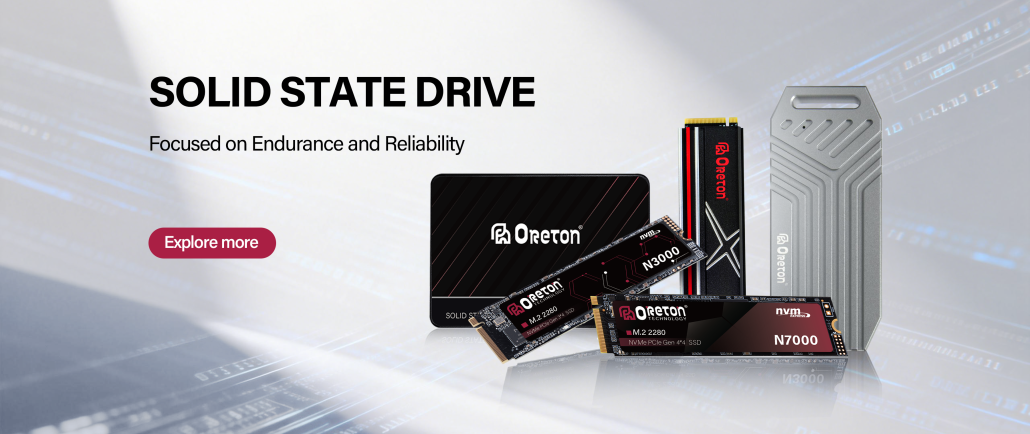
Oreton develops storage solutions designed around:
- stable component validation
- consistent firmware behavior
- reliable NAND sourcing
- balanced thermal performance
- dependable long-term operation
For OEMs, commercial deployments, and enterprise environments, Oreton focuses on storage reliability that supports scalable, predictable system performance over time.