





In modern storage systems, SSD performance is often evaluated by headline metrics like sequential read/write speeds. However, one of the most critical—but frequently overlooked—factors lies in the internal architecture of the SSD itself: whether it includes DRAM or operates as a DRAM-less design.
For system integrators, OEM buyers, and hardware designers, this distinction is not just technical—it directly influences real-world performance, stability, and total cost of ownership.
What Role Does DRAM Play in an SSD?
In a DRAM-equipped SSD, the DRAM chip functions as a high-speed cache that stores the Flash Translation Layer (FTL) mapping table.
This mapping table is essential because SSDs do not directly overwrite data like traditional HDDs. Instead, data is written to NAND flash in blocks, and the controller must constantly track where each piece of data is stored.
With DRAM:
- The controller can quickly reference this mapping table
- Data access becomes faster and more efficient
- Random read/write operations are significantly improved
👉 In practical terms, DRAM acts as a “shortcut memory” that reduces the workload on the controller and NAND flash.
What Is a DRAM-less SSD?
A DRAM-less SSD removes this dedicated memory chip to reduce cost and simplify the design.
Instead of onboard DRAM, it relies on alternative mechanisms such as:
- Host Memory Buffer (HMB) – uses a portion of the system’s RAM
- Internal caching strategies – limited buffer inside the controller
- Controller-based mapping optimizations
This design significantly lowers:
- Bill of materials (BOM) cost
- Power consumption
- Physical component complexity
However, it introduces certain trade-offs that become important under real workloads.
Performance Differences: Beyond Peak Speed
At a glance, both DRAM and DRAM-less SSDs may show similar sequential read/write speeds under ideal conditions. However, the difference becomes clear in sustained and random workloads.
DRAM SSD Performance
- Faster random access
- More consistent sustained write speeds
- Menor latencia durante la multitarea
- Better handling of large or continuous data transfers
DRAM-less SSD Performance
- Competitive performance in light workloads
- Potential slowdown during prolonged writes
- Increased dependency on system memory
- Performance fluctuations under heavy load
👉 The key difference is not just speed—but consistency over time.
Stability and Consistency: The Real Differentiator
For many real-world applications—especially in OEM and system-level deployments—stability is more important than peak performance.
DRAM-Based SSDs
- Maintain stable performance under heavy workloads
- Handle frequent read/write cycles more efficiently
- Reduce strain on NAND flash through optimized mapping
Unidades SSD sin DRAM
- More sensitive to workload intensity
- May experience noticeable performance drops when:
- cache is exhausted
- the drive is near full capacity
- large files are written continuously
👉 This is why DRAM SSDs are often preferred in systems that require predictable and stable behavior over time.
The Impact on NAND Flash and Endurance
Another important factor is how each architecture affects NAND flash wear.
Without DRAM:
- The controller performs more frequent mapping lookups
- Write amplification can increase
- NAND cells may experience higher wear over time
With DRAM:
- Efficient mapping reduces unnecessary writes
- Improved data organization
- Better endurance and lifespan in demanding scenarios
👉 This difference becomes critical in applications with frequent data updates or heavy workloads.
Cost Structure and Market Positioning
From a manufacturing perspective, DRAM is one of the more expensive components in SSD production.
DRAM SSD
- Higher cost due to additional DRAM chip
- Positioned in mid-to-high performance segments
- Typically used in systems where performance and stability are priorities
DRAM-less SSD
- Lower production cost
- Ideal for cost-sensitive markets
- Common in entry-level or high-volume deployments
This cost-performance balance is one of the main reasons both architectures coexist in the market.
Host Memory Buffer (HMB): Bridging the Gap
Modern DRAM-less SSDs often use Host Memory Buffer (HMB) technology, which allows the SSD to utilize a small portion of system RAM as a temporary mapping cache.
While HMB improves performance compared to early DRAM-less designs, it still has limitations:
- Dependency on system configuration
- Limited bandwidth compared to onboard DRAM
- Performance variability depending on workload
👉 HMB helps, but it does not fully replace the benefits of dedicated DRAM.
Real-World Use Cases: Which One Fits Better?
Choosing between DRAM and DRAM-less SSDs depends heavily on the application scenario:
DRAM SSD is better suited for:
- Workstations and professional systems
- Heavy multitasking environments
- Data-intensive applications
- Systems requiring stable long-term performance
DRAM-less SSD is better suited for:
- Entry-level PCs
- Light workloads and general storage
- Despliegues sensibles a los costes
- Applications with limited write intensity
OEM and System-Level Considerations
For OEM buyers and system integrators, the decision goes beyond simple performance metrics.
Key considerations include:
- Consistency under real workloads
- Long-term reliability
- Failure rate and return risk
- Cost structure vs performance balance
In many deployment scenarios, a stable and predictable SSD architecture can significantly reduce support and maintenance costs.
👉 This is why architectural design matters just as much as raw specifications.
Conclusion: It’s About Architecture, Not Just Speed
The difference between DRAM and DRAM-less SSDs is not simply about speed—it’s about how the drive manages data internally.
- DRAM SSDs offer better performance consistency, endurance, and reliability
- DRAM-less SSDs provide a cost-effective solution with acceptable performance for lighter workloads
The right choice depends on the application—not the benchmark.
In today’s storage landscape, understanding SSD architecture is essential for making informed decisions—especially when performance, stability, and cost all need to be balanced carefully.
Acerca de Oreton
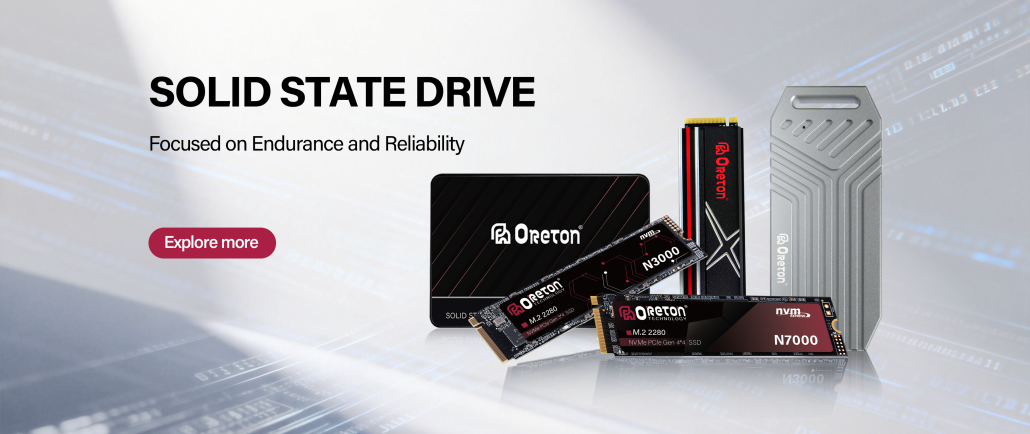
At Oreton, we understand that different applications require different storage architectures.
Our product portfolio is designed to support both:
- DRAM-less SSD solutions for cost-efficient and scalable deployment
- DRAM-based SSD options for scenarios requiring enhanced consistency and performance
More importantly, every product undergoes strict internal validation and testing processes before shipment, helping ensure stable performance and reduced failure rates in real-world usage.
For partners looking to build reliable and consistent storage solutions, Oreton focuses on delivering quality that can stand up to long-term operation—not just benchmark numbers.