





How Modern Workloads, AI, and Content Creation Are Shaping SSD Reliability Requirements
In 2026, SSD marketing often highlights:
- high sequential read/write speeds
- PCIe 4.0/5.0 bandwidth
- peak IOPS
But in real-world enterprise and professional workloads, sustained write performance has become increasingly critical.
Whether you’re managing large AI datasets, video editing projects, or content creation pipelines, short burst benchmarks don’t tell the full story. Long-term reliability, consistency, and endurance depend on how SSDs handle continuous, heavy write workloads.
1️⃣ What Sustained Write Performance Actually Means
Sustained write performance refers to the ability of an SSD to maintain write speed under prolonged, high-intensity workloads.
Factors affecting it include:
- NAND type and quality
- SLC/DRAM cache size
- Optimización del firmware
- Controller efficiency
- Gestión térmica
Por qué es importante: High sustained performance ensures consistent throughput, predictable latency, and lower risk of throttling, which is crucial for:
- AI model training
- Video rendering
- Large dataset transfers
- Enterprise storage deployment
2️⃣ The Role of AI and Content Creation Workloads
Modern AI applications and creative tools put SSDs under heavy, continuous stress:
| Workload | Typical Write Pattern | Impact on SSD |
|---|---|---|
| Video editing (4K/8K) | Escrituras secuenciales de gran volumen | Cache exhaustion → throttling |
| AI training datasets | Random + sequential writes | Sustained high IOPS → thermal stress |
| Content creation | Mixed media, constant saving | Consistent throughput required |
| Virtualization / servers | Constant writes | Higher endurance required |
These workloads reveal limitations in SSDs that look fast on short benchmarks but cannot maintain performance under sustained writes.
3️⃣ NAND Quality and Controller Matter More Than Peak Speed
Many users chase the highest advertised speed:
- DDR5 PCIe 5.0 SSDs: 7–8 GB/s sequential write
- DDR5 PCIe 4.0 SSDs: 4–5 GB/s sequential write
However, in prolonged workloads:
- Lower-quality NAND can degrade speed after SLC cache is exhausted
- Controllers may throttle to protect the SSD, dropping throughput
- Heat buildup may force thermal throttling
Resultado: Real-world performance may be only 30–50% of peak for continuous operations.
4️⃣ Thermal Design Is Critical
Sustained write performance is heavily influenced by thermal conditions:
- Compact systems, laptops, and small form-factor PCs often face limited cooling
- Prolonged write sessions generate heat → thermal throttling
- Enterprise servers and workstations benefit from heatsinks and active cooling
SSD longevity and reliability are strongly tied to thermal management during sustained writes.
5️⃣ Implications for OEMs and Enterprise Deployments
For OEMs and enterprise IT:
- High-speed bursts are insufficient for daily workloads
- Predictable, stable throughput under long-term use is more valuable than peak benchmark numbers
- Choosing SSDs with validated sustained write performance reduces:
- return rates
- tiempo de inactividad
- operational costs
This is particularly relevant in AI labs, video production, and data-intensive environments.
6️⃣ Future Trends in 2026
- SSD manufacturers are increasingly focusing on high-quality NAND y controller optimization
- Larger SLC/DRAM caches help maintain throughput
- Thermal solutions integrated at the design stage
- Enterprise-grade firmware prioritizes consistent IOPS over raw burst speed
In 2026, real-world SSD performance is defined by consistency and endurance — not just peak numbers.
7️⃣ Takeaway
Sustained write performance is becoming a key differentiator for SSDs in professional and AI-heavy environments.
While marketing focuses on maximum bandwidth, real reliability and throughput under continuous load matter most for:
- AI model training
- Video and content creation pipelines
- Enterprise deployments
Choosing SSDs based on sustained performance, NAND quality, and thermal stability ensures predictable, long-term results.
Acerca de Oreton
Oreton develops SSD solutions designed for: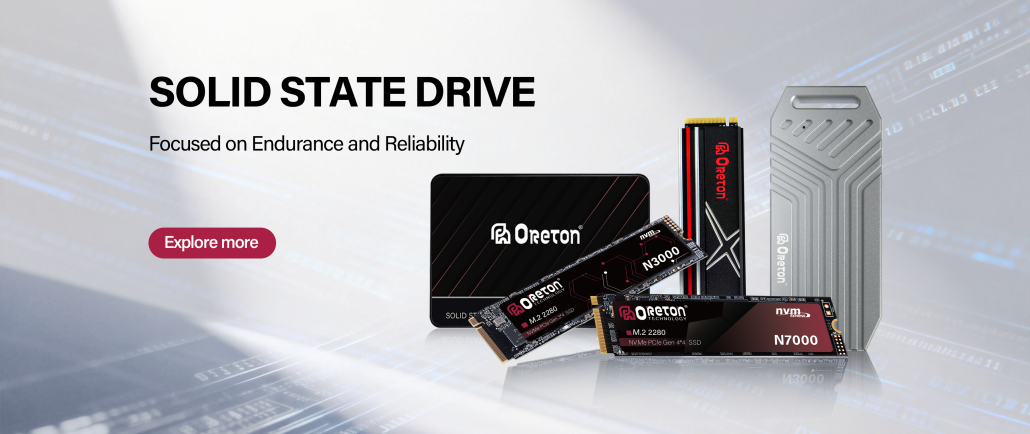
- consistent sustained write performance
- high-quality NAND flash
- optimized controllers and firmware
- thermal reliability
From content creation workstations to enterprise AI deployments, Oreton prioritizes reliable storage that maintains real-world performance under continuous use.