





Introducción
Selecting a storage supplier for an OEM project involves more than comparing product specifications and unit prices. For manufacturers integrating SSDs, DRAM modules, and other storage components into their products, the supplier’s ability to maintain product consistency, meet technical requirements, and support long-term production is equally important.
A storage component that performs well during initial testing may still create challenges if subsequent batches differ in performance, product specifications change without adequate communication, or supply becomes difficult to coordinate as production scales.
These risks become more significant in long-term OEM projects, where storage components may need to remain compatible with a particular hardware platform across multiple production cycles.
A structured supplier evaluation process helps purchasing teams, engineers, and project managers identify potential risks before committing to large-volume orders. The following factors provide a practical framework for evaluating storage suppliers for long-term OEM cooperation.
1. Evaluate Product Compatibility and Technical Capabilities
The first step is to determine whether a supplier’s products meet the technical requirements of the target application.
For SSDs, relevant specifications may include the interface, form factor, capacity, sequential and random performance, endurance ratings, operating temperature range, and power requirements. Depending on the application, buyers may also need to evaluate firmware behavior, boot compatibility, and performance under sustained workloads.
For DRAM modules, compatibility considerations include the memory generation, module type, capacity, data rate, timings, voltage, and supported system platform. A module that matches the basic capacity and speed requirements may still require additional validation on the intended motherboard or device.
Memory cards and other storage components may have different requirements depending on whether they are used in consumer electronics, surveillance equipment, industrial systems, or other embedded devices.
Before selecting a product, buyers should understand the target device’s operating environment and expected workload. Reviewing relevant storage applications and use cases can help identify the factors that need to be considered when matching storage components to specific applications.
What to verify:
- Whether the proposed products meet the project’s technical specifications.
- Whether the supplier can provide detailed and consistent product documentation.
- Whether samples are available for testing on the target platform.
- Whether technical personnel can help investigate compatibility issues.
- Whether product alternatives can be evaluated if requirements change.
The objective is to establish technical suitability before moving into large-scale procurement.
2. Assess Quality Control and Product Consistency
For long-term OEM projects, product quality should be evaluated as an ongoing process rather than a one-time sample approval.
A sample may meet all requirements, but buyers also need confidence that subsequent production batches will remain consistent with the approved configuration. Variations in components, firmware, manufacturing processes, or testing procedures may affect compatibility and performance.
A supplier evaluation should therefore examine how quality is managed throughout production, from incoming material inspection to assembly, testing, and final shipment.
For SSDs, relevant checks may include capacity verification, interface functionality, performance testing, and checks for read or write errors. DRAM modules may require compatibility checks, functional testing, and verification against the agreed specifications.
Buyers should also understand how the supplier handles nonconforming products, customer complaints, and corrective actions. Rather than relying solely on general claims about quality, ask for relevant documentation and clarify how testing procedures are applied.
Questions to ask a potential supplier:
- What quality checks are performed during production and before shipment?
- How are testing procedures defined and documented?
- How are defective products identified and handled?
- Can the supplier provide relevant quality records or test reports?
- How are recurring quality issues investigated and addressed?
- How is consistency between approved samples and subsequent production batches managed?
For additional background on a supplier’s manufacturing operations and quality approach, buyers can review the Oreton company profile and manufacturing information.
A clear quality management process can help reduce uncertainty during production and simplify communication when issues arise.
3. Verify Manufacturing and Supply Capacity
A supplier’s ability to provide samples or fulfill an initial order does not automatically demonstrate that it can support a long-term OEM project.
As demand grows, the supplier may need to coordinate component sourcing, production scheduling, testing, packaging, and delivery across multiple orders. Buyers should evaluate whether the supplier’s operational capabilities are appropriate for the project’s expected volume and production timeline.
This assessment should consider both manufacturing resources and supply planning. Production capacity alone does not guarantee that every component will be available when needed, particularly when products depend on externally sourced memory chips, controllers, or other electronic components.
It is therefore important to understand how the supplier manages demand forecasts, order commitments, component availability, and potential supply disruptions.
Key areas to evaluate include:
- Manufacturing capacity relative to forecast demand.
- Production scheduling and typical order lead times.
- Component sourcing and availability management.
- Ability to accommodate changes in order quantities.
- Coordination of repeat orders and shipment schedules.
- Communication procedures when delays or supply constraints arise.
Buyers should also clarify how much advance notice is required for significant changes in demand.
For projects with recurring production schedules, sharing forecasts and agreeing on a practical ordering process can improve planning for both parties.
When evaluating a potential SSD supplier, buyers can also review its SSD manufacturing capabilities and product information as part of the initial supplier assessment. This should be complemented by direct discussions about project-specific requirements, production schedules, and supply arrangements.
The goal is not simply to find a supplier with a large production facility. It is to find one whose manufacturing and supply arrangements are compatible with the project’s actual requirements.
4. Examine Long-Term Product Availability and Change Management
Storage components may remain part of an OEM product for several years. During that time, market conditions, component availability, and product configurations can change.
A storage supplier should be able to explain how it communicates changes that may affect an existing project.
For example, a change in the SSD controller, NAND configuration, DRAM components, or firmware may influence compatibility or performance. Even if a replacement component meets the same headline specifications, the change may still require additional testing on the customer’s platform.
For this reason, buyers should discuss product change management before production begins.
A practical process should clarify how the supplier handles component substitutions, specification revisions, product discontinuation, and alternative product proposals.
Important questions include:
- How are changes to product specifications communicated?
- Will customers be notified of changes that may affect compatibility or performance?
- Can the supplier provide samples for revalidation when necessary?
- How are approved configurations and revisions documented?
- What options are available if a component becomes difficult to source?
- Can alternative products be evaluated against the project’s original requirements?
For projects with strict hardware qualification requirements, buyers may also need to agree on a formal approval process before significant changes are introduced.
Clear change management helps prevent unexpected differences between previously validated products and later production batches.
5. Evaluate OEM and ODM Customization Capabilities
Not every OEM project requires a completely customized storage product. Some projects can use standard products, while others need adjustments to capacity, form factor, firmware, packaging, labeling, or other product attributes.
The right supplier should understand the difference between standard product selection and genuine customization requirements.
For SSD projects, customization may involve product configuration, firmware-related requirements, labeling, or packaging, depending on the supplier’s capabilities and the target platform.
For DRAM modules, buyers may need to specify module type, capacity, data rate, appearance, heat spreader design, or packaging. Other storage products may require different capacities, product configurations, labels, or packaging arrangements.
However, not every supplier supports every customization option. Buyers should confirm which requirements can be accommodated, which require additional development, and which depend on component availability or minimum order quantities.
Before starting an OEM or ODM project, clarify:
- Which product parameters can be customized.
- Which requirements are supported by existing products.
- Whether engineering samples or additional validation are necessary.
- Applicable minimum order quantities and development lead times.
- Packaging, labeling, and branding requirements.
- How customized configurations will be documented and maintained.
A supplier’s customization capability should be evaluated against the actual project requirements rather than the breadth of its marketing claims.
For a closer look at available customization options and the OEM/ODM cooperation process, review the Oreton OEM storage solutions page.
Clear specifications and documented approval procedures help both parties establish realistic expectations before production begins.
6. Compare Total Cost, Not Just Unit Price
Unit price is an important purchasing factor, but it does not represent the full cost of using a storage component in an OEM product.
A lower-priced component may require more qualification work, create additional compatibility issues, or involve longer delivery times. These factors can increase the overall cost of a project even if the initial purchase price is attractive.
A more comprehensive evaluation considers the cost of purchasing, testing, integrating, maintaining, and replacing the component throughout the project lifecycle.
For example, if a storage component fails to meet the target platform’s requirements during validation, the project may need additional engineering time, replacement samples, or further testing. If production batches are inconsistent, the customer may also need to increase incoming inspection or troubleshoot devices in the field.
These costs are not always visible in the original quotation.
When comparing suppliers, consider:
- Unit price at different order quantities.
- Sample and qualification costs.
- Minimum order quantities.
- Packaging and customization costs.
- Shipping arrangements and delivery terms.
- Expected quality-related costs.
- Warranty terms and defect-handling procedures.
- Potential costs associated with component changes.
The most suitable supplier is not necessarily the one offering the lowest initial price. It is the one that provides an appropriate balance of cost, technical suitability, quality, and supply reliability for the project.
7. Assess Technical Support and Communication
Technical support is particularly important when storage products are integrated into a customer’s own hardware or software environment.
During qualification, buyers may need assistance interpreting specifications, identifying compatibility issues, or understanding performance differences between test conditions. During production, they may need to coordinate product revisions, investigate quality concerns, or adjust delivery plans.
A supplier’s communication process can therefore affect both engineering efficiency and project execution.
When evaluating a supplier, buyers should consider whether technical questions are handled by personnel with relevant product knowledge, whether information is documented clearly, and whether issues can be escalated through an established process.
It is also useful to assess how the supplier responds when a problem cannot be resolved immediately. A clear investigation process, realistic timelines, and regular updates are generally more useful than unsupported assurances.
Areas to evaluate include:
- Availability of relevant technical documentation.
- Responsiveness to specification and compatibility questions.
- Ability to support sample testing and issue investigation.
- Clarity of communication regarding production and delivery.
- Procedures for handling complaints and corrective actions.
- Continuity of communication throughout the project lifecycle.
For long-term cooperation, buyers should look for a supplier that can maintain clear communication from initial evaluation through repeat orders and ongoing product support.
8. Review Documentation, Traceability, and Risk Management
Documentation helps ensure that both parties understand what has been approved, what has been delivered, and how potential issues should be handled.
For OEM projects, incomplete or inconsistent records can complicate troubleshooting and make it difficult to compare production batches.
The documentation required will vary by product and application, but buyers should establish a clear set of records before production begins.
These may include approved specifications, sample test results, product revision information, purchase order requirements, shipment records, and relevant quality documentation.
Where the application requires stronger traceability, buyers can also discuss batch identification and the availability of production or testing records.
Risk management should cover more than product defects. It may also include component shortages, unexpected changes, delivery delays, and the availability of alternative configurations.
A practical documentation and risk review should address:
- Approved product specifications and revisions.
- Sample qualification results.
- Relevant quality inspection and test records.
- Batch identification and traceability arrangements.
- Procedures for reporting and investigating defects.
- Communication requirements for product changes.
- Contingency plans for supply interruptions.
Buyers should determine which records are essential to their own quality system and contractual requirements, then confirm that the supplier can support those needs.
Not every project requires the same level of documentation. The appropriate approach depends on the application, the consequences of failure, and the customer’s internal controls.
9. Start with a Structured Qualification Process
Before committing to large-volume orders, buyers should establish a qualification process that reflects the technical and commercial risks of the project.
A structured process makes it easier to compare suppliers objectively and identify issues before they affect production.
A typical process can include the following stages.
Stage 1: Define project requirements
Document the target application, technical specifications, forecast demand, operating conditions, delivery schedule, and any customization requirements.
Stage 2: Screen potential suppliers
Review product scope, relevant experience, manufacturing arrangements, quality processes, technical support, and ability to meet the project’s requirements.
Stage 3: Evaluate samples
Test representative samples on the intended platform under relevant operating conditions. Record the configuration, test environment, results, and any issues identified.
Stage 4: Review operational readiness
Discuss production planning, order lead times, quality documentation, change management, and communication procedures.
Stage 5: Approve the initial production arrangement
Confirm the approved product configuration, acceptance criteria, packaging requirements, delivery terms, and procedures for managing deviations.
Stage 6: Monitor ongoing performance
Review delivery performance, product consistency, defect trends, issue resolution, and any changes that could affect the project.
This process should be proportionate to the application. A low-risk consumer product may require a simpler evaluation than an industrial device expected to operate continuously in a demanding environment.
The key is to establish clear acceptance criteria and ensure that both parties understand how the product will be evaluated before production begins.
10. Build a Long-Term Supplier Relationship Around Clear Requirements
A successful OEM relationship depends on more than the first shipment. It requires both parties to maintain alignment as production requirements, market conditions, and product configurations evolve.
Buyers can support this process by providing realistic demand forecasts, documenting technical requirements, communicating changes early, and sharing relevant information when issues arise.
Suppliers, in turn, should communicate product and supply changes clearly, maintain agreed quality procedures, and provide timely updates on production and delivery.
Regular reviews can help identify emerging risks before they affect production. These reviews may cover forecast accuracy, delivery performance, quality trends, unresolved technical issues, and potential changes to approved products.
It is also useful to establish clear responsibilities for engineering approval, purchasing decisions, quality investigations, and delivery coordination.
A long-term relationship works best when expectations are documented and performance is evaluated against agreed requirements rather than informal assumptions.
Conclusión
Evaluating a storage supplier for a long-term OEM project requires a broader perspective than comparing specifications and quotations.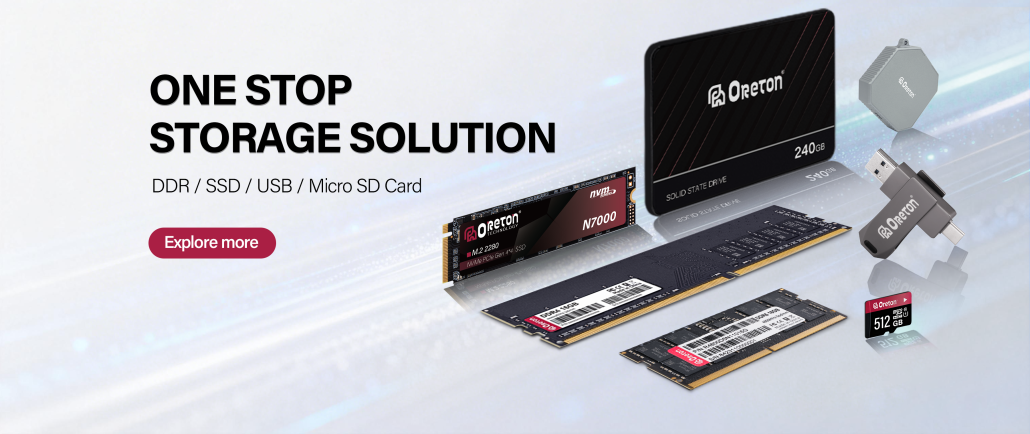
Product compatibility, quality control, manufacturing capacity, supply planning, change management, customization capabilities, technical support, and documentation all contribute to the suitability of a supplier.
The relative importance of these factors depends on the application. A high-volume consumer device may place greater emphasis on cost and scalable production, while an industrial system may require more extensive validation, traceability, and long-term product planning.
By establishing clear requirements, testing samples on the target platform, and agreeing on quality and communication procedures before mass production, buyers can make more informed sourcing decisions and reduce avoidable project risks.
For OEM brands, device manufacturers, and system integrators, the objective is not simply to purchase storage components. It is to establish a supply arrangement that can support the product throughout its intended lifecycle.
Working with a Storage Supplier for OEM Projects
Oreton supplies SSD and DRAM storage solutions for OEM/ODM projects, distributors, and system integrators. Buyers evaluating a potential manufacturing partner can review the Oreton website for an overview of its storage product categories and business.
When preparing for a new project, customers can discuss product specifications, application requirements, customization needs, and supply arrangements to determine whether a proposed solution fits their requirements.
For project-specific questions or product inquiries, visit the Oreton contact page.