





Choosing the right OEM memory supplier involves more than comparing capacity and frequency. Here’s what really determines the quality, reliability, and long-term performance of a DDR memory module.
As demand for desktops, laptops, Mini PCs, industrial computers, and AI-ready systems continues to grow, OEM memory modules have become an important part of many commercial hardware projects. Whether you’re launching your own memory brand, building PCs for customers, or integrating memory into embedded systems, selecting the right OEM partner is just as important as selecting the right specifications.

Many buyers begin by comparing capacity, speed, and price. While these factors are certainly important, they tell only part of the story. Two DDR memory modules may share the same specifications on paper, yet deliver very different levels of compatibility, stability, and long-term reliability.
Behind every high-quality OEM memory module is a combination of carefully selected components, precise manufacturing, thorough validation, and consistent quality control.
In this article, we’ll explore the key factors that define a reliable OEM DDR memory module and what buyers should consider when evaluating suppliers.
1. High-Quality DRAM Chips Are the Foundation
Every memory module begins with its DRAM chips.
These chips temporarily store data that the processor needs to access quickly, making them the core component that directly influences memory performance and stability.
However, not all DRAM chips are identical.
Manufacturers may source chips from different suppliers, production batches, or quality grades. Reputable OEM manufacturers carefully evaluate and match DRAM chips to ensure consistent electrical characteristics and stable performance across every module.
For large commercial deployments, consistency is often more valuable than chasing the highest advertised frequency. Systems built with well-matched components are less likely to experience compatibility issues, unexpected errors, or inconsistent performance.
For OEM customers, asking how DRAM chips are selected and validated is just as important as asking about memory capacity.
2. PCB Quality Plays a Bigger Role Than Many Buyers Realize
While DRAM chips receive most of the attention, the Printed Circuit Board (PCB) is equally important.
The PCB connects every component on the memory module and serves as the pathway for electrical signals.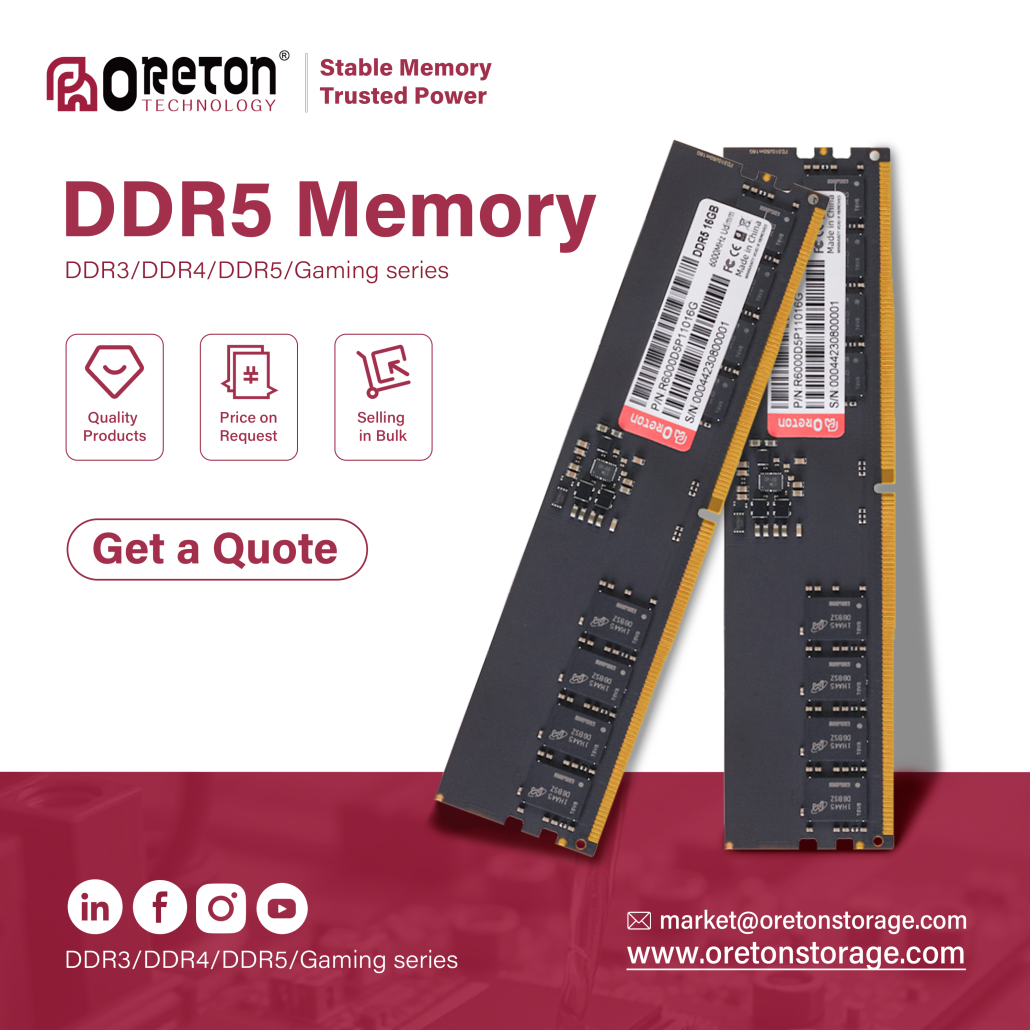
A well-designed PCB helps ensure:
- Stable signal transmission
- Better electrical integrity
- Reduced interference
- Consistent performance under continuous workloads
- Long-term reliability
High-quality PCBs are manufactured with tighter tolerances and carefully controlled production processes. This becomes particularly important in commercial systems that operate for long hours every day.
Although the PCB is rarely visible after installation, it remains one of the key factors behind a reliable memory module.
3. SPD Programming Ensures Proper System Recognition
One of the most overlooked aspects of OEM memory is SPD (Serial Presence Detect) programming.
SPD is a small memory chip on every RAM module that stores essential configuration information, including:
- Memory capacity
- Operating frequency
- Timing values
- Voltage
- Supported profiles
When a computer starts, the motherboard reads this information to determine how the memory should operate.
Accurate SPD programming helps ensure that the memory module is recognized correctly across different platforms and can operate according to its designed specifications.
Improper SPD programming may lead to issues such as:
- Boot failures
- Incorrect memory speeds
- Compatibility problems
- Reduced system stability
For OEM customers shipping products to different markets, proper SPD programming is an important part of ensuring a consistent user experience.
4. Comprehensive Validation and Compatibility Testing
Manufacturing a memory module is only part of the process.
Before reaching customers, high-quality OEM memory should undergo extensive testing.
A comprehensive validation process often includes:
- Functional testing
- Compatibility verification
- Stability testing
- Burn-in testing
- Platform validation
- Long-duration stress testing
Because customers use different processors, motherboards, and operating systems, compatibility testing across multiple hardware platforms helps reduce deployment risks.
For system builders and enterprise customers, reliable validation means fewer installation issues, lower return rates, and reduced technical support costs.
5. Heatspreader Design Is About More Than Appearance
Heatspreaders are often associated with gaming memory because of their distinctive appearance.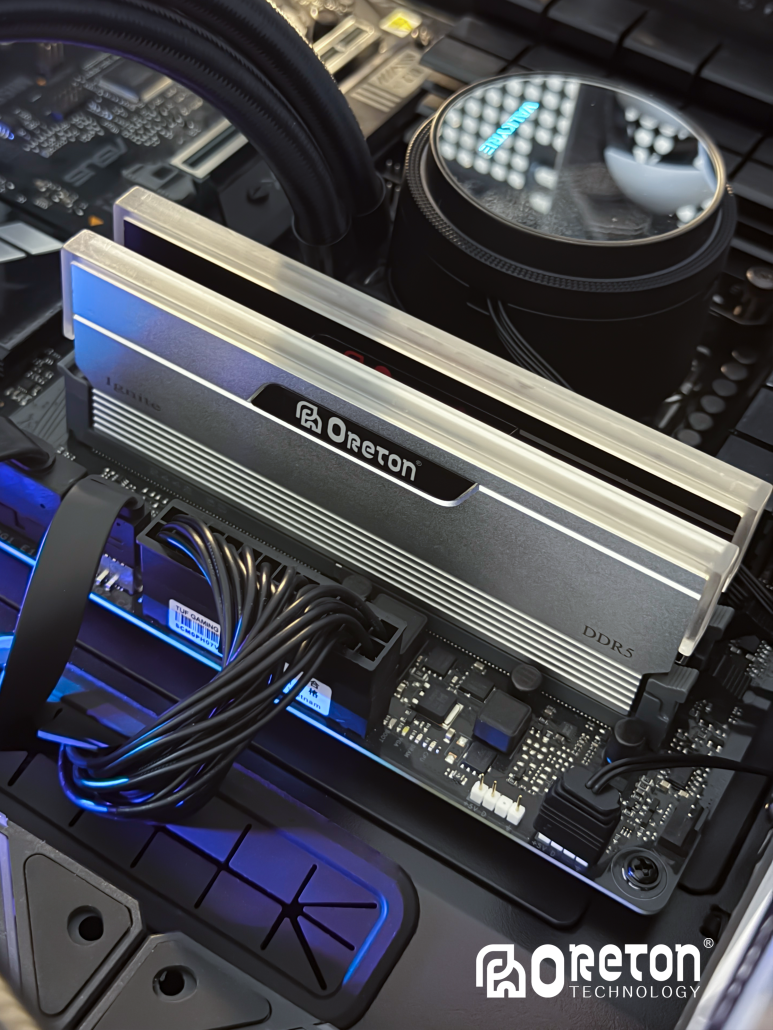
However, for OEM projects, they serve several practical purposes beyond aesthetics.
A well-designed heatspreader can help:
- Improve heat dissipation during sustained workloads
- Protect the PCB from minor physical damage
- Increase structural rigidity
- Support long-term reliability in demanding environments
From a business perspective, heatspreaders also create opportunities for product differentiation.
OEM customers frequently customize:
- Colors
- Surface finishes
- Brand logos
- Labels
- Product series designs
A distinctive heatspreader allows a memory module to reflect a customer’s own brand identity while helping products stand out in competitive markets.
For brands looking to build recognition, customization is about much more than appearance—it is part of the overall product strategy.
6. Manufacturing Consistency Is Essential for OEM Projects
For individual consumers, purchasing one memory module is relatively simple.
OEM customers, however, often purchase hundreds or even thousands of units over an extended period.
In these situations, consistency becomes one of the most valuable qualities a supplier can provide.
Consistent manufacturing helps ensure that every shipment offers the same:
- Performance
- Compatibility
- Component quality
- Firmware configuration
- Appearance
This consistency simplifies deployment, reduces warranty claims, and makes future expansion easier.
Reliable manufacturing processes also allow system builders to standardize hardware across different projects, making inventory management and technical support more efficient.
7. Customization Goes Beyond the Memory Module
Many buyers think OEM services simply involve placing a logo on an existing product.
In reality, modern OEM and ODM memory solutions offer much greater flexibility.
Depending on project requirements, manufacturers may support customization of:
- Capacity options
- Operating frequency
- Heatspreader design
- Product labels
- Retail packaging
- Brand identity
- SPD configuration
- Product documentation
This flexibility enables partners to develop products that align with different customer segments, market positioning, and regional preferences without having to build manufacturing capabilities from scratch.
Choosing an OEM Memory Partner Is About Long-Term Value
Selecting an OEM memory supplier should never be based solely on price or specifications.
A dependable partner should provide:
- Stable component sourcing
- Comprehensive quality control
- Consistent manufacturing
- Broad platform compatibility
- Flexible customization
- Reliable technical support
- Long-term supply capability
These factors help reduce operational risks while ensuring products continue to perform reliably throughout their lifecycle.
For businesses building their own memory brand or integrating memory into commercial systems, choosing the right supplier can have a direct impact on product quality, customer satisfaction, and long-term business growth.
Conclusion
A good OEM memory module is the result of much more than fast specifications or attractive packaging. It is built on carefully selected DRAM chips, high-quality PCB design, accurate SPD programming, comprehensive validation, thoughtful thermal design, and consistent manufacturing processes.
For OEM customers, understanding these factors makes it easier to evaluate suppliers beyond price alone and build products that deliver reliable performance in real-world applications.
At Oreton, we provide OEM and ODM DDR memory solutions designed to meet the needs of system builders, distributors, and global partners. Through strict component selection, extensive compatibility testing, flexible customization options, and consistent quality control, we help customers develop reliable memory products that support a wide range of commercial and industrial applications.