





Introduction
When shopping for DDR4 or DDR5 memory, most users focus on specifications such as capacity, frequency, and latency. However, there is another technical characteristic that can influence memory performance: memory rank.
Terms like Single Rank and Dual Rank often appear in product specifications, yet many users are unsure what they actually mean or how they affect real-world performance.
Does Dual Rank memory always perform better? Is Single Rank better for gaming? And how does memory rank relate to Dual Channel configurations?
The answer is more nuanced than many people expect.
In this article, we’ll explain what memory rank is, how it affects system performance, and what users, system builders, and OEM customers should consider when choosing DDR memory.
What Is Memory Rank?
A memory rank is a group of DRAM ICs (memory chips) that the memory controller accesses simultaneously.
Think of a rank as an independently addressable block of memory on a DIMM. A memory module may contain:
- Single Rank (1R) – One group of DRAM chips
- Dual Rank (2R) – Two independent groups of DRAM chips
Although a Dual Rank module contains two ranks, only one rank is actively accessed at a time. The memory controller switches between them, allowing it to better utilize idle cycles and improve overall efficiency.
It’s important to note that memory rank is different from the number of chips on a module. A module with chips on both sides is not necessarily Dual Rank, and a module with chips on one side is not always Single Rank.
The actual rank configuration depends on the module’s internal electrical design.
How Single Rank and Dual Rank Memory Work
The CPU’s integrated memory controller communicates with memory one rank at a time.
With Single Rank memory, there is only one available group of memory chips.
With Dual Rank memory, the controller can alternate between two groups, reducing waiting time during certain operations and improving memory utilization.
This interleaving allows the controller to schedule memory accesses more efficiently, particularly during workloads that continuously move large amounts of data.
Rather than increasing memory frequency, Dual Rank improves the way available bandwidth is used.
Performance Differences in Real-World Applications
One of the biggest misconceptions is that Dual Rank memory always delivers dramatically higher performance.
In reality, the performance improvement depends heavily on the workload.
Gaming
Most modern games benefit more from:
- GPU performance
- CPU architecture
- Memory frequency
- Memory latency
In many gaming scenarios, the performance difference between Single Rank and Dual Rank memory is relatively small.
Some CPU-intensive games may see modest improvements, but the difference is rarely dramatic.
Content Creation
Applications such as:
- Video editing
- 3D rendering
- Photo processing
often transfer large amounts of data.
These workloads can benefit more from Dual Rank memory because the memory controller can make better use of available bandwidth.
Multitasking
Running multiple applications simultaneously also places greater demand on system memory.
Dual Rank configurations may improve responsiveness when switching between applications or handling heavy multitasking.
Professional Workstations
Engineering software, virtualization, software development, and scientific computing often perform continuous memory operations.
In these environments, Dual Rank memory can provide more consistent performance improvements than in typical gaming workloads.
Does Dual Rank Mean Higher Memory Bandwidth?
Not exactly.
Memory bandwidth is influenced by several factors, including:
- Memory frequency
- Memory channels
- CPU memory controller
- Memory rank
Dual Rank does not double memory bandwidth.
Instead, it improves memory efficiency by allowing the memory controller to better schedule operations between two independent ranks.
As a result, some applications experience improved throughput without increasing memory frequency.
Single Rank vs Dual Rank: Advantages and Considerations
Single Rank Memory
Advantages:
- Lower electrical load on the memory controller
- Often easier to achieve very high memory frequencies
- Suitable for gaming-focused systems and general desktop use
Best suited for:
- Everyday computing
- Gaming PCs
- Entry-level systems
Dual Rank Memory
Advantages:
- Improved memory utilization
- Better performance in memory-intensive workloads
- More efficient data scheduling
Best suited for:
- Content creation
- Professional workstations
- Heavy multitasking
- Productivity-focused systems
The best choice depends on the intended application rather than assuming one configuration is universally better.
Single Rank, Dual Rank and Modern CPUs
Modern Intel and AMD processors include integrated memory controllers designed to support a variety of memory configurations.
However, actual performance depends on the balance between:
- CPU architecture
- Memory frequency
- CAS latency
- Memory capacity
- Rank configuration
- Motherboard design
This is why identical memory modules can perform differently on different platforms.
Professional memory validation across multiple platforms remains an essential part of memory development.
Don’t Confuse Dual Rank with Dual Channel
One of the most common misunderstandings is treating Dual Rank and Dual Channel as the same thing.
They are two completely different concepts.
Dual Rank describes the internal organization of DRAM chips on a memory module.
Dual Channel describes how the CPU communicates with two memory modules simultaneously through separate memory channels.
For example:
- One Dual Rank module can operate in Single Channel.
- Two Single Rank modules can operate in Dual Channel.
- Two Dual Rank modules can also operate in Dual Channel.
Because they improve performance in different ways, rank configuration and channel configuration should be considered separately when building a system.
Choosing the Right Memory Configuration
When selecting DDR4 or DDR5 memory, buyers should evaluate the complete system rather than focusing on a single specification.
Important considerations include:
- Intended workload
- CPU capabilities
- Motherboard compatibility
- Required capacity
- Memory frequency
- Memory latency
- Rank configuration
- Channel configuration
For many users, increasing memory capacity may provide a greater performance improvement than changing from Single Rank to Dual Rank.
The best memory configuration is always the one that matches the workload and platform requirements.
Oreton’s Approach to Reliable Memory Performance
At Oreton, we understand that memory performance depends on much more than frequency specifications.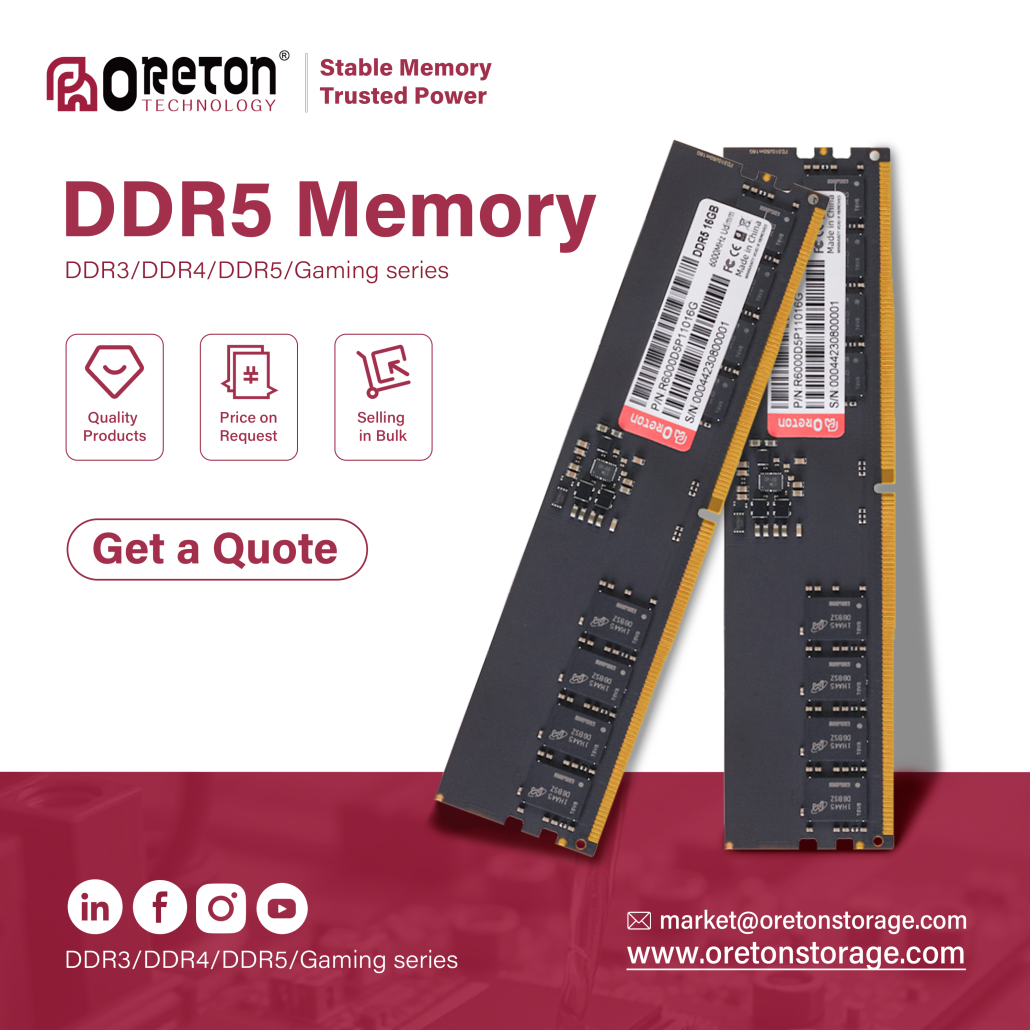
Reliable DDR memory is built through careful component selection, precision manufacturing, and comprehensive validation.
Our DDR4 and DDR5 memory modules are developed using carefully selected DRAM ICs and undergo compatibility testing across mainstream Intel and AMD platforms to ensure stable operation in a wide range of applications.
For users building dual-channel systems, Oreton also offers matched dual-module memory kits. Each kit is validated to ensure both modules operate together with consistent specifications, helping deliver stable Dual Channel performance, simplified installation, and dependable compatibility for gaming PCs, professional workstations, and OEM projects.
By combining quality manufacturing with rigorous testing, Oreton provides memory solutions designed for consistent performance and long-term reliability.
Conclusion
Single Rank and Dual Rank memory each have their own advantages, and neither is universally better than the other.
While Dual Rank memory can improve efficiency in certain workloads, overall system performance is determined by the combination of memory capacity, frequency, latency, CPU architecture, and channel configuration.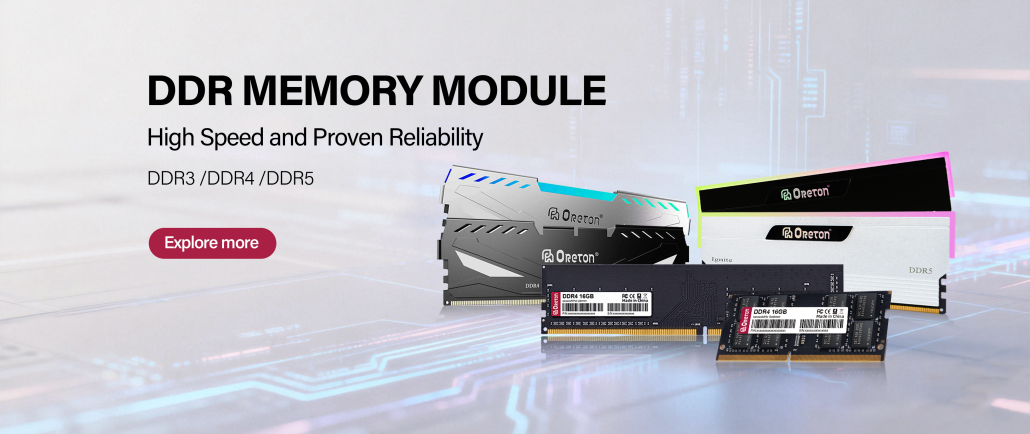
Understanding these factors allows users and professional buyers to make more informed decisions when selecting memory solutions.
At Oreton, we believe dependable memory begins with more than specifications. From DRAM IC selection and module design to platform validation and matched memory kit testing, every stage of development is focused on delivering stable, compatible, and reliable performance for users and global partners alike.