





PCIe 5.0 entered the consumer ecosystem with Intel Alder Lake motherboards in late 2021, but real consumer-grade PCIe 5.0 SSDs did not appear until 2023. By 2024–2025, firmware and controller maturity made Gen5 drives viable for high-end systems, yet OEM and system integrators discovered that the true performance benefits depend heavily on platform, workload, and system design, not just the raw specification.
This article dives into what PCIe 5.0 really delivers today, when it is needed, and how other storage standards fit into the current market landscape.
1. PCIe 5.0 Performance: What Actually Matters
Sequential Workloads — The Main Use Case
PCIe 5.0’s strength lies in large sequential transfers. Scenarios where Gen5 delivers clear benefits include:
-
4K/8K video editing: RAW, ProRes, BRAW workflows
-
3D and VFX pipelines: Massive textures, asset libraries
-
Machine learning / AI model loading: Large model checkpoints (tens to hundreds of GBs)
-
Data-intensive engineering workflows: CAD, simulations, large database snapshots
-
High-speed local backup & transfer of multi-hundred GB batches
For these applications, a Gen5 SSD can reduce transfer times by 40–70% compared to Gen4, and multiple times faster than Gen3.
Random Workloads — Marginal Gains
Most consumer workloads — OS boot, app launches, browsing, gaming — rely on random I/O. Here:
-
Queue depths are typically very low (QD1–4)
-
CPU and memory latency dominate
-
Many apps are not optimized for ultra-high sequential throughput

Result: Gen5 shows minimal real-world improvement over Gen4 for random tasks.
2. Platforms Capable of Real Gen5 Performance
To reach advertised PCIe 5.0 speeds, the entire platform must support it. Factors include:
-
CPU PCIe lanes: Only some CPUs provide full x4 lanes at Gen5 speed for storage.
-
Motherboard M.2 slot routing: Secondary slots often fall back to Gen4/Gen3 depending on chipset connections.
-
Thermal management: Gen5 drives are hotter. Active airflow or large heatsinks are often required.
-
Firmware maturity: Early 2023 drives had throttling or stability issues; modern drives are much more reliable.
-
Workload suitability: Only workloads saturating sequential bandwidth will fully utilize Gen5.
Summary: Gen5 SSDs are high-performance components in well-engineered systems, not plug-and-play accelerators.
3. Who Actually Needs PCIe 5.0?
✅ Must-have Scenarios
-
Professional video and film studios handling RAW 4K/8K
-
3D/VFX content creators working with multi-terabyte projects
-
AI/ML engineers with large-scale model training or inference
-
Enterprise developers performing high-speed local data replication
⚠ Situational Benefit
-
Enthusiast PC builders
-
Some gaming setups with asset-heavy games
-
Developers with large project assets
❌ Little or No Benefit
-
Office and SMB desktops
-
Education or general productivity PCs
-
Mini PCs / thin clients with limited thermal capacity
-
Platforms where Gen5 lanes are limited or unavailable
4. Reaching True Gen5 Speeds in Practice
To leverage Gen5 in 2025, system designers must ensure:
-
Correct M.2 slot selection: CPU-direct x4 Gen5 slot
-
Dedicated PCIe lanes: Avoid lane sharing with GPU or expansion cards
-
Adequate cooling: Passive heatsinks may suffice in desktops; laptops often need active cooling
-
Platform validation: Test drive in full system configuration, not in isolation
-
Workload alignment: Only large sequential transfers justify Gen5 over Gen4
Takeaway: Gen5 is a system-level performance upgrade, not just a faster SSD.
5. SATA, PCIe 3.0, 4.0: Current Market Overview
Even as Gen5 emerges, other interfaces maintain relevance:
-
SATA SSDs (6 Gbps)
-
Stable, cost-effective, ideal for legacy systems or bulk storage
-
Still dominates office PCs, embedded systems, and cost-sensitive deployments
-
-
PCIe 3.0 NVMe
-
Widely available and compatible
-
Excellent for everyday desktop, laptop, and mainstream workstation workloads
-
Dominates consumer and SMB markets where cost-performance ratio is critical
-
-
PCIe 4.0 NVMe
-
Current “mainstream high-performance” standard
-
Balanced performance, firmware maturity, thermal efficiency
-
Preferred choice for high-end gaming, creative workstations, and OEM deployments where Gen5 is overkill
-
-
PCIe 5.0 NVMe
-
Niche, high-end segment
-
Required only for workloads fully saturating sequential bandwidth and supported by the platform
-
6. Conclusion: PCIe 5.0 Is a Specialized Tool, Not a Universal Upgrade
The PCIe 5.0 transition between 2022 and 2025 taught the industry:
-
Raw bandwidth isn’t enough — platform design and cooling are decisive
-
Workload dictates necessity — only data-heavy sequential tasks truly benefit
-
Other standards remain relevant — SATA, PCIe 3.0, and 4.0 cover most real-world scenarios efficiently
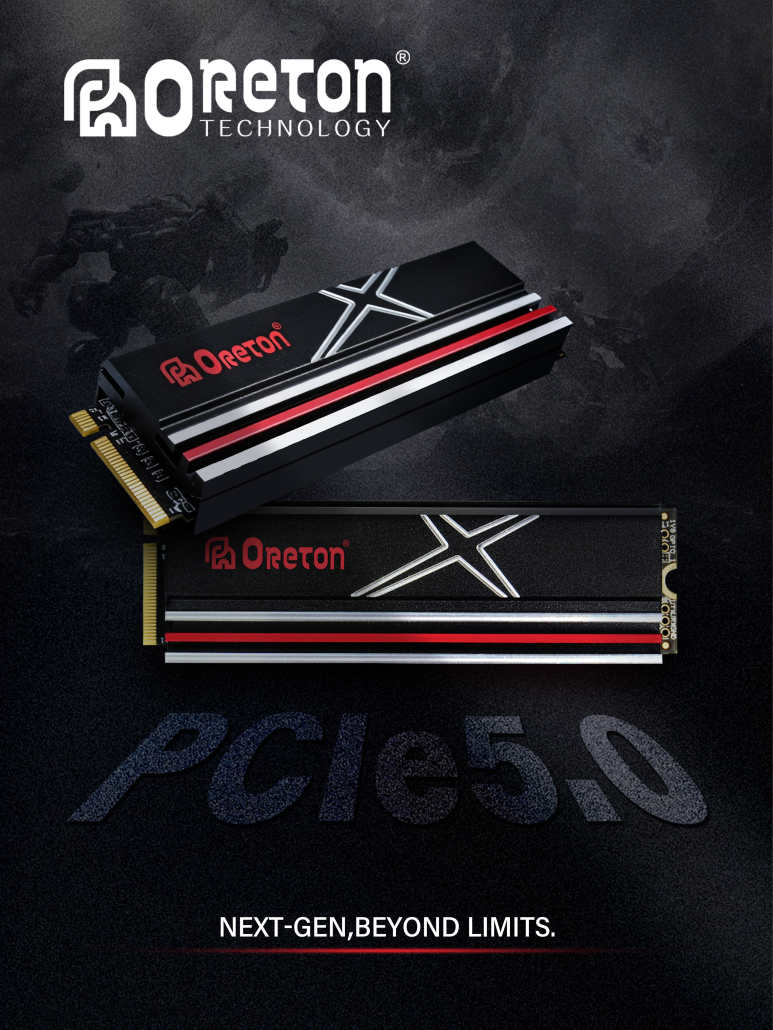
Practical rule: Choose the right interface for the system, not the fastest spec. Gen5 shines only in well-engineered, high-bandwidth environments.
At Oreton, we observe these trends firsthand. From SATA to PCIe 5.0, our solutions ensure stable supply, reliable performance, and compatibility across platforms, helping OEMs and system integrators build storage solutions that meet real-world needs.