





Introduction
In the memory industry, product quality is measured by far more than capacity or operating frequency. For distributors, OEM customers, and system integrators, consistency is just as important as performance.
Whether a memory module is installed in a gaming PC, an industrial computer, or a commercial workstation, customers expect every module to deliver the same stability, compatibility, and reliability—regardless of when it was manufactured.
Achieving this level of consistency is only possible through a comprehensive quality control (QC) system that covers every stage of production, from incoming component inspection to final product validation.
At Oreton, quality control is not limited to the final inspection before shipment. It is integrated throughout the entire manufacturing process to ensure every DDR4 and DDR5 memory module meets the same high standards.
Why Quality Control Matters in Memory Manufacturing
A memory module is made up of multiple precision components, including:
- DRAM ICs
- PCB
- PMIC (DDR5)
- SPD EEPROM
- Passive electronic components
Even if two modules share the same specifications, differences in component quality or manufacturing processes can affect:
- System stability
- Compatibility
- Performance consistency
- Long-term reliability
- Product lifespan
For manufacturers, quality control is about minimizing variation and ensuring that every production batch performs consistently under real-world conditions.
Quality Begins with Component Inspection
Every reliable memory module starts with carefully selected components.
Before production begins, incoming materials undergo inspection to verify that they meet manufacturing requirements.
DRAM IC Verification
As the core component of a memory module, DRAM ICs must be checked for:
- Manufacturer identification
- Part number verification
- Capacity and organization
- Speed grade
- Physical condition
- Batch information
Whether using components from Samsung, SK hynix, Micron, or other qualified suppliers, verifying component authenticity and specifications helps ensure consistent product quality.
PCB Inspection
The PCB provides the electrical foundation for the entire memory module.
Inspection typically includes:
- PCB dimensions
- Surface quality
- Copper trace integrity
- Pad alignment
- Layer structure
- Electrical continuity
A high-quality PCB contributes to stable signal transmission and long-term reliability.
Process Control During SMT Assembly
Surface Mount Technology (SMT) is one of the most critical stages in memory module production.
During this process, DRAM ICs and other electronic components are accurately mounted onto the PCB.
To maintain manufacturing consistency, automated inspection systems are commonly used throughout production.
Solder Paste Inspection (SPI)
Before component placement, SPI verifies:
- Solder paste volume
- Position accuracy
- Printing consistency
This helps prevent soldering defects before assembly begins.
Automated Optical Inspection (AOI)
After reflow soldering, AOI systems inspect every module for potential issues such as:
- Missing components
- Incorrect component placement
- Solder bridges
- Insufficient solder
- Alignment deviations
Automated inspection significantly improves production accuracy while reducing the possibility of human error.
SPD Programming and Verification
Every memory module contains an SPD (Serial Presence Detect) chip that stores configuration information used by the motherboard.
This includes:
- Capacity
- Frequency
- Timing parameters
- Operating voltage
- Manufacturer information
After programming, the SPD data is verified to ensure that each module reports accurate information and operates correctly across supported platforms.
For performance memory products, XMP or EXPO profiles are also validated to ensure stable operation at their rated specifications.
Functional Testing and Stability Validation
Once assembly is complete, every memory module undergoes functional testing before entering the next production stage.
Typical validation includes:
- Read and write verification
- Memory addressing tests
- Error detection
- Continuous stress testing
- Performance validation
These tests help confirm that every module functions correctly before shipment.
Burn-In and Reliability Testing
To improve long-term reliability, selected products or production batches may undergo burn-in testing.
During burn-in, memory modules operate continuously under controlled conditions to identify potential early-life failures.
Depending on product requirements, additional testing may include:
- High-temperature operation
- Low-temperature validation
- Voltage tolerance testing
- Long-duration stability testing
These procedures help verify product reliability under demanding operating environments.
Platform Compatibility Validation
A memory module must perform consistently across a wide range of hardware platforms.
Compatibility validation is therefore an essential part of quality control.
Testing typically includes systems based on:
- Intel platforms
- AMD platforms
- Different motherboard chipsets
- Various BIOS versions
For high-performance products, compatibility with XMP and EXPO profiles is also verified to ensure stable operation at supported frequencies.
This process helps reduce compatibility issues for distributors, OEM customers, and end users.
Batch Traceability and Production Management
Quality control does not end when a product passes testing.
Modern manufacturing also relies on comprehensive traceability systems.
Each production batch can be associated with information such as:
- DRAM IC supplier
- Component batch
- Production date
- Manufacturing records
- Test results
- Product serial number
If quality analysis or after-sales support is required, this information allows manufacturers to quickly identify the affected production batch and review the corresponding manufacturing records.
For OEM customers managing long-term projects, batch traceability is particularly valuable for maintaining consistent product quality across multiple production cycles.
Oreton’s Quality Control Approach
At Oreton, quality management is integrated throughout every stage of memory module manufacturing.
Our quality control process includes: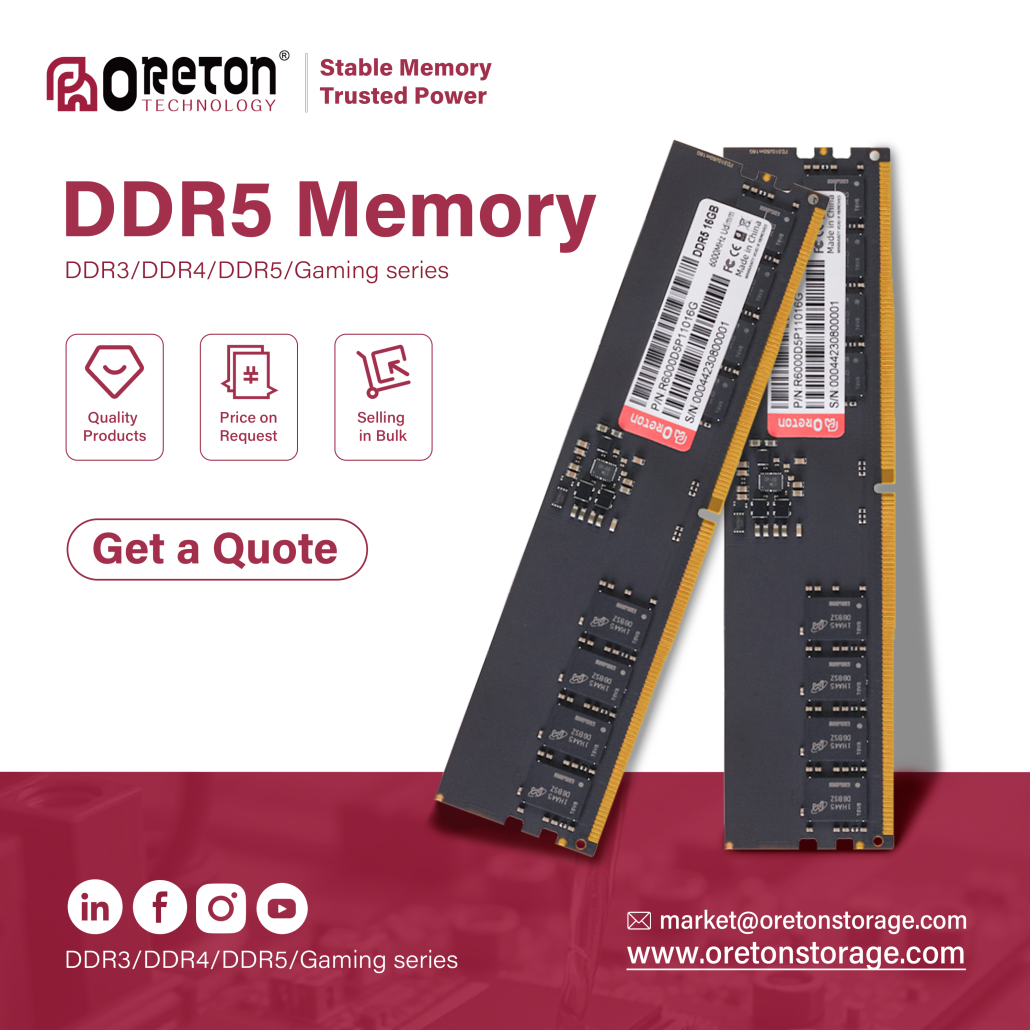
- Qualified component sourcing
- Incoming material inspection
- Automated SMT production
- SPI and AOI inspection
- Accurate SPD programming
- Functional testing
- Platform compatibility validation
- Batch traceability
- Final quality inspection before shipment
Rather than relying solely on final product testing, we emphasize process control at every manufacturing stage. This approach helps reduce production variation, improve consistency, and ensure every DDR4 and DDR5 memory module meets our quality standards.
Whether supporting retail products, industrial applications, or OEM projects, Oreton is committed to delivering memory solutions that combine stable performance, reliable compatibility, and long-term consistency.
Conclusion
Consistent memory performance is the result of disciplined manufacturing and comprehensive quality control—not chance.
From component inspection and SMT assembly to SPD programming, functional testing, compatibility validation, and batch traceability, every stage contributes to the reliability of the final product.
For distributors, OEM partners, and system integrators, choosing a manufacturer with a mature quality management system is just as important as selecting the right memory specifications.
At Oreton, quality control is embedded throughout the manufacturing process, enabling us to deliver dependable DDR4 and DDR5 memory products with the consistency and reliability that global customers expect.