





Why Stability, Supply Consistency, and Real-World Value Are Becoming More Important Than Extreme Specifications
For many years, the PC hardware industry was heavily driven by flagship products.
The spotlight often focused on:
- the fastest SSDs
- the highest-frequency memory
- premium gaming hardware
- extreme benchmark performance
But across many real-world markets, purchasing priorities are changing.
Today, a growing number of system integrators, distributors, OEM partners, and commercial buyers are shifting attention toward something different:
👉 reliable mid-range hardware solutions.
Not because performance no longer matters —
but because real deployment environments increasingly require:
- long-term stability
- predictable supply
- consistent compatibility
- balanced cost-performance
- lower operational risk
In many markets, the goal is no longer chasing the highest theoretical specifications. Instead, it is building systems that remain stable, scalable, and dependable over time.
1. Market Priorities Are Becoming More Practical
Over the past few years, global hardware markets have experienced:
- supply chain fluctuations
- component shortages
- pricing volatility
- changing workload demands
- increasing deployment scale
As a result, many buyers have become more cautious about relying heavily on aggressively optimized high-end hardware.
For large-scale deployments, stability often creates more long-term value than peak benchmark leadership.
This is especially true in environments where systems are expected to:
- operate continuously
- maintain compatibility over long product cycles
- minimize maintenance costs
- reduce return rates
- support broad user bases
In these scenarios, balanced hardware solutions frequently provide better long-term operational efficiency than extreme-performance configurations.
2. Why Mid-Range Hardware Is Becoming More Attractive
Modern mid-range hardware has improved significantly compared to previous generations.
Today’s mainstream SSDs and memory solutions already provide performance levels that are more than sufficient for:
- office environments
- commercial systems
- educational deployments
- system integration projects
- mainstream gaming
- content consumption
- multitasking workloads
The performance gap between flagship and mid-range hardware often appears much larger in benchmark charts than in actual daily experience.
Example: Real-World Perceived Difference
| Hardware Tier | Benchmark Improvement | Daily User Experience Difference |
|---|---|---|
| Entry-Level → Mid-Range | Very noticeable | major improvement |
| Mid-Range → Flagship | Large on paper | often moderate |
Uwaga:
For many real-world workloads:
- stabilność
- responsiveness
- compatibility
- spójność
matter more than extreme peak throughput.
3. Reliability Is Becoming a Competitive Advantage
As deployment scales grow larger, hardware reliability becomes increasingly important.
A single unstable component can create:
- support costs
- deployment delays
- maintenance overhead
- system downtime
- reputation risk
For OEMs and system integrators, low return rates and predictable long-term behavior are often more valuable than maximum benchmark performance.
This is particularly important for:
- education systems
- office deployments
- commercial PCs
- public infrastructure
- long-life platforms
In these environments, consistency across batches and stable firmware behavior become critical factors.
4. The Hidden Cost of Chasing Extreme Specifications
High-end hardware often introduces additional complexity:
- higher thermal output
- increased power consumption
- tighter compatibility requirements
- platform sensitivity
- higher cost volatility
While flagship products can provide excellent performance, they may not always be the most practical solution for large-scale deployment environments.
In many commercial scenarios, excessively aggressive hardware tuning may increase:
- instability risk
- cooling requirements
- qualification complexity
- long-term maintenance difficulty
As a result, many buyers increasingly prioritize balanced configurations optimized for reliability rather than maximum theoretical speed.
5. Supply Consistency Is Becoming More Important
One of the biggest challenges in recent years has been supply predictability.
Frequent component changes can create problems such as:
- inconsistent validation results
- BIOS compatibility issues
- firmware differences
- deployment inconsistency
- quality control complications
For distributors and OEM customers, stable supply continuity often matters as much as hardware specifications themselves.
This is why long-term component planning and validation are becoming increasingly valuable across the industry.
Why Buyers Increasingly Prioritize Stable Supply
| Priority Area | Dlaczego to ma znaczenie |
|---|---|
| Long-term availability | reduces redesign cycles |
| Consistent component sourcing | improves validation efficiency |
| Stable firmware behavior | lowers support complexity |
| Predictable performance | improves deployment consistency |
| Lower return rates | reduces operational cost |
6. The Mid-Range Segment Is No Longer “Low-End”
The definition of mid-range hardware has changed dramatically.
Modern mid-range SSDs now offer:
- PCIe 4.0 support
- strong random performance
- excellent daily responsiveness
- efficient thermal behavior
- stable sustained workloads
Likewise, mainstream DDR4 and DDR5 memory solutions already deliver performance levels suitable for most modern workloads without requiring extreme tuning.
For many users and businesses:
👉 the practical experience difference between optimized mid-range hardware and flagship products is smaller than ever before.
7. Emerging Markets Are Accelerating the Trend
Growing demand in developing and price-sensitive markets is also reshaping hardware priorities.
In many regions, buyers increasingly focus on:
- niezawodność
- deployment scalability
- balanced cost-performance
- long-term durability
- maintenance simplicity
rather than only premium benchmark positioning.
This trend is creating stronger demand for hardware solutions that combine:
- dependable operation
- stable quality
- practical performance
- efficient supply management
8. Modern Workloads Favor Balanced Systems
Modern applications increasingly depend on:
- multitasking
- Szybkość reakcji w czasie rzeczywistym
- storage consistency
- efficient memory behavior
- stable system interaction
As a result, balanced system design is becoming more important than isolated component leadership.
A well-optimized mid-range platform often delivers:
- smoother daily responsiveness
- better thermal stability
- lower failure risk
- easier deployment management
than poorly balanced high-end configurations.
9. Why the Industry Is Moving Toward Sustainable Performance
The market is gradually shifting away from pure specification competition toward sustainable real-world performance.
Today, many enterprise buyers and OEM partners increasingly evaluate hardware based on:
- stability under sustained workloads
- firmware maturity
- validation quality
- compatibility consistency
- długoterminowa niezawodność
rather than short benchmark bursts alone.
This reflects a broader industry understanding:
👉 performance is valuable only when it remains stable over time.
10. Podsumowanie
The growing demand for reliable mid-range hardware solutions reflects a major shift in the industry.
Modern buyers increasingly understand that successful deployments depend not only on peak specifications —
but on:
- stabilność
- compatibility
- supply consistency
- predictable long-term behavior
As hardware ecosystems become more complex, balanced solutions are becoming more valuable than ever before.
Because in real-world deployment environments, reliability often creates more long-term value than extreme benchmark numbers alone.
O Oreton
At Oreton, we focus on storage and memory solutions designed around long-term stability, consistent quality, and practical real-world performance.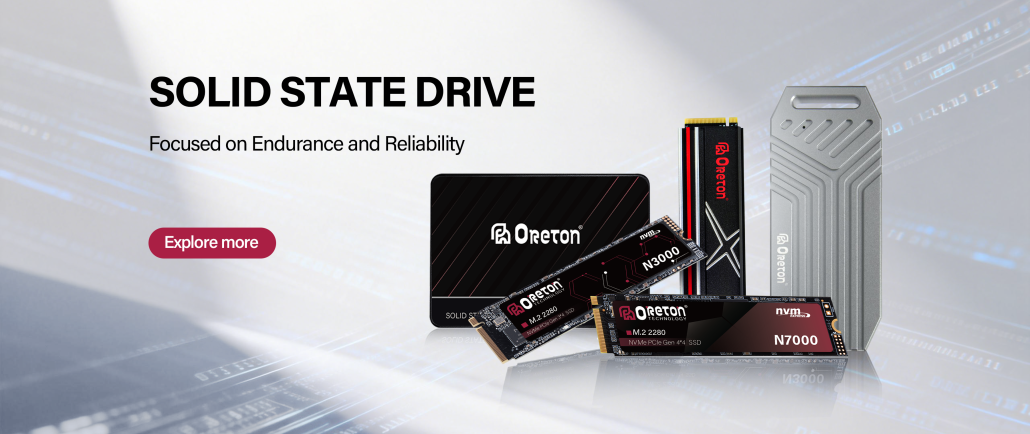
From reliable SSD solutions to stable DDR4 and DDR5 memory products, our goal is to support OEM partners, system integrators, and distributors with hardware designed for dependable operation across different deployment environments and workload demands.
Because sustainable performance is not only about reaching high numbers —
it’s about delivering stable results over time.