





Understanding Data Transfers, Video Recording, and Real-World Performance
When choosing an SD or microSD card, you will often see two speed specifications on the packaging: read speed and write speed. Both are important, but they affect different tasks.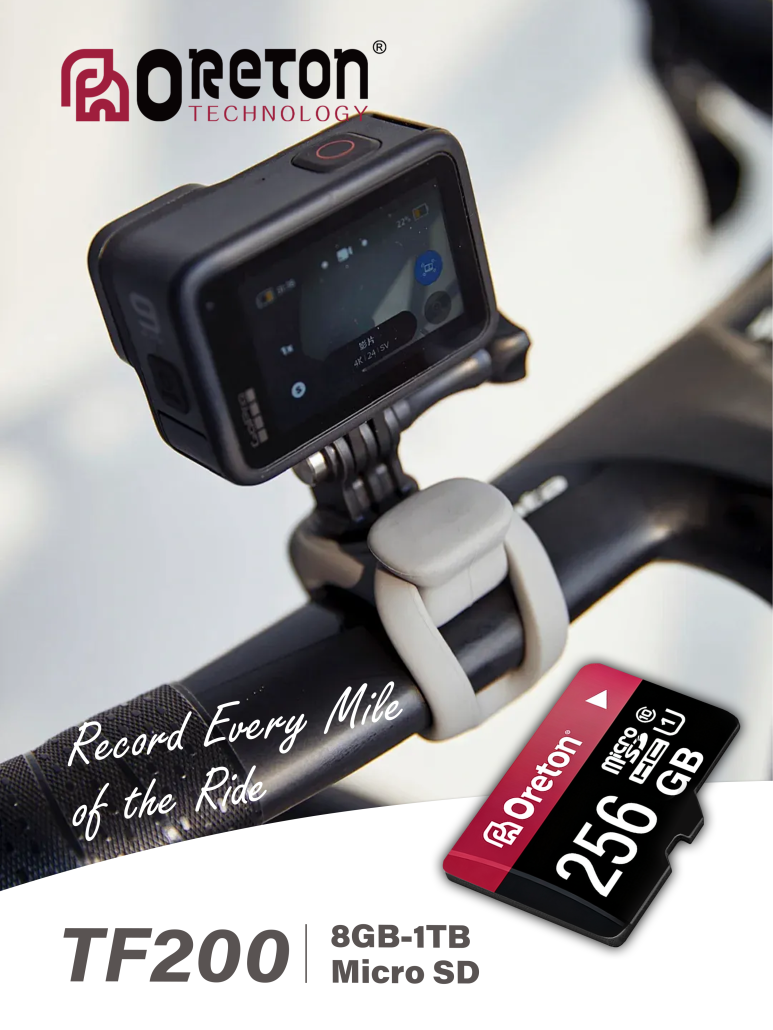
A card with a high read speed can transfer photos and videos to a computer quickly. A card with a high write speed can save data faster when recording video, capturing burst photos, or writing files from another device.
However, the highest advertised speed does not always represent the performance you will experience in everyday use. The memory card, host device, card reader, interface, and type of workload all influence actual transfer speeds.
So, what exactly is the difference between read speed and write speed? And which one should you prioritize when choosing a memory card?
1. What Is Memory Card Read Speed?
Read speed measures how quickly a memory card can retrieve stored data and transfer it to another device.
For example, when you insert a microSD card into a computer using a card reader, the computer reads the files stored on the card. The faster the card’s read performance, the less time it generally takes to transfer those files.
Read speed is particularly important for:
- Transferring photos and videos to a computer.
- Importing large RAW image files into editing software.
- Reviewing high-resolution video footage.
- Accessing files stored on a memory card.
- Loading applications or media from removable storage.
Example: Transferring Photos to a Computer
Imagine you have a memory card containing 40GB of photos and videos.
If the card and reader can sustain a transfer rate of 80MB/s, copying the files will generally take less time than with a setup that manages only 30MB/s.
The theoretical transfer time can be estimated using:
Transfer Time (seconds) = File Size (MB) ÷ Transfer Speed (MB/s)
Bijvoorbeeld:
40GB is approximately 40,000MB.
- At 80MB/s: approximately 500 seconds.
- At 30MB/s: approximately 1,333 seconds.
These are simplified estimates. Actual transfer times may be longer because of small files, file-system overhead, reader limitations, and variations in transfer speed.
The practical point is that higher read speed can make file transfers and media workflows more efficient.
2. What Is Memory Card Write Speed?
Write speed measures how quickly a memory card can save incoming data.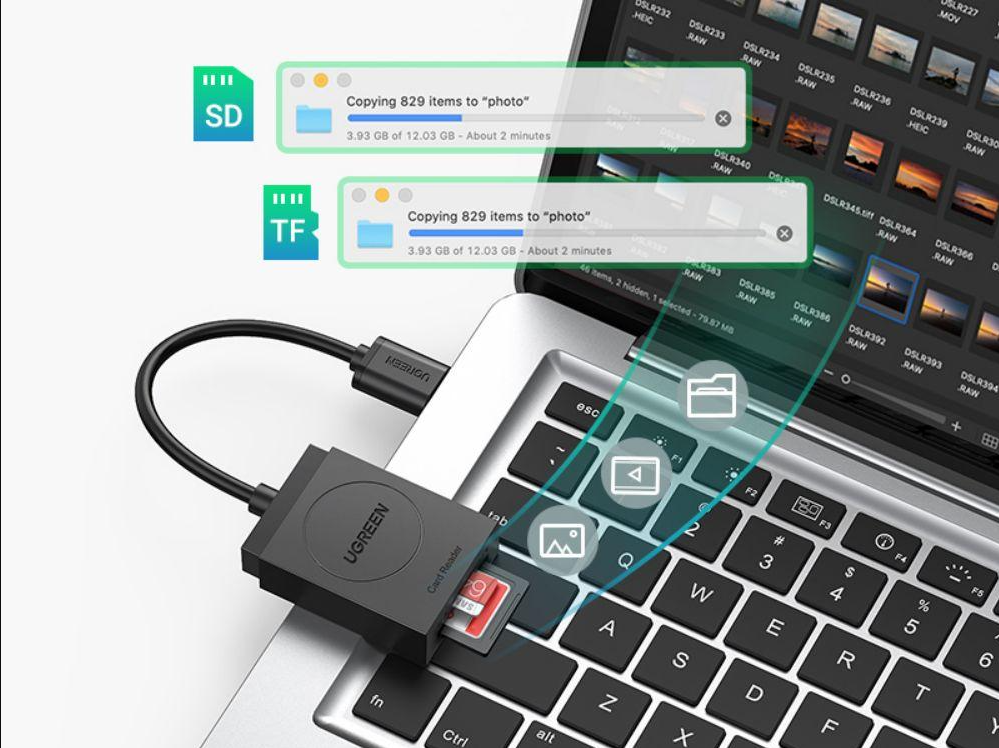
Whenever a camera takes a photo, a drone records video, or a security camera stores footage, data is written to the memory card.
Write speed is especially important when the device continuously generates data or needs to save large files quickly.
Common applications include:
- Recording Full HD, 4K, or higher-resolution video.
- Capturing continuous burst photos.
- Recording footage with action cameras and drones.
- Saving continuous surveillance footage.
- Writing large files from a computer or another device.
Example: Recording Video
When a camera records video, it generates a continuous stream of data that must be written to the memory card.
If the card cannot maintain the required write speed, the camera may experience recording interruptions, dropped frames, or recording errors, depending on the device and recording mode.
This is why write performance is particularly important for video recording.
A card’s maximum advertised write speed is not the only specification to consider. For recording, sustained write performance is often more important because the card needs to maintain a sufficiently consistent rate throughout the recording session.
3. Read Speed vs. Write Speed: What’s the Difference?
Although both specifications describe data transfer performance, they represent opposite directions of data movement.
| Comparison | Read Speed | Write Speed |
|---|---|---|
| Betekenis | How quickly stored data is retrieved | How quickly incoming data is saved |
| Data direction | Memory card → Device | Device → Memory card |
| Main applications | File transfer, media playback, importing photos | Video recording, burst photography, saving files |
| Important for | Fast file access and downloads from the card | Continuous recording and data capture |
| Key consideration | Maximum practical read performance | Maximum and sustained write performance |
In simple terms: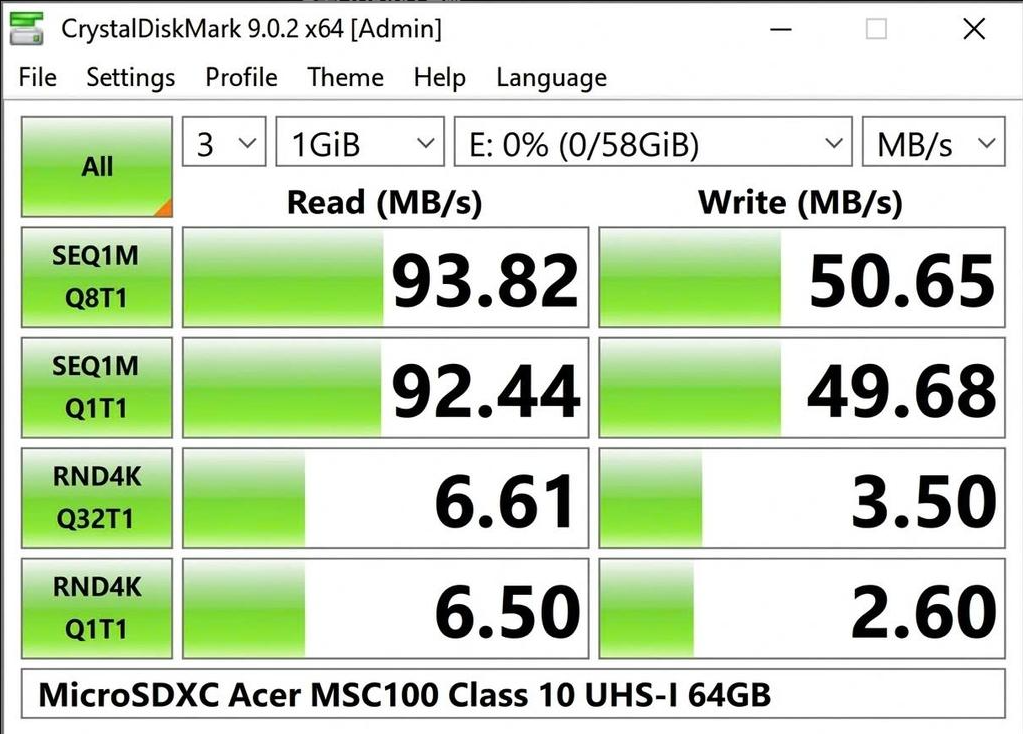
- Read speed affects how quickly you can get data off the card.
- Write speed affects how quickly the card can save new data.
A memory card may have a high read speed but a lower write speed. This is why comparing only one speed figure can give an incomplete picture of its performance.
4. Why Is Write Speed So Important for Video Recording?
Video recording places a continuous workload on a memory card.
Unlike transferring a group of files, video recording requires the card to accept a steady stream of incoming data. If the card cannot keep up, the recording device may not be able to save footage correctly.
The required write speed depends on several factors:
- Video resolution, such as Full HD, 4K, or 8K.
- Frame rate, such as 30fps, 60fps, or 120fps.
- Video bitrate and compression format.
- The camera’s recording mode.
- Whether multiple video streams are being recorded.
Understanding Video Bitrate and Write Speed
Video bitrate is commonly measured in megabits per second (Mbps), while memory card transfer speeds are usually measured in megabytes per second (MB/s).
These are different units.
Since 1 byte equals 8 bits:
MB/s = Mbps ÷ 8
For example, a video recorded at 100Mbps generates approximately 12.5MB of data per second before accounting for additional overhead and variations.
A memory card must be able to sustain the required write rate with sufficient headroom. The exact card requirement should always be checked against the camera manufacturer’s recommendations.
What Is Sustained Write Speed?
Sustained write speed refers to the speed a memory card can maintain over an extended period, rather than only during a short burst.
This is particularly important for:
- Long video recordings.
- High-bitrate footage.
- Continuous security camera recording.
- Extended drone recording sessions.
The SD Association defines Speed Class standards to indicate minimum sequential performance under specified conditions. These ratings help users identify cards suitable for recording workloads that require a consistent minimum write speed.
For more details, see the SD Association’s Speed Class standards.
5. Does a Higher Read Speed Also Mean a Higher Write Speed?
Not necessarily.
Read and write speeds are separate performance characteristics. A memory card can be optimized to deliver high read performance without offering the same level of write performance.
For example, a card might advertise:
| Specification | Voorbeeld |
|---|---|
| Maximum read speed | 160MB/s |
| Maximum write speed | 90MB/s |
| Minimum sustained write speed | Depends on its speed class |
These figures describe different performance characteristics.
The maximum read speed indicates how quickly data may be retrieved under suitable conditions. Maximum write speed describes peak writing performance, while the minimum sustained write speed provides a more useful reference for certain continuous recording tasks.
When comparing cards, always check the individual specifications instead of assuming that a higher read speed means a faster write speed.
6. How Do Memory Card Readers and Device Interfaces Affect Speed?
Even if a memory card supports high transfer speeds, the connected device must also support the required interface.
For example, a high-performance UHS-II card used in a UHS-I-only card reader will not achieve the full performance potential of the UHS-II interface.
The same principle applies to cameras, drones, laptops, smartphones, and other devices.
Actual performance depends on several components working together:
Memory Card: Its internal NAND flash, controller, and supported interface determine its potential performance.
Host Device: The camera, smartphone, or computer must support the card’s relevant interface and capabilities.
Card Reader: A slow or incompatible reader can limit file transfer speeds.
Connection Interface: The USB port and cable used to connect a reader to a computer can also become bottlenecks.
File Characteristics: Large sequential files and thousands of small files can produce very different transfer results.
Therefore, buying the fastest available memory card does not guarantee the fastest real-world performance. The entire transfer path needs to support the required speed.
7. Which Speed Matters More for Different Applications?
The right balance between read and write performance depends on how the memory card will be used.
Photography and RAW Image Capture
For photographers, both read and write speeds matter.
Write speed affects how quickly the camera can save captured images, particularly during continuous burst shooting. A fast card can help the camera clear its internal buffer sooner, allowing users to continue shooting with fewer delays.
Read speed becomes important when importing large RAW files and transferring photographs to a computer for editing.
4K and 8K Video Recording
For video recording, sustained write speed is a key consideration.
The memory card must maintain enough performance to handle the camera’s video bitrate and recording format. Users should check the required Speed Class and interface specified by the camera manufacturer.
A high maximum read speed alone does not guarantee that a card is suitable for high-bitrate recording.
Drones and Action Cameras
Drones and action cameras often generate large video files, especially when recording at high resolutions or frame rates.
Write speed helps ensure that the card can keep up with the recording workload. Read speed also affects how efficiently footage can be transferred for editing and backup.
For these applications, users should consider both sustained write performance and the speed of their post-recording workflow.
Security Cameras and Dash Cameras
Security cameras and dash cameras may continuously write data to a memory card over long periods.
In these applications, sustained write performance and endurance are important considerations. A card must support the recording workload reliably, rather than simply offering a high peak transfer speed.
Read speed is generally less important during recording itself, but it still matters when reviewing or exporting stored footage.
Everyday Storage and File Transfers
For general file storage, document transfers, and media playback, read speed can have a noticeable effect on how quickly files are accessed or copied to another device.
Write speed still matters when saving new files, but users may not need the same level of sustained performance required by professional video recording.
8. How to Choose the Right Memory Card Speed
Before purchasing a memory card, consider the following factors:
- Identify the primary application. Determine whether the card will mainly be used for photography, video recording, surveillance, or everyday file storage.
- Check the required write speed. For video recording, consult the device manufacturer’s recommended minimum Speed Class.
- Compare maximum read and write speeds. Do not assume that both specifications are identical.
- Check the interface compatibility. Confirm that the host device and card reader support the card’s interface.
- Consider sustained performance. For continuous recording, prioritize the minimum guaranteed write speed and reliable long-duration performance.
- Choose an appropriate capacity. Consider recording bitrate, expected recording time, and how frequently files will be transferred or backed up.
For a more detailed explanation of memory card speed ratings, read our guide to U1, U3, V30, and V60 microSD Speed Classes.
Conclusie
Read speed and write speed describe two different aspects of memory card performance.
Read speed determines how quickly stored data can be retrieved and transferred to another device. Write speed determines how quickly new data can be saved to the card.
For photography and file transfers, read speed can significantly affect workflow efficiency. For video recording, continuous data capture, and surveillance applications, sustained write speed is particularly important.
Ultimately, the best memory card is not necessarily the one with the highest advertised speed. It is the one whose read and write performance, sustained speed, capacity, and interface compatibility match the requirements of the device and its intended workload.
For more information about storage technologies and memory card applications, explore our opslagtoepassingen en TF card product range.