





How Budget-Conscious Buyers Can Maximize Value Without Compromising Stability
For many enterprise IT departments, procurement is a constant balancing act. Organizations want hardware that is reliable, consistent, and long-lasting, but budgets are often tight — especially in emerging markets or for large-scale deployments.
While cutting-edge components like NVMe SSDs and DDR5 memory offer impressive peak performance, mid-range solutions such as 2.5″ SATA SSDs and DDR3/DDR4 memory often deliver the best balance of cost and reliability for real-world enterprise needs.
1. Why Cost and Reliability Must Be Considered Together
Enterprise buyers often face the temptation to chase peak performance numbers. However:
- High-end SSDs and memory can exceed budget limits when scaling across hundreds or thousands of units.
- Extreme specifications often introduce compatibility and stability challenges in large deployments.
- Poor reliability leads to higher maintenance costs, downtime및 replacement cycles, which can quickly offset initial savings.
In practice, selecting hardware is about predictable performance and long-term consistency, not just maximum benchmarks.
2. 2.5″ SATA SSDs: Cost-Effective Storage with Proven Reliability
While PCIe NVMe drives dominate high-end systems, 2.5인치 SATA SSD remain a workhorse for enterprise deployments, especially in office PCs, thin clients, or budget-constrained systems.
Advantages of 2.5″ SATA SSDs:
| Feature | Benefit |
|---|---|
| Lower cost per GB | Enables scaling to large deployments within tight budgets |
| Mature technology | Fewer firmware issues, higher compatibility across platforms |
| Proven reliability | Long MTBF, stable performance over sustained workloads |
| Easy integration | Works with existing SATA infrastructure without upgrades |
For enterprises, a 2.5″ SATA SSD provides fast boot and app load times, even if it doesn’t match NVMe for sequential peak speeds. The focus is consistent real-world performance 그리고 low maintenance overhead.
3. DDR3 vs DDR4: Choosing Memory for Stability and Cost
Memory is another critical area where balance is key. Many enterprises still operate with DDR3-based systems, while newer deployments may adopt DDR4 for higher performance.
주요 고려 사항
| 메모리 유형 | 강점 | When to Choose |
|---|---|---|
| DDR3 | Lower cost, widespread compatibility, proven stability | Budget-conscious upgrades, legacy systems |
| DDR4 | Higher frequency, better power efficiency, future-proof | New deployments, workloads requiring more bandwidth |
While DDR4 offers better performance metrics, DDR3 still delivers reliable service for office tasks, database workloads, and mid-tier applications, making it ideal for budget-sensitive enterprises.
4. Real-World Examples of Cost-Reliability Trade-Offs
Consider a company deploying 500 desktops across multiple offices:
- Upgrading all systems to NVMe SSD + DDR5 memory could triple hardware costs while offering only marginal real-world gains for standard office tasks.
- A 2.5″ SATA SSD + DDR4 configuration provides stable boot times, predictable app performance및 장기적인 신뢰성, while keeping costs manageable.
The result: enterprise-grade reliability without exceeding budget limits, enabling more units to be deployed or saved for other critical IT projects.
5. Procurement Tips for Budget-Sensitive Enterprises
- Evaluate real-world workloads: prioritize consistent performance under sustained tasks over peak benchmark numbers.
- Focus on reliability metrics: MTBF, endurance ratings, and internal testing history are more meaningful than advertised speed.
- Plan for compatibility: legacy systems often require SATA SSDs or DDR3 memory; avoid mixing too many new standards in a single deployment.
- Work with trusted suppliers: companies that provide validated, consistent components reduce the risk of returns and downtime.
- Balance total cost of ownership (TCO): consider maintenance, warranty, and replacement costs — not just the upfront purchase price.
6. Key Takeaways
- Mid-range components such as 2.5″ SATA SSDs and DDR3/DDR4 memory often provide the best value for budget-sensitive enterprise deployments.
- Peak specifications do not always translate to better real-world performance; stability, compatibility, and predictable behavior matter more.
- Careful procurement planning and partnering with reliable hardware suppliers ensures enterprises get the optimal balance of cost and reliability.
For enterprises looking to maximize value while minimizing risk, these considerations are essential.
오레톤 소개
At Oreton, we provide storage and memory solutions designed for long-term reliability, predictable supply, and stable performance.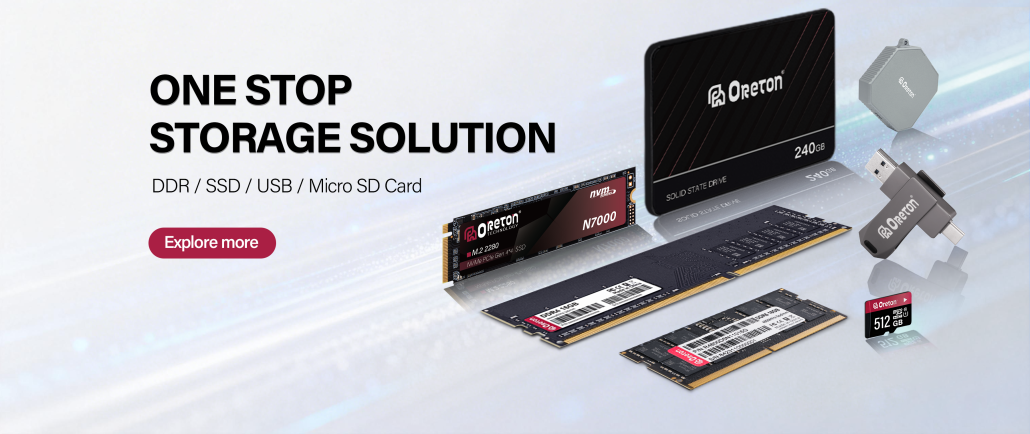
From 2.5″ SATA SSDs to DDR3/DDR4 memory, we help OEMs, system integrators, and enterprise IT teams deploy mid-range hardware that balances cost and operational stability — ensuring projects run smoothly without unnecessary expenditure.