





소개

When choosing memory for a modern PC, many users focus on one specification first: frequency.
Numbers such as 3200MHz, 5600MHz, 6000MHz, or even higher speeds have become common marketing points for DDR memory products.
However, memory performance is not determined by frequency alone.
A faster memory system depends on multiple factors working together, including memory bandwidth, architecture, channel configuration, timing, and the ability of the CPU memory controller to efficiently access data.
As modern applications become increasingly demanding—from gaming and content creation to AI workloads and professional computing—the role of memory bandwidth has become more important than ever.
Understanding how memory bandwidth works helps users and system builders make better decisions when selecting DDR4 or DDR5 memory.
Frequency Is Only One Part of Memory Performance
Memory frequency is one of the most visible specifications of RAM.
예를 들어
- DDR4-3200
- DDR5-5600
- DDR5-6000
These numbers represent the data transfer rate of the memory.
Higher frequency allows memory to transfer more data per second, which can improve performance in applications that frequently access large amounts of data.
However, frequency alone does not tell the complete story.
A memory module with higher frequency does not automatically deliver better real-world performance if other factors limit the system.
Memory performance also depends on:
- 메모리 대역폭
- Memory channels
- 지연 시간
- CPU architecture
- Memory controller capability
- Software workload
A balanced memory system requires all these elements to work together.
Understanding Memory Bandwidth
Memory bandwidth refers to the amount of data that memory can transfer to and from the CPU within a specific period of time.
Simply put:
Higher memory bandwidth means the system can move more data faster.
This becomes especially important when applications need to process large amounts of information.
Examples include:
- High-resolution gaming
- Video editing
- 3D 렌더링
- Scientific computing
- AI 워크로드
- Large-scale multitasking
When the processor needs frequent access to data, higher bandwidth helps reduce waiting time and allows the CPU to operate more efficiently.
Why DDR5 Provides Higher Memory Bandwidth
DDR5 is not simply a faster version of DDR4.
It introduces several architectural improvements designed to increase efficiency and bandwidth.
Higher Data Transfer Rates
One of the biggest advantages of DDR5 is its increased operating frequency.
Compared with mainstream DDR4 speeds, DDR5 starts at significantly higher transfer rates and continues to scale toward faster standards.
예를 들어
DDR4:
- Common range: 2666MT/s – 3200MT/s
DDR5:
- Common range: 4800MT/s and above
Higher transfer rates allow DDR5 memory to provide significantly greater bandwidth for modern processors.
Improved Memory Architecture
DDR5 introduces changes beyond frequency improvements.
Each DDR5 memory module is divided into two independent 32-bit subchannels.
This allows the memory controller to handle smaller data requests more efficiently compared with traditional DDR4 architecture.
The result is improved parallel data processing and better utilization of available bandwidth.
Better Power Efficiency
DDR5 operates at a lower voltage compared with DDR4.
DDR4:
- 1.2V standard voltage
DDR5:
- 1.1V standard voltage
Although the voltage difference may appear small, improved power efficiency becomes increasingly important as memory capacity and frequency continue increasing.
For modern systems with large memory configurations, better efficiency helps maintain stable operation and thermal management.
Dual Channel: Increasing the Data Path
Memory bandwidth is also strongly influenced by memory channel configuration.
A single memory module operates through one memory channel, while two matched modules can operate in dual-channel mode.
Dual-channel configurations effectively double the available memory data path compared with single-channel setups.
예를 들어
단일 채널:
One memory module communicates through one 64-bit channel.
듀얼 채널:
Two memory modules work together through two channels, increasing available bandwidth.
This is why installing two identical memory modules is often recommended for gaming PCs, workstations, and performance-oriented systems.
For DDR5 platforms, the combination of higher frequency and improved architecture allows dual-channel configurations to achieve significantly greater bandwidth compared with previous generations.
The CPU Memory Controller Matters
Memory does not work independently.
The CPU plays a critical role through its integrated memory controller (IMC).
The memory controller manages communication between the processor and memory modules.
The final performance depends on the relationship between:
- CPU architecture
- Memory controller capability
- 마더보드 디자인
- Memory specifications
A high-performance DDR5 kit requires a compatible processor and motherboard platform to achieve its full potential.
For example, a DDR5 module rated at high frequency may not operate at its maximum speed if the CPU or motherboard does not support that specification.
Therefore, choosing memory should always consider the entire platform rather than focusing only on the memory module itself.
 Memory Bandwidth in Real-World Applications
 Memory Bandwidth in Real-World Applications
Different workloads benefit from higher memory bandwidth in different ways.
게임
Modern games continuously load textures, game assets, and background data.
While GPU performance remains the biggest factor in gaming, faster memory can help improve:
- Frame consistency
- Minimum FPS performance
- 시스템 응답성
Especially when combined with powerful processors and high-end graphics cards.
콘텐츠 제작

Applications such as:
- Adobe Premiere Pro
- Photoshop
- DaVinci Resolve
- Blender
frequently process large files and complex data.
Higher memory bandwidth helps improve data movement between CPU, memory, and storage, reducing bottlenecks during demanding workloads.
AI and Professional Computing
AI applications are increasing demand for faster memory systems.
Local AI workloads often require processing large datasets and models, making memory capacity and bandwidth increasingly important.
Higher bandwidth allows processors to access information more efficiently, improving overall system performance.
Choosing Memory Beyond Frequency
When selecting DDR memory, frequency is important—but it should not be the only consideration.
A reliable memory solution should also consider:
용량
More capacity allows the system to handle larger workloads without relying heavily on slower storage-based virtual memory.
호환성
Memory should match the processor and motherboard platform.
안정성
Stable operation under long workloads is essential for gaming, professional applications, and commercial systems.
Quality Components
The quality of DRAM chips, PCB design, SPD programming, and validation processes all contribute to long-term reliability.
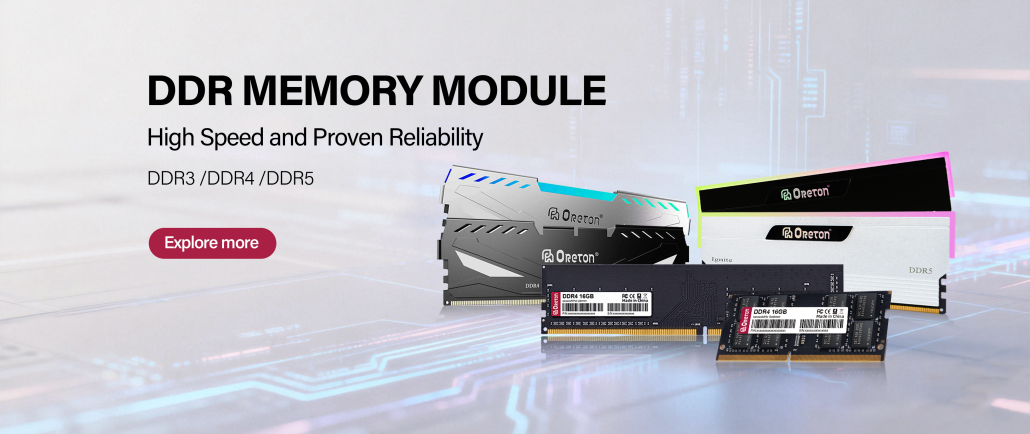
Oreton DDR Memory: Designed for Modern Computing Needs
At Oreton, we understand that memory performance is not defined by frequency alone.
Modern users require memory solutions that balance bandwidth, stability, compatibility, and reliability across different applications.
Our DDR4 and DDR5 memory products are designed for various computing environments, including:
- Everyday productivity systems
- 게이밍 PC
- Content creation platforms
- Professional workstations
- AI-ready computing systems
Through careful component selection, compatibility validation, and quality testing, Oreton memory modules are developed to provide stable performance for modern computing platforms.
Whether users need reliable DDR4 solutions or high-bandwidth DDR5 memory for next-generation systems, the goal remains the same:
Deliver dependable memory performance that supports real-world workloads.
결론
Memory performance is about much more than a single frequency number.
While higher frequencies contribute to faster data transfer, true performance depends on the complete memory system—including bandwidth, architecture, dual-channel configuration, CPU memory controller, and platform compatibility.
As applications become more demanding, memory bandwidth will continue to play a larger role in overall computing performance.
Understanding these factors helps users, system builders, and businesses choose memory solutions that deliver better performance, stability, and long-term value.
DDR5 represents the next step in memory evolution, providing the bandwidth and efficiency required for the future of gaming, AI, professional workloads, and modern computing.