





Memory is an important part of a gaming PC, but gaming memory performance is not determined by capacity or frequency alone.
Two memory kits can have the same capacity and frequency while delivering different levels of performance because memory timings, channel configuration, rank organization, the CPU memory controller, motherboard design, BIOS settings, and game workloads can all influence the final result.
For gaming PC manufacturers, OEMs, system integrators, and hardware distributors, understanding these factors helps create memory configurations that balance performance, compatibility, stability, and cost.
1. The Role of Memory in a Gaming PC
During gaming, system memory temporarily stores game data, application data, operating system resources, and other information required by the CPU.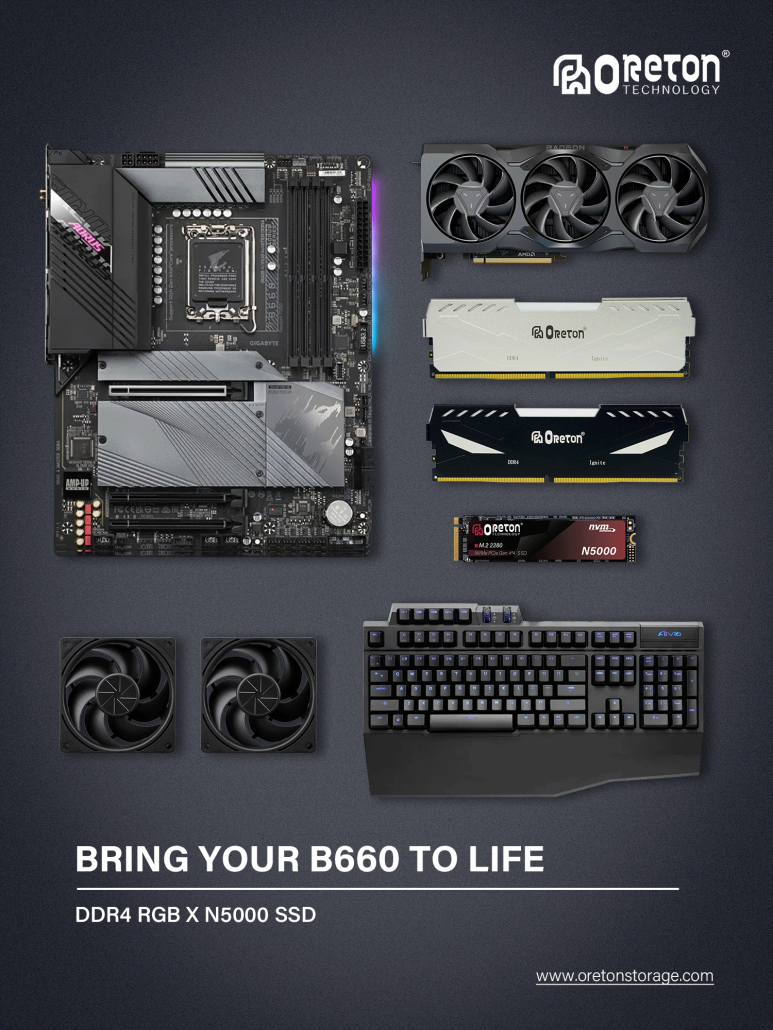
The CPU continuously accesses memory while processing game logic, physics, AI, background tasks, and other workloads.
A gaming PC therefore needs enough memory capacity to keep the required data available while providing sufficient bandwidth and low enough latency for the platform.
However, memory is only one part of the complete gaming system.
CPU performance, GPU performance, storage, motherboard design, and software optimization can all have a significant impact on the final gaming experience.
This means memory should be evaluated as part of the complete platform rather than as an isolated specification.
2. Memory Capacity and Gaming Workloads
Memory capacity determines how much data the system can keep readily available before relying more heavily on storage.
For gaming PCs, common capacity configurations include:
- 16GB
- 32 GB
- 64 GB
The appropriate capacity depends on the game, operating system, background applications, and user workload.
A system used mainly for gaming may have different requirements from a system used for gaming, streaming, video recording, browser multitasking, and other applications simultaneously.
16GB Memory
16GB can still be suitable for many mainstream gaming systems, particularly when the system is primarily dedicated to gaming.
However, the available memory can become more limited when users run multiple applications in the background.
32GB Memory
32GB provides additional headroom for modern gaming workloads and multitasking.
It can be particularly useful for users who combine gaming with:
- Streaming
- Voice communication
- Navigazione web
- Recording
- Creazione di contenuti
- Background applications
For many mid-range and higher-end gaming systems, 32GB can provide a practical balance between capacity and cost.
64GB Memory
64GB may be useful for gaming systems that are also used for demanding professional workloads, heavy multitasking, content creation, virtual machines, or local AI applications.
However, additional capacity does not automatically increase gaming performance if the game does not require it.
This is an important distinction between memory capacity e memory performance.
3. Memory Frequency and Bandwidth
Memory frequency is commonly used as a quick indicator of memory performance.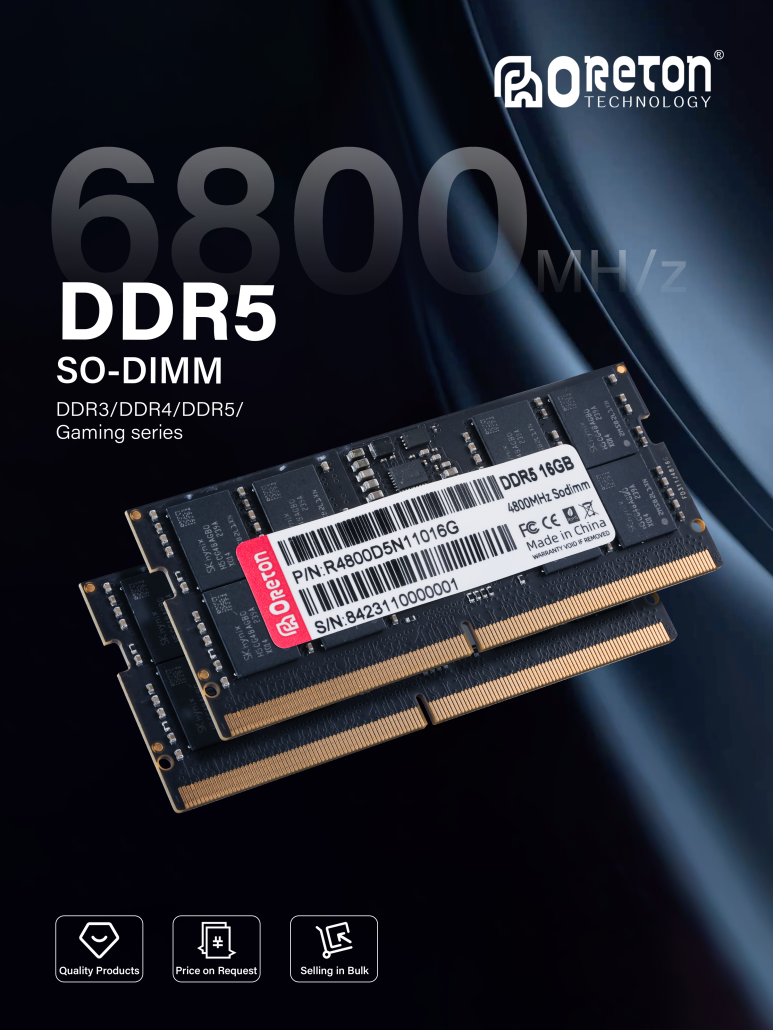
Higher operating frequencies can increase available memory bandwidth, allowing the memory subsystem to transfer more data over a given period.
For example, DDR4 and DDR5 platforms operate across different frequency ranges, with DDR5 generally offering higher bandwidth on newer platforms.
However, frequency should not be evaluated independently.
Actual memory performance also depends on:
- Memory timings
- Channel configuration
- Rank organization
- Memory controller
- Motherboard
- Configurazione del BIOS
- Carico di lavoro
Higher frequency can therefore provide additional bandwidth, but the real-world benefit depends on whether the gaming workload can take advantage of it.
4. Memory Timings and Latency
Memory frequency describes how quickly memory operates, while timings describe the number of memory clock cycles associated with different operations.
Common memory timing parameters include:
- CL or CAS Latency
- tRCD
- tRP
- tRAS
CAS Latency, commonly referred to as CL, is one of the most familiar memory specifications.
However, a lower CL number does not automatically mean that one memory kit is faster in every situation.
The actual memory access time depends on both frequency and timing.
For example, two memory configurations may operate at different frequencies and have different CL values. Comparing only the CL number would therefore provide an incomplete picture.
Memory latency should be evaluated together with operating frequency and the overall platform configuration.
5. Frequency and Timings Work Together
Memory performance is influenced by the relationship between frequency and timings.
A higher-frequency memory kit may have higher timing values, while a lower-frequency kit may have tighter timings.
This creates a common misconception that the lowest timing specification is always better.
In reality, memory evaluation requires consideration of both:
Bandwidth + Latency
Higher frequency can increase bandwidth, while tighter timings can reduce certain memory access delays.
The practical impact depends on the CPU architecture, memory controller, game engine, and workload.
6. Dual Channel Memory and Gaming Performance
Memory channel configuration is another important part of gaming PC memory architecture.
A system using two compatible memory modules in a supported dual-channel configuration can provide greater memory bandwidth than a comparable single-channel configuration.
Ad esempio:
1 × 16GB
e
2 × 8GB
both provide 16GB of total capacity, but they do not necessarily provide the same memory-channel configuration.
On a platform supporting dual-channel operation, two appropriately installed modules can allow the memory controller to access two channels.
This can improve available memory bandwidth and may improve performance in workloads that are sensitive to memory bandwidth.
However, dual-channel operation depends on the CPU memory controller, motherboard, DIMM placement, BIOS, and module configuration.
7. Dual Channel Is Not the Same as Dual Rank
These two concepts are often confused.
Doppio canale describes how memory modules communicate with the memory controller through multiple memory channels.
Dual Rank describes the internal organization of memory resources within a module.
A memory module can therefore be single-rank or dual-rank, while the system itself can operate in single-channel or dual-channel mode.
These configurations affect different parts of the memory architecture.
For gaming PC design, both module population and rank organization may need to be considered during platform validation.
8. Memory Rank and Gaming Workloads
Rank organization can influence how the memory controller accesses memory resources.
Under certain conditions, a dual-rank configuration can provide opportunities for rank interleaving, allowing the memory controller to switch between ranks while operations are being processed.
The actual performance benefit depends on:
- CPU memory controller
- Motherboard
- BIOS
- Memory frequency
- Timings
- Carico di lavoro
- Number of populated DIMMs
As a result, dual-rank memory should not automatically be described as faster than single-rank memory in every gaming system.
Platform behavior matters.
9. DDR4 and DDR5 Gaming Memory
DDR4 and DDR5 represent different generations of memory technology.
DDR5 generally offers higher bandwidth and newer platform features, while DDR4 remains relevant for compatible systems and cost-sensitive configurations.
The choice between DDR4 and DDR5 depends on:
- CPU platform
- Motherboard
- Required frequency
- Memory capacity
- System cost
- Upgrade plans
- Application requirements
A DDR5 module cannot simply be installed into a DDR4-only motherboard.
Memory generation is therefore a platform-level decision.
For OEMs and system integrators, the CPU, motherboard, memory module, and BIOS should be validated as a complete configuration.
10. CPU Memory Controllers Matter
The CPU memory controller plays an important role in determining how a gaming PC handles its memory.
Modern CPUs integrate memory controllers that communicate directly with system memory.
The supported memory frequency and configuration can vary between CPU generations and platforms.
Factors such as:
- Maximum supported memory frequency
- Number of memory channels
- DIMM population
- Memory rank
- Memory training
- BIOS implementation
can all influence memory operation.
This is one reason why the same memory kit can perform differently on different systems.
11. Motherboard Design and DIMM Population
The motherboard also affects memory behavior.
Important design considerations include:
- DIMM slot configuration
- PCB layout
- Memory trace design
- BIOS support
- Power delivery
- Memory training
- Supported capacities
- Supported frequencies
The number of populated DIMMs can also influence achievable memory frequency and stability.
For example, a memory configuration that operates reliably with two modules may require different settings when four modules are installed.
Gaming PC manufacturers should therefore validate the actual memory population used in the final system.
12. Memory Training and BIOS Configuration
Memory training occurs during system initialization and helps the platform establish suitable memory operating parameters.
This process can become particularly important when using higher-frequency DDR5 memory configurations.
BIOS settings may influence:
- Memory frequency
- Timings
- Tensione
- Training behavior
- Stability
- Compatibilità
Automatic memory profiles such as XMP or EXPO can make higher-performance configurations easier to configure on supported platforms.
However, profile support does not eliminate the need for platform validation.
A memory kit should be tested with the intended CPU and motherboard configuration rather than evaluated only through its advertised profile.
13. Gaming Performance Does Not Scale Directly With Memory Frequency
Higher memory frequency does not always produce a proportional increase in gaming performance.
The actual impact depends on the game engine and whether the workload is limited by memory bandwidth or latency.
In GPU-limited scenarios, increasing memory frequency may have only a limited effect on frame rates.
In CPU-limited scenarios, memory performance can sometimes have a more noticeable influence.
Other factors such as game resolution, graphics settings, CPU architecture, GPU performance, and background applications also affect the result.
This is why memory specifications should be evaluated in the context of the complete gaming system.
14. CPU-Limited and GPU-Limited Gaming
The performance relationship between memory and gaming can be easier to understand by separating CPU-limited and GPU-limited scenarios.
When a game is primarily GPU-limited, the graphics processor is responsible for most of the performance limitation.
In this situation, changing memory frequency may produce relatively small differences.
When a game is more CPU-limited, memory bandwidth and latency can become more relevant because the CPU is processing game logic at a higher rate.
This is particularly relevant for high-refresh-rate gaming, where the CPU may need to prepare more frames per second.
The same memory configuration can therefore produce different results depending on the game and graphics settings.
15. Background Applications Increase Memory Demand
Gaming rarely happens in isolation.
Users may simultaneously run:
- Discord
- Browser web
- Streaming software
- Game launchers
- Recording software
- Music applications
- Hardware monitoring tools
These applications consume additional memory.
As a result, a gaming PC should be configured based not only on the game’s minimum requirements but also on the user’s complete usage pattern.
This is one reason why memory capacity can become increasingly important as gaming PCs are used for more than gaming.
16. Memory and SSD Work Together
Memory and storage serve different roles in a PC.
DRAM provides fast temporary working space for active applications and data.
The SSD provides persistent storage for the operating system, games, applications, and files.
When system memory becomes insufficient, the operating system may use storage for paging or other memory-management operations.
SSD performance cannot fully replace insufficient DRAM, because SSDs and system memory operate differently.
A balanced gaming PC therefore needs appropriate levels of both memory capacity and SSD storage.
17. Storage Capacity Also Affects Gaming Systems
Modern games can require substantial storage capacity.
A gaming PC may need space for:
- Operating system
- Game installations
- Updates
- Game recordings
- Mods
- Applications
- Personal files
For this reason, SSD capacity is becoming an increasingly important part of gaming PC configuration.
A high-performance gaming PC with insufficient storage may require frequent game management or additional drives.
Capacity planning should therefore consider both current requirements and expected future usage.
18. Memory Stability Is More Important Than Peak Specifications
Gaming systems can operate for long periods under sustained workloads.
A memory configuration that passes a short benchmark but experiences instability during extended gaming is not a suitable production configuration.
Memory validation should include:
- Boot testing
- Memory stress testing
- Long-duration gaming
- Different game engines
- Different memory populations
- Different temperature conditions
- Multiple CPU platforms where required
For OEMs, system integrators, and memory manufacturers, stable operation should be considered alongside peak frequency.
19. Memory Configuration for Different Gaming PC Segments
Different gaming systems can use different memory strategies.
Entry-Level Gaming PC
Typical priorities include:
- Adequate memory capacity
- Platform compatibility
- Efficienza dei costi
- Funzionamento stabile
Mainstream Gaming PC
The configuration can place greater emphasis on:
- 32GB-class capacity
- Dual-channel operation
- Suitable frequency
- Balanced timings
- SSD capacity
High-End Gaming PC
Higher-end systems may prioritize:
- Higher memory bandwidth
- Optimized timings
- Higher-capacity configurations
- CPU platform compatibility
- Thermal and stability validation
The appropriate configuration depends on the target system rather than a single universal specification.
20. OEM Considerations for Gaming Memory
For OEMs and system integrators, gaming memory selection involves more than choosing a high-frequency module.
Important factors include:
- DRAM IC selection
- Module capacity
- Rank organization
- PCB design
- SPD configuration
- Frequenza
- Timings
- Tensione
- CPU compatibility
- Motherboard compatibility
- BIOS support
- Thermal behavior
- Production consistency
These factors become particularly important when the same memory product is offered across multiple system configurations.
A configuration that works well on one platform may require additional validation on another.
21. Memory Consistency Across Production Batches
For mass-produced gaming PCs, consistency is as important as peak performance.
A memory configuration should provide predictable behavior across different production batches.
Component changes can affect:
- Memory frequency
- Timings
- Compatibilità
- Training behavior
- Stability
- Thermal characteristics
For this reason, any changes to DRAM ICs, PCB design, or other critical module components should be evaluated before being introduced into a qualified production configuration.
22. Evaluating Gaming Memory Beyond the Datasheet
A memory datasheet provides important specifications, but it does not describe every aspect of real-world gaming behavior.
A complete evaluation can include:
Capacity → Frequency → Timings → Channel → Rank → Platform → Workload → Stability
This approach provides a more realistic understanding of how a memory configuration behaves in a gaming PC.
Instead of asking which specification is the highest, system designers should evaluate whether the complete memory configuration is appropriate for the intended platform.
23. Oreton’s Approach to Gaming Memory Solutions
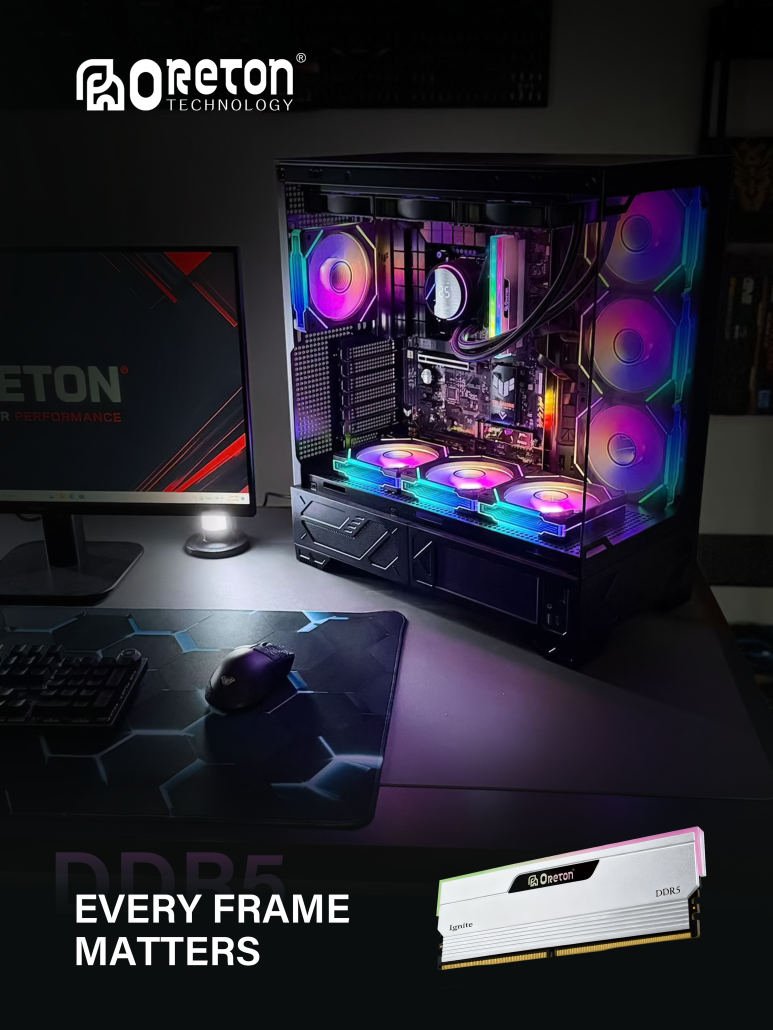
At Oreton, we focus on memory design and configuration as part of the complete PC platform.
Our DDR4 and DDR5 memory solutions can be configured for different capacity, frequency, heatsink, and module requirements depending on the target application.
For gaming PC manufacturers, OEMs, and system integrators, important considerations include:
- DRAM IC selection
- Module capacity
- Frequency and timings
- Rank configuration
- Platform compatibility
- Coerenza del prodotto
- Quality control
- OEM/ODM requirements
- Long-term supply planning
The objective is not simply to provide the highest memory frequency. It is to deliver a stable and consistent memory solution that matches the target platform and workload.
Conclusione
Gaming PC memory performance is influenced by more than capacity or frequency.
Capacità determines how much active data the system can keep available. Frequenza influences memory bandwidth, while tempi affect memory access behavior. Channel configuration, rank organization, the CPU memory controller, motherboard, BIOS, and workload can further influence the final result.
For gaming PC manufacturers and OEMs, the right memory configuration should therefore be evaluated as part of the complete system.
A well-designed gaming PC balances memory capacity, bandwidth, latency, compatibility, stability, cost, and production consistency rather than focusing on a single specification.
This system-level approach helps ensure that the selected memory solution performs reliably across the target gaming platform and remains suitable for long-term production.