





Purchasing SSDs in bulk is a different decision from buying a few drives for personal use. In large-volume procurement, the lowest unit price is rarely the full story. What matters more is whether the product can remain consistent across
shipments, perform reliably in real deployment environments, and continue to be available when repeat orders are needed.
For distributors, OEM partners, system builders, and project-based buyers, one incorrect sourcing decision can create a chain reaction: compatibility issues, higher return rates, delayed delivery schedules, customer complaints, or costly product replacements. That is why experienced buyers evaluate far more than headline read/write speeds.
This article looks at the factors that matter most before placing a bulk SSD order—and why they often determine the real cost of ownership over time.
Performance on Paper vs Performance at Scale
Many SSD listings focus on peak sequential speeds. These numbers are useful, but they only describe performance under specific test conditions. In real deployments, especially when hundreds or thousands of drives are installed across different systems, buyers need to know whether that performance is repeatable and stable.
A sample drive may benchmark well in a controlled environment, but bulk shipments introduce new variables: component sourcing changes, firmware revisions, platform differences, and workload diversity. If performance varies significantly between batches, the issue is no longer technical—it becomes operational.
For example, imagine a project where one shipment delivers acceptable boot times and stable application loading, while the next shipment feels slower under the same conditions. Even if both products carry the same label, inconsistency creates support pressure and damages confidence in the final product.
This is why serious buyers should ask not only “How fast is the SSD?” but also:
- Will the next shipment behave the same way?
- Are components locked or subject to change?
- Is firmware managed consistently?
- Has performance been validated beyond a single benchmark screenshot?
In large-scale purchasing, repeatability often matters more than peak speed.
Component Transparency Matters More Than Many Buyers Expect
An SSD is not one single component. It is a combination of controller, NAND flash, firmware, PCB design, thermal behavior, and sometimes DRAM cache. If any of these elements change, the user experience may also change.
Some suppliers reserve the flexibility to switch controllers or NAND sources depending on market availability. While component substitution is not automatically negative, undisclosed changes can create major problems for buyers who approved an earlier sample based on different hardware.
This becomes especially important when a customer has already qualified the product internally. Once a drive has passed compatibility tests, been added to a product catalog, or entered deployment planning, unexpected hardware changes can reset the validation process and consume time.
Professional buyers should therefore evaluate whether the supplier offers:
- clear BOM (bill of materials) control
- disclosure of major component changes
- version tracking for product revisions
- transparent communication when alternatives are introduced
A trustworthy supply relationship is built on predictability, not surprises.
Choosing the Right SSD for the Real Workload
One of the most common procurement mistakes is assuming all SSDs fit all workloads. In reality, storage requirements differ significantly depending on how the drive will be used.
A basic office PC may prioritize low power consumption, smooth startup, and low failure rates. A surveillance environment may demand continuous writing. A content workstation may need sustained transfer performance under large file loads. A point-of-sale terminal may care more about reliability and uptime than benchmark speed.
These use cases place very different stress patterns on the SSD.
That is why endurance and architecture matter. Buyers should consider factors such as:
- expected daily writes
- average usage hours per day
- file size patterns
- random vs sequential workload behavior
- importance of sustained performance vs occasional bursts
The best purchasing decision is not necessarily the highest-speed model or the cheapest model. It is the drive whose design matches the actual operating environment.
Firmware Quality Is Often Invisible—Until Problems Appear
Many procurement discussions focus on hardware, but firmware is just as important. Firmware determines how the SSD manages wear leveling, garbage collection, thermal response, error recovery, compatibility behavior, and overall stability.
When firmware is poorly optimized, the drive may still pass a simple speed test while showing issues later in deployment:
- unstable latency under sustained use
- compatibility problems with certain motherboards or chipsets
- unexpected throttling
- slower recovery after heavy workloads
- inconsistent behavior after sleep/wake cycles or repeated reboots
Because firmware quality is not obvious from product photos or headline specifications, buyers should ask whether the product has undergone platform validation and whether firmware management continues after shipment.
A responsive supplier should be able to discuss testing methodology, supported platforms, and how post-sale issues are handled if they arise.
Supply Continuity Can Be More Valuable Than a Low Initial Price
Bulk purchasing often extends beyond one order. Many projects need repeat shipments, staged deployment, or long-term replenishment. A low-cost offer can become expensive if the product becomes unavailable shortly afterward.
This is why lifecycle planning matters. Buyers should understand:
- whether the model is intended for ongoing supply
- whether production capacity can support growth
- whether there is visibility into future availability
- what happens if key components reach EOL (End of Life)
- whether replacement models are compatible if transitions are required
For system brands and OEM partners, supply continuity protects not only operations but also customer relationships. Requalifying new hardware every few months creates avoidable friction.
Quality Control and Failure Rate Are Real Cost Drivers
The purchase price of an SSD is easy to compare. The cost of failure is often hidden until later.
A drive with a lower upfront price may generate higher total cost if it leads to returns, technical support time, logistics expenses, or damaged end-user trust. In bulk projects, even a small increase in failure rate can become meaningful.
That is why quality control should be part of supplier evaluation. Buyers should understand whether products are checked before shipment and whether testing focuses only on basic detection or deeper functional validation.
Useful questions include:
- Is outgoing inspection performed on each batch?
- Are products function-tested before shipment?
- Are there internal standards for sampling and consistency?
- How are warranty claims handled?
- Is historical field feedback used to improve future shipments?
Long-term cost is influenced by reliability far more than by small differences in unit price.
Execution Ability: Logistics, Communication, and Support
Even strong products can become difficult projects if communication is slow or delivery execution is weak.
Bulk procurement often involves schedules, packaging requirements, documentation requests, branding needs, customs timelines, and urgent coordination. A capable supplier should not only manufacture products but also support the business process around them.
Fast response times, clear production updates, accurate lead times, and efficient after-sales handling all reduce friction. For repeat buyers, this operational reliability becomes part of the purchasing decision.
In practice, many successful long-term partnerships are built as much on communication quality as on hardware quality.
How Experienced Buyers Make the Final Decision
Experienced buyers usually compare offers beyond the quotation sheet. They evaluate the total picture:
- Can this supplier maintain consistency?
- Does the product match the intended workload?
- Is the firmware stable and validated?
- Can supply continue over time?
- Is quality control credible?
- Will communication remain efficient after payment?
When these questions are answered well, procurement becomes lower-risk and more scalable.
Dernier point à retenir
Ordering SSDs in bulk should never be reduced to a price comparison.
The stronger decision is the one that balances performance, reliability, transparency, supply continuity, and support capability. These factors determine whether a project runs smoothly after deployment—or becomes expensive to maintain.
The most valuable supplier is not simply the one offering drives. It is the one helping buyers reduce uncertainty.
À propos d'Oreton
At Oreton, we understand that bulk buyers need more than specifications. They need consistency, clear communication, and dependable long-term cooperation.
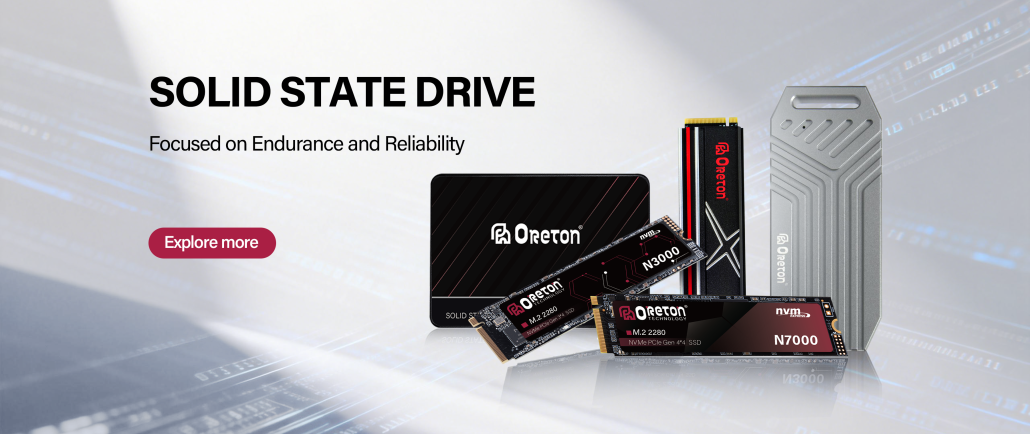
Our storage portfolio includes flexible capacities and configurations for different market needs. Every shipment goes through internal validation and quality checks designed to support stable batch performance and reliable deployment outcomes.
For partners building products, serving distribution channels, or managing ongoing projects, we focus on delivering solutions that work not only in testing—but in the real market.