





Over the past few years, QLC (Quad-Level Cell) NAND has moved from being labeled “entry-level” to becoming a central topic in mainstream storage discussions.
As 2TB and 4TB consumer SSDs rapidly drop in price, QLC has played a key role in enabling higher capacities at lower cost per gigabyte. At the same time, concerns around endurance, sustained write performance, and long-term reliability have persisted.
So is QLC a capacity breakthrough — or a compromise in reliability?
The answer lies not in perception, but in workload models, architecture design, and data-driven evaluation.
1. The Technical Foundation of QLC: Density vs. Physical Limits
In NAND evolution:

SLC: 1 bit per cell
-
MLC: 2 bits per cell
-
TLC: 3 bits per cell
-
QLC: 4 bits per cell
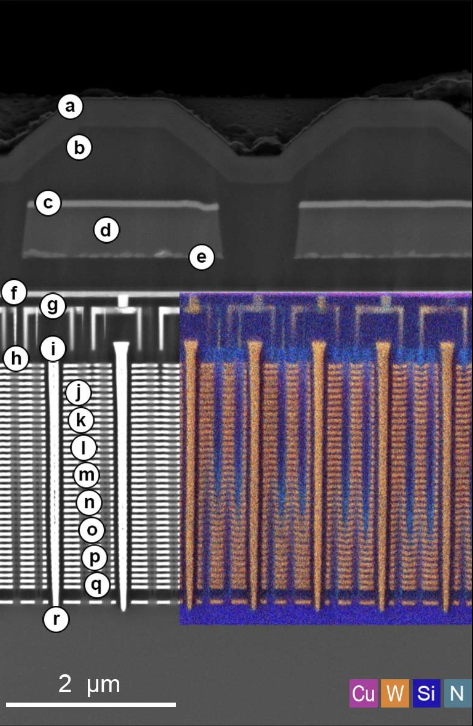
Each additional bit significantly increases storage density but narrows voltage margins inside the cell. This directly impacts endurance and error tolerance.
Typical industry endurance ranges (publicly available figures):
-
TLC: ~1000–3000 P/E cycles
-
QLC: ~100–1000 P/E cycles
This is not a “quality issue,” but a physical characteristic of multi-level cell design.
Modern 3D NAND structures (176-layer, 232-layer and beyond) improve density and partially mitigate endurance constraints, but QLC still relies heavily on:
-
Advanced ECC (Error Correction Code)
-
Wear leveling algorithms
-
Garbage collection efficiency
-
Controller architecture optimization
In other words, QLC performance and reliability are system-level outcomes — not just NAND-type decisions.
2. The Boundary Between Consumer and Enterprise Use
The QLC debate often arises because different workloads produce very different results.
Consumer Workloads: Read-Dominant and Burst-Based
Public usage data suggests that average consumer daily writes typically remain below 20–30GB per day.
Par exemple :
-
A 1TB QLC SSD with a TBW rating of 200–400TB
-
At 30GB/day sustained writes
-
Theoretical lifespan exceeds 10 years
Les charges de travail typiques des consommateurs sont les suivantes
-
Game libraries (read-heavy)
-
Media storage
-
Applications bureautiques
-
Light content creation
In these cases, QLC’s density advantage translates directly into better capacity value without significantly stressing endurance limits.
Here, QLC is not a compromise — it is an economically efficient solution.
Enterprise Workloads: Sustained Write Intensity Matters
Enterprise environments differ fundamentally:
-
High-concurrency workloads
-
Continuous logging
-
Database transaction layers
-
Virtualized infrastructure
-
AI training pipelines
These workloads involve sustained, heavy write patterns.
Under such conditions:
-
Lower P/E cycles are consumed faster
-
Write amplification becomes more impactful
-
Thermal stress accelerates degradation
Therefore, in enterprise deployments, QLC is typically positioned in:
-
Cold storage tiers
-
Archive layers
-
Read-intensive data pools
-
Secondary storage nodes
Core transaction layers generally remain TLC- or higher-endurance-based.
The real boundary is not whether QLC “can be used,” but whether it is properly matched to workload behavior.
3. The Real Impact of SLC Cache Strategy
To address QLC’s inherent write limitations, most QLC SSDs implement SLC caching mechanisms.
The principle is simple:
A portion of QLC NAND temporarily operates in SLC mode to accelerate incoming writes before being folded back into QLC blocks in the background.
This results in:
-
High burst write speeds (often 1500–3000MB/s depending on interface and controller)
-
Significantly lower speeds once the cache is saturated
After cache exhaustion, sustained write performance may drop to 100–400MB/s, depending on firmware strategy and folding efficiency.
This explains why QLC performance appears “excellent” in light usage yet inconsistent during large, continuous transfers (e.g., 200GB+ media ingestion or dataset migration).
The real-world impact depends on:
-
Cache size allocation (static vs dynamic)
-
Folding algorithm efficiency
-
Background garbage collection scheduling
-
Gestion thermique
Thus, the difference between a stable QLC solution and a problematic one is rarely just NAND type — it is firmware maturity and system tuning.
4. Long-Term Stability Under Sustained Writes
In high-intensity environments, several technical factors influence QLC longevity:
Amplification de l'écriture
SLC-to-QLC folding increases internal writes. Poorly optimized algorithms amplify wear and reduce usable lifespan.
Thermal Acceleration
At elevated temperatures (e.g., 60°C+ environments), charge leakage increases and data retention periods shorten.
Controller and Firmware Strategy
Robust implementation of:
-
Advanced ECC engines
-
Nivellement dynamique de l'usure
-
Bad block management
-
Thermal throttling mechanisms
can significantly extend practical lifespan beyond theoretical NAND limitations.
Therefore, endurance ratings alone do not fully define reliability — system integration quality does.
5. Capacity Revolution — or Misapplied Technology?
QLC is neither inherently risky nor universally suitable.
It represents:
-
Higher density
-
Coût par Go réduit
-
Greater reliance on architecture optimization
When deployed in read-intensive or moderate-write scenarios, QLC delivers strong economic value.
When forced into heavy sustained-write workloads without architectural consideration, it reveals its physical constraints.
The debate around QLC often reflects misalignment between deployment scenario and design intent.
Technology itself is neutral. Application determines outcome.
6. Matching Before Maximizing: A Practical Perspective
In real-world storage planning, we prioritize:
-
Actual workload patterns
-
Deployment temperature conditions
-
Expected service lifecycle
-
Long-term maintenance cost
over peak benchmark figures.
Au Oreton, our approach to QLC-based solutions is built around workload matching rather than specification racing.
For QLC deployments, we emphasize:
-
Clear scenario positioning
-
Optimized firmware and cache management
-
Batch consistency control
-
Secondary validation and aging tests before shipment
We believe capacity can scale, and performance can be tuned —
but stability defines long-term value.
If you are evaluating whether QLC fits your deployment architecture, we are ready to support a more precise, workload-based assessment.
In storage selection, matching matters more than headline numbers.