





When people compare DDR5 memory modules, the first numbers they usually notice are frequency and capacity.
Specifications such as 5600 MT/s, 6400 MT/s, or even higher speeds often dominate product descriptions and marketing materials.
However, one critical factor behind DDR5 performance is often overlooked: the DRAM chips themselves, also known as memory ICs. These small semiconductor components determine much of the module’s real-world behavior, including stability, overclocking potential, latency tolerance, and compatibility across platforms.
For system builders, OEM manufacturers, and hardware enthusiasts, understanding the role of DDR5 memory chips helps explain why two modules with identical specifications can behave very differently.
The Role of DRAM Chips in DDR5 Memory Modules
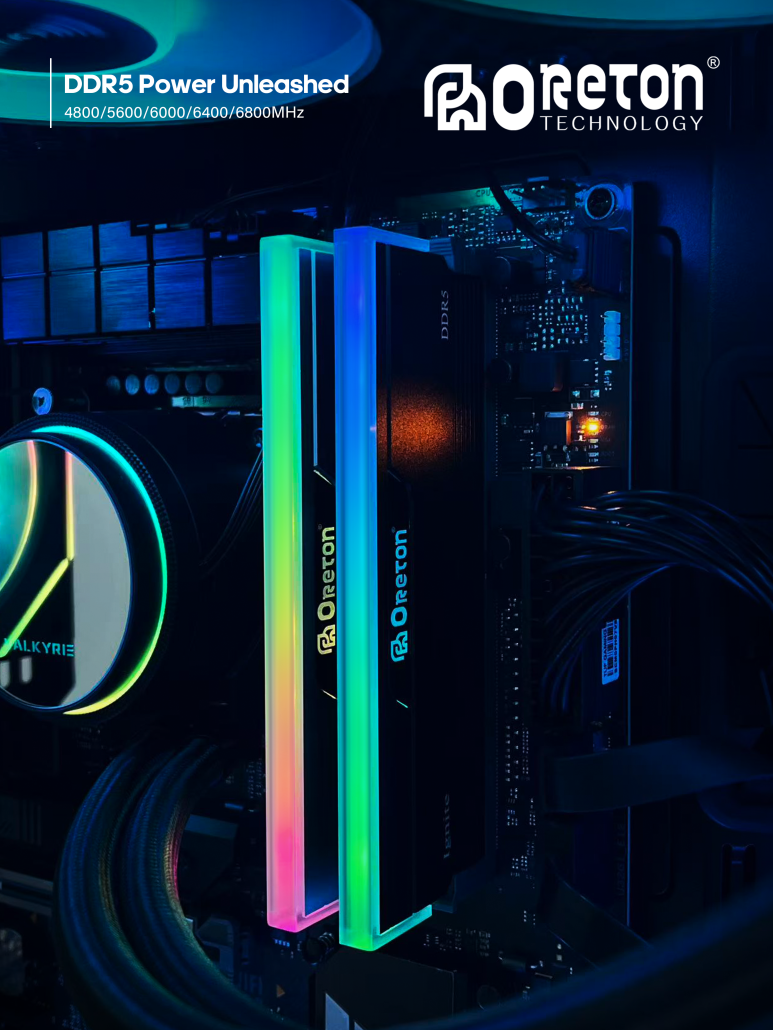
A memory module is more than a simple collection of storage cells. Each DDR5 DIMM consists of several components working together, including DRAM
chips, power management circuitry, and a printed circuit board designed to maintain signal integrity.
Among these components, the DRAM ICs are the core element responsible for storing and retrieving data. Their internal architecture, manufacturing process, and quality grading influence the performance limits of the entire module.
Even when two memory kits share the same advertised speed, their underlying DRAM chips may differ in several ways:
-
Manufacturing process and wafer quality
-
internal die design
-
voltage tolerance
-
thermal behavior
These factors directly affect how well a module performs under high frequency or sustained workloads.
Major DDR5 DRAM Manufacturers
The global DRAM market is dominated by three major semiconductor manufacturers: Samsung, SK hynix, and Micron. Together, these companies produce the majority of DDR5 memory chips used in consumer and enterprise memory modules.
Each manufacturer uses its own fabrication processes and design optimizations, which can result in different performance characteristics.
Samsung has historically been known for strong manufacturing scale and consistent production quality. Samsung DDR5 chips are widely used across consumer and OEM memory products, often providing stable baseline performance.
SK hynix has gained significant attention in recent DDR5 generations due to strong high-frequency performance. Certain SK hynix chip variants have become popular among enthusiasts and high-performance memory manufacturers.
Micron focuses heavily on power efficiency and long-term stability, making its DRAM chips widely used in enterprise environments and OEM systems where reliability is a priority.
While the differences between manufacturers are often subtle, they can become more noticeable in high-frequency configurations or demanding workloads.
Die Variations and Their Impact
Beyond the manufacturer itself, die variations within DDR5 chips also influence performance.
In semiconductor manufacturing, a “die” refers to the individual integrated circuit design produced from a silicon wafer. Different die revisions can introduce changes in signal behavior, voltage tolerance, or efficiency.
For example, certain DDR5 dies are known for their ability to sustain higher frequencies, while others may prioritize lower power consumption or stable operation at standard speeds.
These die variations are one reason why memory modules with the same advertised specifications may still differ in overclocking headroom or long-term stability.
In enthusiast communities, particular DDR5 dies have gained reputations for strong performance characteristics, especially in high-frequency environments. However, for OEM and enterprise applications, the focus often shifts from maximum speed to predictable and consistent operation.
Overclocking Potential and Frequency Scaling
High memory frequencies depend heavily on the quality of the DRAM chips used in a module.
When a module is rated for speeds such as DDR5-6400 or DDR5-7200, the underlying DRAM chips must maintain stable signal timing under increased electrical stress. Higher frequencies require tighter control of voltage regulation, signal integrity, and timing margins.
Modules built with higher-quality DRAM chips often provide:
-
greater frequency headroom
-
better tolerance to voltage adjustments
-
more stable operation under heavy workloads
Conversely, modules built from lower-binned chips may still reach their rated specifications but have less margin for tuning or sustained high-frequency operation.
For this reason, memory manufacturers typically perform binning processes, selecting chips that meet specific performance criteria before assembling them into modules designed for different speed grades.
Stability and Platform Compatibility
While high frequencies often receive the most attention, stability remains the most critical factor in real-world systems.
Memory modules must operate reliably across a wide range of platforms, including different CPUs, motherboards, and firmware configurations. DRAM chip characteristics influence how well modules maintain stability under these varying conditions.
Factors affected by DRAM chip quality include:
-
signal tolerance under high frequencies
-
resistance to electrical noise
-
temperature sensitivity during prolonged workloads
-
compatibility with integrated memory controllers
In large-scale deployments—such as OEM systems or enterprise environments—consistency between batches of DRAM chips becomes especially important. Even small variations can affect validation processes or system integration.
As DDR5 frequencies continue to increase, the importance of stable and well-characterized DRAM components will only grow.
Performance Is More Than Just a Number
Modern DDR5 memory modules are often evaluated based on headline specifications, but performance is determined by a combination of factors beneath the surface.
Frequency ratings represent the final product specification, yet the DRAM chips inside the module largely define how reliably those specifications can be maintained.
Manufacturing quality, chip selection, and validation processes all play important roles in ensuring that memory modules deliver stable and consistent performance across different workloads and system configurations.

For both enthusiasts seeking performance and organizations deploying hardware at scale, understanding the role of DRAM chips helps reveal why memory design is more complex than a simple frequency rating.
Oreton: Reliable Memory Built on Quality Components
At Oreton, memory products are developed with a strong emphasis on component quality, platform compatibility, and long-term stability.
By carefully selecting DRAM components and implementing strict validation procedures, Oreton memory modules are designed to deliver consistent performance across different platforms and workloads. Each production batch undergoes additional internal inspection before shipment, helping ensure dependable operation and extremely low return rates in real-world deployments.
For partners seeking reliable memory solutions, the goal is not simply higher specifications, but balanced performance built on stable components and rigorous quality control.