





Beyond Specifications: Managing Supply Stability in SSD and Memory Procurement
When evaluating storage products such as SSDs and memory modules, most buyers focus on specifications—capacity, speed, interface, and price.
However, in large-scale or long-term deployments, these parameters are only part of the equation. A less visible but equally critical factor is lifecycle management.
For OEM customers, system integrators, and distributors, lifecycle-related risks—such as supply inconsistency, component changes, and end-of-life (EOL) transitions—can have a direct impact on product stability, operational costs, and customer satisfaction.
Why Lifecycle Management Matters More in B2B Environments
Unlike consumer purchases, B2B procurement often involves:
-
long product lifecycles (1–5 years or more)
-
repeated batch orders
-
strict system validation requirements
-
consistent performance expectations across deployments
In such scenarios, even small variations in hardware can lead to:
-
problemas de compatibilidad
-
system instability
-
increased failure rates
-
costly returns or revalidation processes
This is why lifecycle management is not just a supply chain concern—it is a technical and operational priority.
1. Long-Term Supply: More Than Just Availability
One of the most overlooked challenges in storage procurement is long-term supply consistency.
While a product may be available today, there is no guarantee that:
-
the same model will remain in production
-
the internal components will stay unchanged
-
performance characteristics will remain consistent
In the NAND and DRAM industry, supply is heavily influenced by:
-
wafer production cycles
-
market demand fluctuations
-
vendor allocation strategies
For example, during periods of NAND shortage, suppliers may prioritize high-margin products or adjust production plans, affecting availability for certain models.
What Buyers Should Evaluate
-
Is the product part of a long-term supply program?
-
Does the supplier offer lifecycle visibility?
-
Are there guarantees on component consistency over time?
Without clear answers, buyers may face unexpected disruptions in future procurement cycles.
2. BOM Changes: The Hidden Source of Inconsistency
Another critical but often overlooked factor is Bill of Materials (BOM) variation.
Even when a product retains the same model name and specifications, internal components may change over time, including:
-
NAND flash type (TLC ↔ QLC)
-
DRAM configuration
-
controller revisions
-
PCB layout updates
These changes are sometimes necessary due to component availability or cost optimization. However, they can lead to:
-
performance variation between batches
-
different thermal characteristics
-
compatibility issues with certain systems
Real-World Impact
In large deployments, inconsistent BOM across batches can result in:
-
uneven system performance
-
unexpected behavior under load
-
increased troubleshooting complexity
For system integrators, this can translate into higher operational costs and longer validation cycles.
Key Question for Buyers
-
Does the supplier provide BOM control or notification mechanisms?
-
Are changes tracked and documented?
-
Can batch-level consistency be ensured?
3. EOL Risk: Planning for the End Before It Happens
End-of-life (EOL) is an inevitable part of hardware product cycles. However, what matters is how predictable and manageable the transition is.
Unplanned or poorly communicated EOL events can cause:
-
sudden supply shortages
-
forced redesign of systems
-
urgent and costly last-time buys
In storage products, EOL risks are often tied to:
-
NAND generation transitions
-
controller discontinuation
-
shifts in manufacturing nodes
Industry Practice
Leading suppliers typically provide:
-
Product Change Notifications (PCN)
-
End-of-Life (EOL) notices
-
Last Time Buy (LTB) opportunities
However, not all suppliers maintain the same level of transparency or lead time.
What Buyers Should Look For
-
Advance EOL notification timelines
-
Migration support to alternative products
-
consistency between old and new product generations
Lifecycle Management Is a Stability Strategy
Ultimately, lifecycle management is not just about supply continuity—it is about ensuring system-level stability over time.
For OEM customers and distributors, the real cost of a storage product includes:
-
validation effort
-
deployment risk
-
after-sales support
-
return and failure rates
A product with stable lifecycle management can significantly reduce these hidden costs.
A Practical Approach to Storage Procurement
When evaluating SSD and memory solutions, it is worth considering a broader set of criteria:
-
coherencia entre lotes
-
transparency in component changes
-
long-term supply planning
-
clear lifecycle communication
These factors often have a greater long-term impact than peak performance specifications alone.
A Note on Stability and Supply Consistency
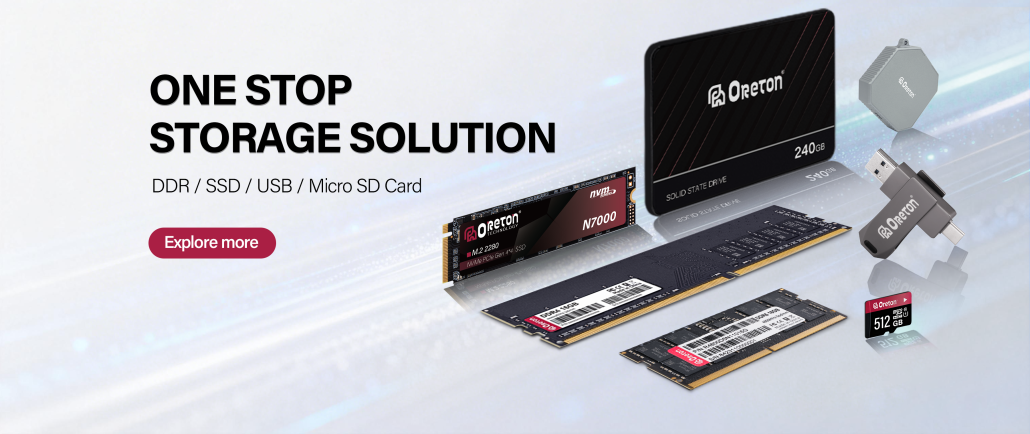
En Oreton, storage and memory products are developed with a focus on consistency across batches and long-term usability.
Through controlled component selection and internal validation processes before shipment, efforts are made to minimize variability and ensure reliable performance across different deployment scenarios.
As system requirements continue to evolve, maintaining balance between performance, supply continuity, and stability remains an essential part of storage product design.