





Why Most External SSD Problems Come From Selection Logic — Not the Drive
External SSD failures are often blamed on “bad drives.”
But in OEM projects, the root cause is rarely the NAND or flash quality itself.
In most RMA cases, the failure chain starts much earlier —
con interface assumptions, controller mismatches, and power delivery limits that were never validated at the system level.
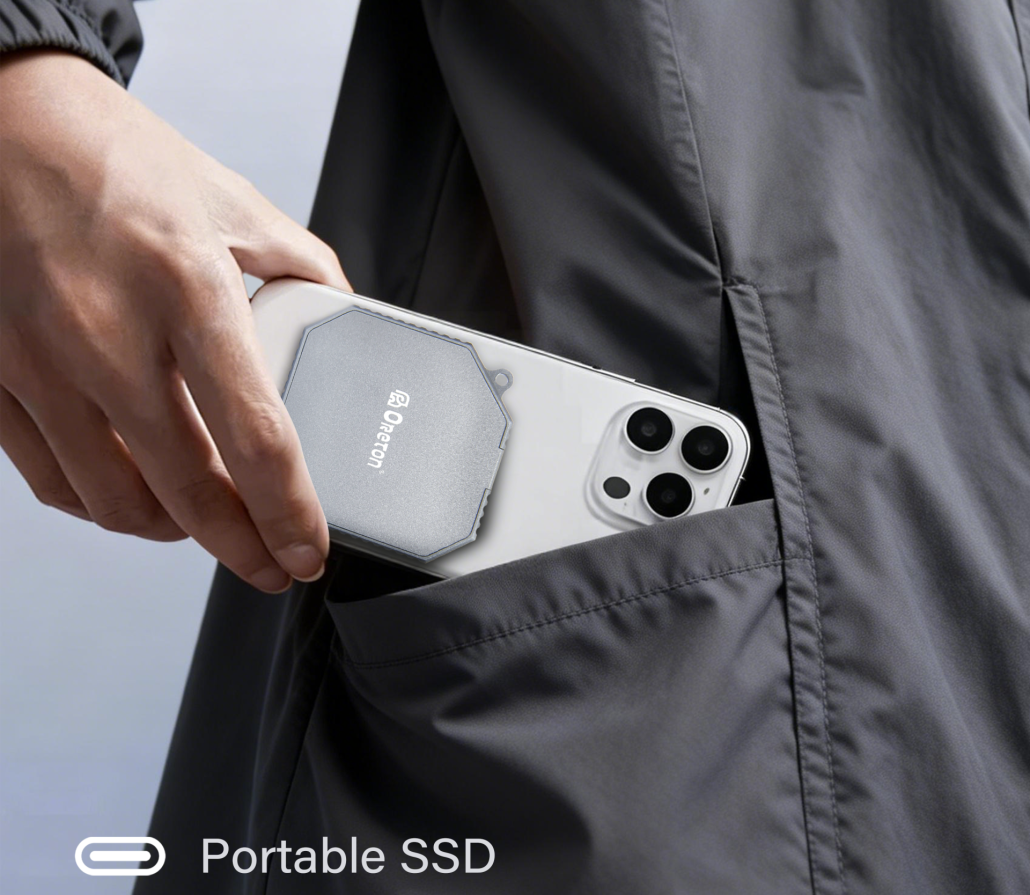
This article breaks down where external SSD projects actually go wrong — and how to avoid those risks before shipment.
1. USB Interface ≠ Performance Guarantee
One of the most common selection mistakes is treating USB labels as linear performance upgrades.
USB Gen2 / Gen2x2 / Thunderbolt: Real-World Differences
| Interfaz | Theoretical Bandwidth | Typical Real Throughput | Common OEM Reality |
|---|---|---|---|
| USB 3.2 Gen2 (10Gbps) | 1,250 MB/s | 900–1,050 MB/s | Most laptops & mini PCs |
| USB 3.2 Gen2x2 (20Gbps) | 2,500 MB/s | 1,700–2,000 MB/s | Poor host support |
| Thunderbolt 3 / 4 | 40Gbps | 2,800–3,500 MB/s | Limited to TB-certified platforms |
Key issue:
Many OEMs select Gen2x2 enclosures assuming “double the speed,”
but over 70% of laptops and embedded platforms do not support Gen2x2 at all.
Resultado:
-
Drive runs at Gen2 speed
-
Users report “SSD not reaching advertised performance”
-
Product gets blamed, not the interface mismatch
2. Controller Choice Matters More Than NAND in External SSDs
Unlike internal SSDs, external drives rely heavily on bridge controllers to translate PCIe → USB / TB.
Common Controller-Level Failure Modes
| Issue Type | Real-World Symptom | Root Cause |
|---|---|---|
| Controller overheating | Sudden disconnects | No thermal path in enclosure |
| Firmware instability | Drive drops under load | Poor USB protocol handling |
| Power sensitivity | Random dismounts | Host port power fluctuation |
| Sleep / resume errors | Drive not recognized | Controller firmware edge cases |
A high-quality NVMe SSD paired with a marginal USB controller
will fail faster than a mid-range SSD with a stable bridge solution.
3. Power Delivery: The Silent RMA Trigger
External SSDs often fail without any visible damage — because power instability doesn’t leave marks.
Typical Power-Related Failure Scenarios
-
Bus-powered USB ports delivering <4.5W under load
-
Thin cables causing voltage drop
-
Front-panel USB ports with unstable power rails
-
Mobile platforms entering aggressive power-saving states
What This Causes
| Power Issue | Resulting Behavior |
|---|---|
| Voltage dip during write | File corruption |
| Current spike | Controller reset |
| Inconsistent power | Drive disconnect / reconnect |
| Brownout events | SSD enters read-only or fails enumeration |
These failures are often intermittent, making them extremely costly to diagnose post-shipment.
4. OEM External SSD RMA: What Actually Fails Most Often
Based on common OEM return patterns, external SSD RMAs typically break down like this:
| Failure Category | Share of RMA Cases |
|---|---|
| Interface / host incompatibility | ~35% |
| Controller firmware instability | ~25% |
| Power delivery issues | ~20% |
| Thermal design problems | ~15% |
| Actual NAND failure | <5% |
Lo más importante:
Over 90% of external SSD failures are system-level issues, not flash quality problems.
5. How OEMs Should Rethink External SSD Selection
A stable external SSD project starts with environment-first logic, not peak-speed targets.
Practical OEM Selection Checklist
-
✅ Validate host interface support (Gen2 vs Gen2x2 vs TB)
-
✅ Match controller thermal design to enclosure material
-
✅ Test sustained write, not burst benchmarks
-
✅ Validate power stability across multiple host platforms
-
✅ Run disconnect / sleep / resume stress cycles
Peak sequential speed matters far less than consistency under real-world constraints.
Conclusion: External SSD Stability Is a System Decision
When an external SSD fails, it is rarely because the SSD is “bad.”
More often, it is because the interface, controller, enclosure, and power assumptions were never aligned.
For OEMs, the goal is not maximum headline speed —
but predictable behavior across hosts, workloads, and environments.
That requires interface-aware design, controller validation, and system-level testing, not just fast components.
At Oreton, external storage solutions are built with this logic in mind —
focusing on stable controllers, thermal-aware enclosures, and interface-matched configurations designed for long-term OEM deployment, not short-term benchmarks.