





A practical guide to selecting the right interface, form factor, capacity, and performance for commercial and OEM deployments.
When selecting storage products for business projects, many buyers naturally focus on specifications such as PCIe generation, sequential read speeds, or the latest technology. While these factors are important, they are rarely the only considerations that determine whether a product is suitable for a particular application.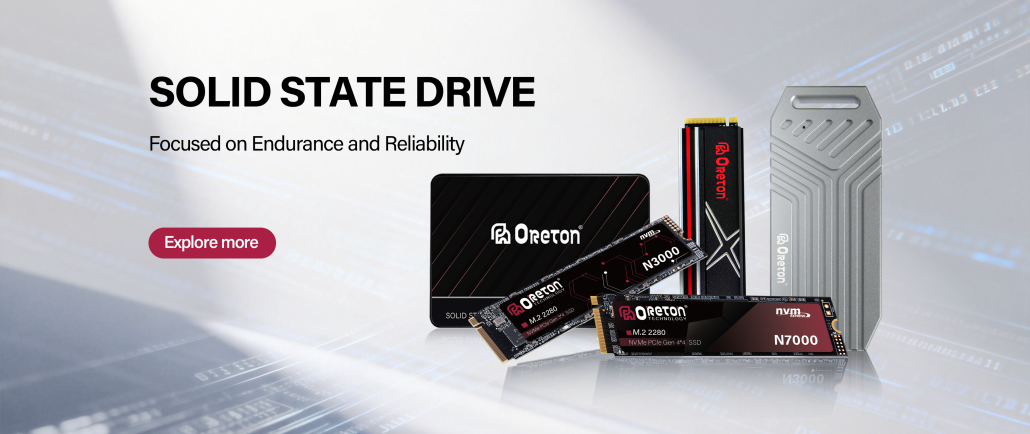
For distributors, system integrators, OEM customers, and enterprise buyers, choosing the right SSD is about balancing performance, compatibility, reliability, lifecycle, and cost. A high-end PCIe Gen5 SSD may be an excellent choice for one project but unnecessary—or even incompatible—for another.
Through ongoing cooperation with partners in different regions and industries, Oreton has found that successful deployments begin with understanding how the storage device will actually be used. The right SSD is not simply the fastest one available, but the one that best matches the application’s requirements.
This article explores how different business scenarios influence SSD selection and why interface, form factor, capacity, and long-term product stability all play an important role.
Understanding the Four Key Factors
Before selecting a storage product, it is helpful to evaluate four fundamental aspects.
1. Interface
The interface determines both compatibility and potential performance.
Common business SSD interfaces include:
- 2.5-inch SATA – Widely compatible with existing commercial desktops, POS terminals, and industrial PCs.
- M.2 SATA – Uses the M.2 form factor while maintaining SATA performance, often found in compact systems.
- M.2 NVMe PCIe Gen3 – A balanced solution for office PCs, commercial systems, and many OEM projects.
- M.2 NVMe PCIe Gen4 – Increasingly popular for high-performance workstations and content creation.
- PCIe Gen5 – Designed for cutting-edge platforms where maximum bandwidth is required.
Selecting a faster interface than the platform supports offers little practical benefit. Compatibility should always be verified before performance becomes the primary consideration.
2. Form Factor
The physical size of the SSD must match the system design.
The most common form factors are:
- 2.5-inch SATA SSD
- M.2 2280 SSD
While M.2 SSDs dominate many new platforms, 2.5-inch SATA SSDs remain widely used across commercial and industrial environments because of their compatibility, simplicity, and mature ecosystem.
3. Capacity
Capacity should reflect actual workload rather than simply maximizing specifications.
Typical recommendations include:
- 256 جيجابايت – Basic office systems and lightweight commercial applications.
- 512 جيجابايت – The most balanced choice for general business use.
- 1 تيرابايت – Professional workloads with larger datasets.
- 2TB and above – Content creation, AI development, and specialized applications.
Over-specifying capacity increases project costs, while under-specifying storage may reduce productivity over time.
4. Reliability and Lifecycle
Business deployments often remain in service for five years or more.
Therefore, considerations such as:
- Product consistency
- Component quality
- Validation procedures
- Stable supply
- التوافر على المدى الطويل
can be just as important as benchmark performance.
For OEM projects especially, lifecycle planning often begins long before the first system is shipped.
Office PCs: Practical Performance Over Maximum Speed
Office computers continue to represent one of the largest commercial deployment categories.
Typical workloads include:
- Microsoft Office
- البريد الإلكتروني
- ERP systems
- Web applications
- Video conferencing
These applications rarely require extreme storage bandwidth.
For most office environments, recommended configurations include:
- Interface: SATA or PCIe Gen3 NVMe
- Form Factor: 2.5-inch SATA or M.2 2280
- السعة: 256 جيجابايت - 512 جيجابايت
- Memory: DDR4 or DDR5 depending on platform
In these scenarios, system responsiveness, compatibility, and long-term reliability provide greater business value than peak benchmark numbers.
Education Systems: Maximizing Value Within Budget
Schools, universities, and training centers often deploy hundreds or thousands of computers simultaneously.
Large-scale education projects typically prioritize:
- الكفاءة من حيث التكلفة
- Easy maintenance
- Broad hardware compatibility
- Reliable operation
Typical recommendations include:
- 2.5-inch SATA SSD
- 240GB–480GB capacities
- ذاكرة DDR4
Although newer technologies continue to evolve, mature platforms frequently offer the best balance between performance and budget for educational environments.
POS Systems: Stability Comes First
Point-of-sale systems operate in restaurants, supermarkets, pharmacies, and retail stores where continuous operation is essential.
Unlike gaming systems, POS terminals rarely require maximum storage performance.
Instead, businesses focus on:
- Fast boot times
- Stable daily operation
- Low maintenance
- Long product lifecycle
For many POS deployments:
- 2.5-inch SATA SSDs remain the preferred choice
- 240GB or 480GB capacities are often sufficient
- DDR4 memory continues to be widely adopted
Compatibility with existing hardware often outweighs the benefits of adopting the newest storage technologies.
Workstations for Design, Engineering, and Content Creation
Professional workstations handle significantly larger files than typical office computers.
Applications may include:
- CAD software
- 3D rendering
- Video editing
- تطوير البرمجيات
- AI-assisted workflows
These workloads benefit from:
- PCIe Gen4 NVMe SSDs
- 1TB or larger capacities
- Higher-capacity DDR5 memory
For these users, faster sustained performance can directly improve productivity.
Industrial PCs: Long-Term Stability Matters
Industrial computers often operate in factories, transportation systems, manufacturing equipment, and embedded environments.
Unlike consumer hardware, industrial systems may remain in service for many years without hardware upgrades.
Selection priorities typically include:
- Stable operation
- Long-term supply
- Product consistency
- Platform compatibility
Depending on the application, either 2.5-inch SATA أو M.2 SATA/NVMe SSDs may be appropriate.
The newest interface is not always the most practical choice.
Understanding Regional Market Demand
Technology adoption varies significantly across global markets.
One lesson learned through ongoing cooperation with international partners is that successful product selection depends on local market realities rather than global technology headlines.
Brazil as an Example
Brazil has long been an important market for Oreton, and our discussions with distributors, retailers, and OEM partners continue to reveal consistent demand for practical, dependable storage solutions.
Although PCIe Gen5 SSDs and DDR5 memory attract considerable attention within the technology industry, a large number of commercial deployments in Brazil continue to rely on mature and proven platforms.
على سبيل المثال:
- 2.5-inch SATA SSDs remain widely used in commercial upgrade projects.
- DDR4 memory continues to account for a significant share of market demand.
- 256GB, 512GB, and 1TB SSDs remain the most requested capacities across many business applications.
- Customers frequently prioritize compatibility, product stability, and cost-performance balance over pursuing the latest specifications.
This illustrates an important point for distributors and OEM partners: understanding local customer requirements is often more valuable than simply stocking the newest technology.
The best-selling product is not always the newest product.
OEM Projects Require a Different Decision Process
For OEM customers, SSD selection extends beyond technical specifications.
Large-scale deployments introduce additional considerations such as:
- Component consistency across production batches
- Product validation
- Firmware stability
- Supply chain continuity
- Lifecycle management
- After-sales support
Even small component changes can increase validation costs or complicate future maintenance.
As a result, many OEM customers prefer products that deliver consistent long-term performance rather than chasing the highest benchmark scores.
Choosing the Right Product Portfolio
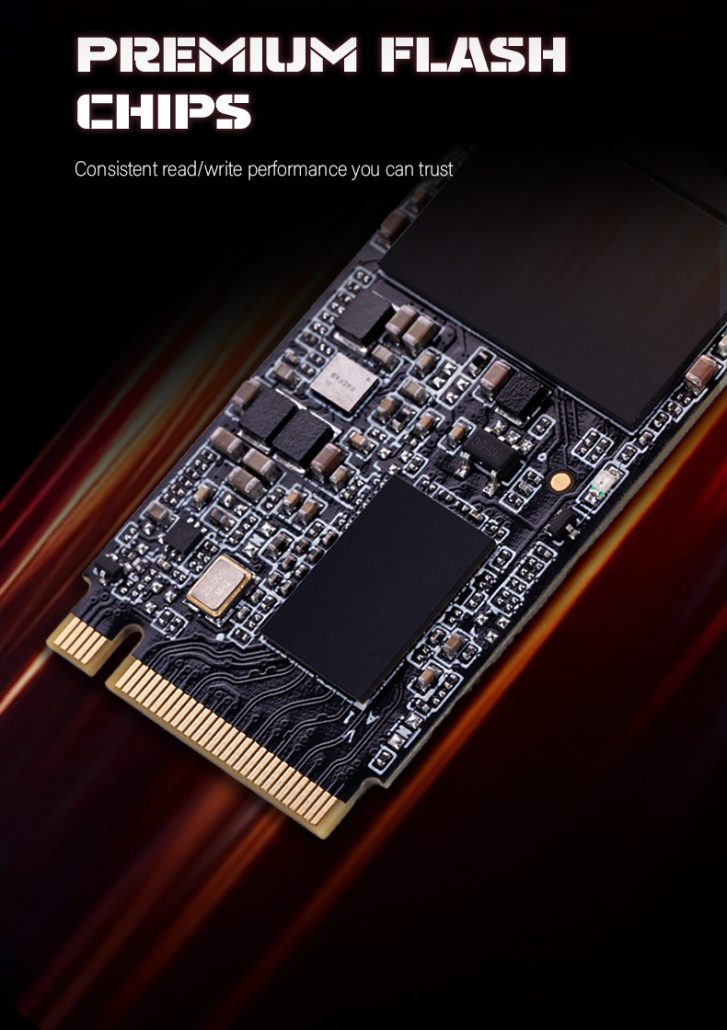 Successful distributors rarely focus on a single product category.
Instead, they build portfolios that address different customer needs.
A balanced lineup might include:
- 2.5-inch SATA SSDs for commercial upgrades and office deployments.
- PCIe Gen3 NVMe SSDs for mainstream business systems.
- PCIe Gen4 NVMe SSDs for professional workstations and gaming applications.
- ذاكرة DDR4 for mature commercial platforms.
- ذاكرة DDR5 for newer systems requiring higher bandwidth.
- Multiple capacity options, from 256GB to 2TB, to suit different workloads and budgets.
This strategy enables partners to serve a wider range of customers while maintaining efficient inventory management.
الخاتمة
Selecting the right SSD for a business application involves much more than choosing the highest read and write speeds.
Successful storage planning requires understanding the platform, workload, budget, deployment scale, and long-term maintenance requirements.
From office PCs and education systems to retail terminals, industrial computers, and OEM projects, every application has different priorities—and the best solution is the one that aligns with those real-world needs.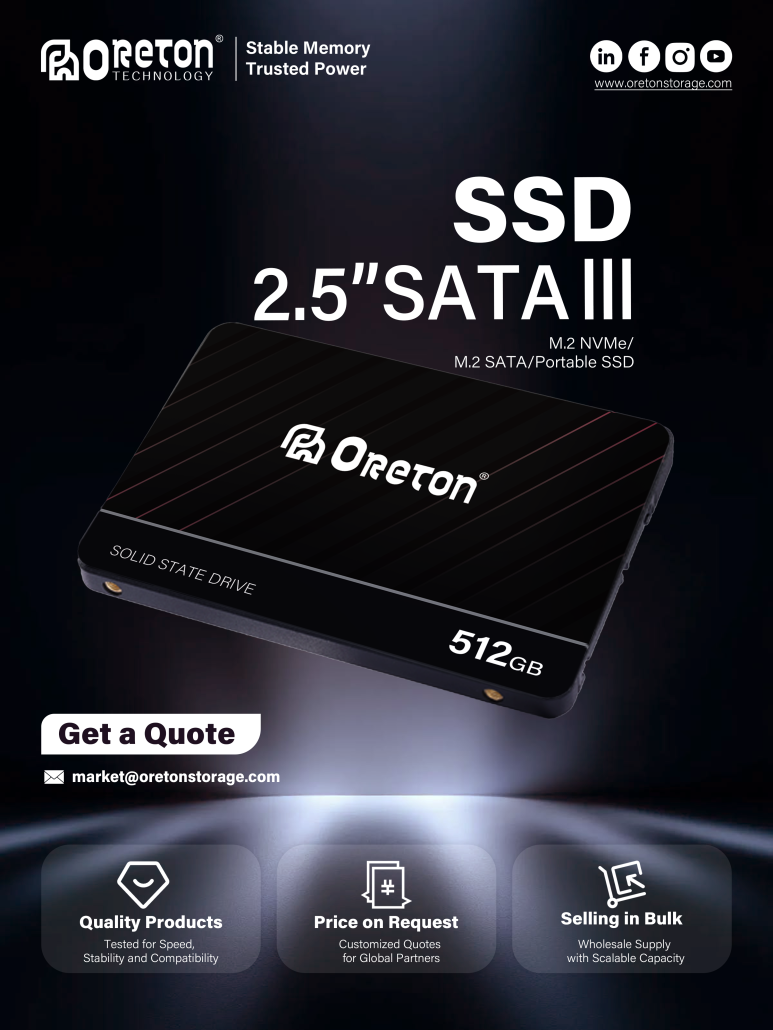
At Oreton, we work closely with partners across different markets to better understand regional demand and application requirements. Whether supporting mature platforms that continue to rely on 2.5-inch SATA SSDs and DDR4 memory or newer systems built around PCIe Gen4 NVMe SSDs and DDR5, our focus remains the same: delivering reliable, consistent storage and memory solutions that help customers build products with confidence.
Technology will continue to evolve, but understanding the market—and choosing products that truly fit it—will always remain the foundation of successful business deployments.