





Introduction
In the competitive world of SSD development, performance numbers like “7,000MB/s” often dominate spec sheets.
Yet for system integrators, builders, and brands, real-world reliability is determined by something far less visible — the pairing of NAND flash with the controller and firmware.
This alignment impacts not only speed, but also thermal behavior, endurance, consistency across batches, and long-term maintenance.
Understanding this deeper layer is key to building stable product lines that can scale with confidence.
1) Beyond Speed: Why NAND Pairing Matters
An SSD is an ecosystem:
Controller + NAND + Firmware + Power management + Thermal design
The NAND flash is not a passive component; its electrical characteristics, internal structure, and behavior under load all interact with the controller.
A well-paired SSD ensures:
✅ Stable sustained performance
✅ Predictable wear
✅ Efficient garbage collection
✅ Consistent latency
✅ Lower error rates
Poor pairing may still achieve high benchmark speeds — but can suffer from sudden drop-offs, thermal issues, or shortened lifespan during real workloads.
In high-duty environments, consistency beats peak speed.
2) Key Technical Factors That Shape SSD Reliability
① NAND Structure & Program Behavior
Different NAND generations vary in page size, voltage window tolerance, and program-erase characteristics.
Controllers must be tuned to handle these differences efficiently, which directly affects:
-
Write amplification
-
Latency control
-
Endurance (TBW)
-
Error correction behavior
Improper tuning leads to unpredictable performance and faster cell degradation.
② Firmware Calibration
Firmware is where controller meets NAND.
It governs functions such as:
-
ECC strategy
-
Wear leveling
-
Bad block handling
-
Thermal throttling response
-
SLC cache behavior
Optimized firmware ensures stable behavior throughout the drive’s life cycle — especially under sustained writes and repeated erase cycles.
③ Batch-Level Consistency
Even with the same NAND generation, consistency across batches matters.
Professional production ensures:
✅ Validated NAND bins
✅ Matched timing characteristics
✅ Consistent channel mapping
This prevents performance fluctuations between production runs — a critical requirement for brand and system builders.
3) Performance Consistency > Peak Rating
Real-world workloads—content creation, gaming, mobile storage, edge deployment—stress SSDs differently from synthetic benchmarks.
A well-paired SSD can maintain 80–90% sustained write throughput under thermal load, while poorly paired designs may drop 40–70% once SLC cache depletes.
Real value is created through:
-
Heat-optimized write strategies
-
Balanced SLC cache allocation
-
Smarter GC/Trim scheduling
Users experience smoother timelines, shorter export times, and better responsiveness — even when capacity is near full.
4) Power Behavior & Thermal Balance
NAND power characteristics influence heat generation, which affects:
-
Sustained performance
-
Thermal throttling frequency
-
Device longevity
Optimized pairing minimizes unnecessary current spikes and thermal stress — a key factor for compact systems where airflow is limited, such as portable drives or mini PCs.
5) Why This Matters for Integrators & Branding Partners
For partners building stable and scalable product portfolios, NAND pairing offers tangible benefits:
✅ Predictable product lifecycle
✅ Lower RMA rates
✅ Easier system qualification
✅ Reduced firmware maintenance
✅ Better cost planning
In production, pairing consistency supports reliable mass assembly and minimizes edge-case failures — crucial for partners shipping into diverse markets.
6) How Oreton Ensures NAND Pairing Stability
At Oreton, NAND pairing is treated as a critical engineering discipline — not a marketing phrase.
We maintain reliability through:
-
Multi-stage compatibility validation
-
Batch-level NAND screening
-
Controller-firmware co-tuning
-
Thermal & stress-test cycles
-
Fixed BOM policies
-
Internal dual-process testing
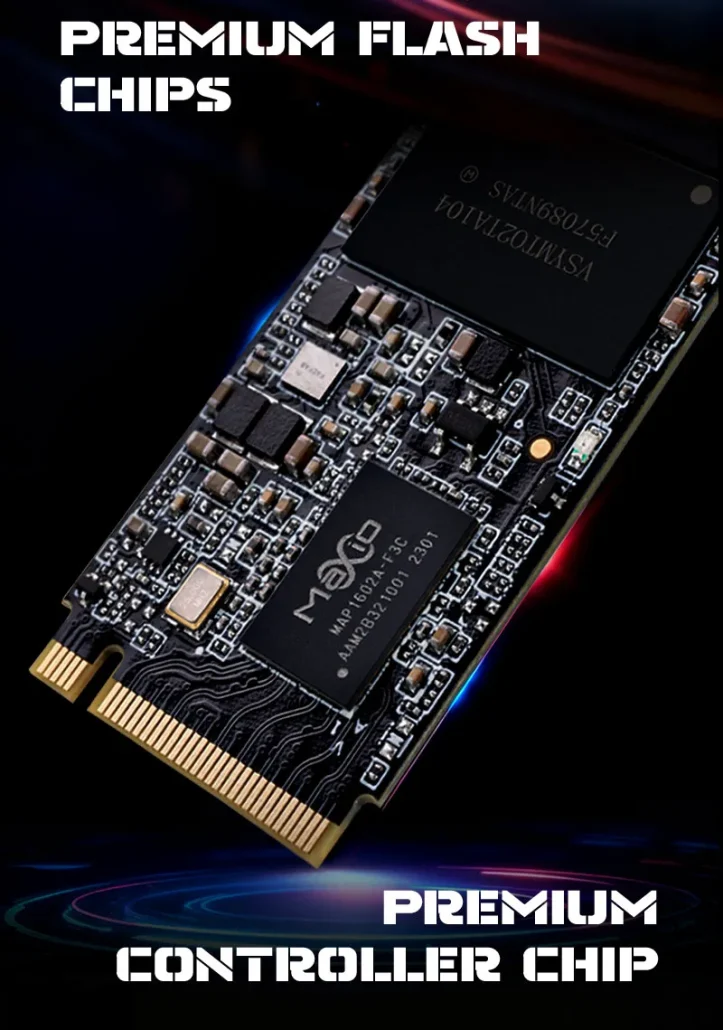
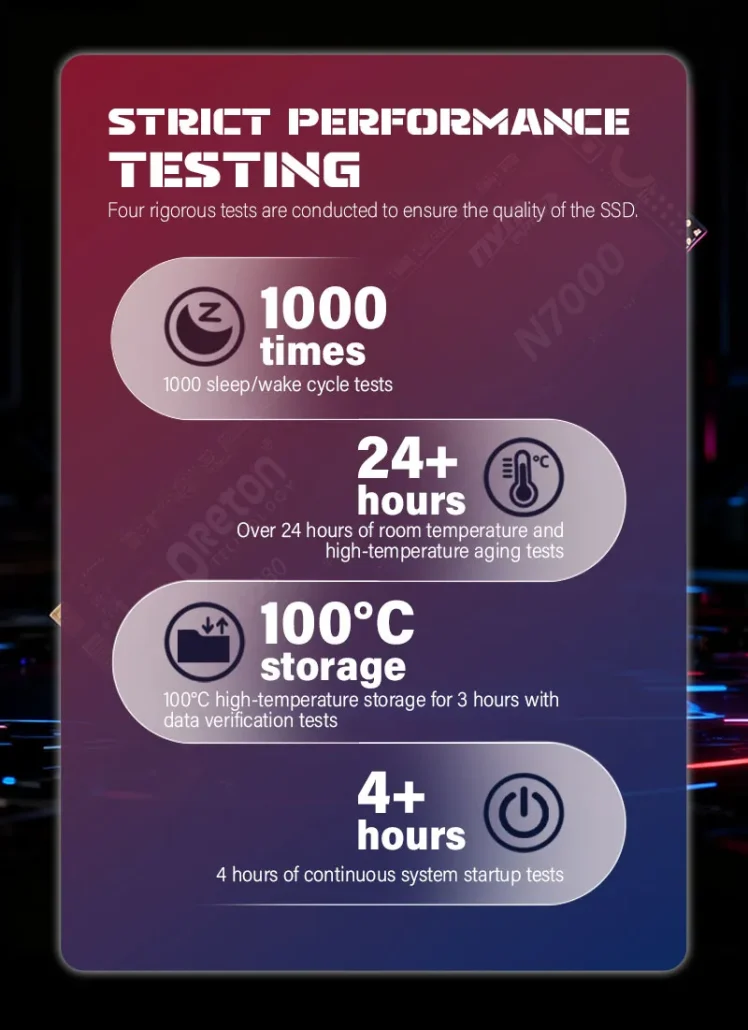
This approach ensures that every drive delivered — regardless of capacity — maintains consistent performance and health behavior over time.
Strong pairing is designed, validated, and refined long before shipment — not left to chance.
Conclusion
Behind every stable SSD lies engineering discipline.
While capacity and peak bandwidth remain important, true value comes from well-matched NAND + controller + firmware working as a unified system.
For builders and brand partners, this is the foundation of:
✅ Lower long-term maintenance
✅ Stable end-user experience
✅ Scalable product portfolios
In a market where components evolve quickly, disciplined pairing is what ensures your product remains reliable — not just on day one, but for years.
Real reliability starts with the details you don’t see — and live in the systems you depend on.